Your security team needs to govern model risk and regulatory compliance, while also monitoring the apps employees use to vibe code, yet no single platform handles all three. These are the 7 best AI governance solutions for enterprises in 2026, mapped to which problem each one actually solves.
7 best AI governance solutions at a glance
Vendors specialize based on where they sit in the stack. Model-layer focus comes from ModelOp and IBM watsonx.governance, while Holistic AI specializes in bias audits and third-party assessments. Compliance-led platforms include OneTrust and Securiti.
Platform-native AWS SageMaker covers AI within its own cloud, while Superblocks addresses the newer application-governance problem posed by vibe coding.
How I researched and tested these AI governance solutions
I ran each platform through the same evaluation across model intake, policy enforcement, audit visibility, and fit with the security stack most teams already own. Some tools were tested hands-on through trials and demo sandboxes.
Others were evaluated through documentation reviews, customer interviews, and analyst write-ups, since most enterprise AI governance tools do not offer self-serve access.
- Capability: depth of model registry, policy library, risk scoring, and audit logging, plus modern AI coverage like autonomous agent oversight and RAG pipeline governance.
- Security and governance: RBAC, audit logs, SSO and IAM integration, and deployment model (SaaS, cloud-prem, on-prem).
- Regulatory mapping: pre-built coverage for the EU AI Act, NIST AI RMF, ISO 42001, SR 11-7, and emerging state laws.
- Integrations: fit with existing IAM, SIEM, GRC, and model serving infrastructure.
- Maturity and use cases: which governance layer the tool actually handles, plus analyst coverage and customer reference depth.
This hands-on approach helped me see the split clearly. Model and compliance governance and AI-app governance are still two distinct problems, and most enterprises end up running one platform for each.
1. IBM watsonx.governance for enterprises on the IBM stack
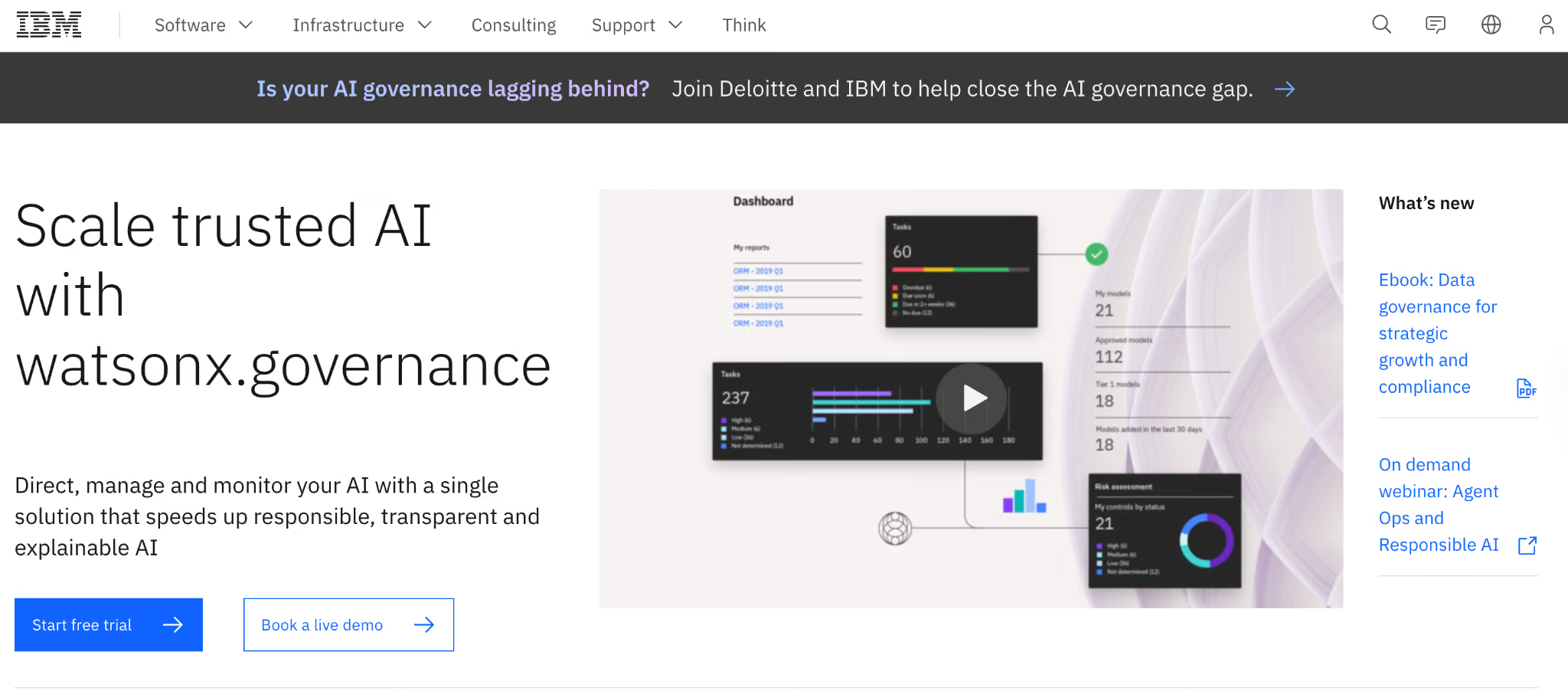
What it does: IBM watsonx.governance brings model lifecycle tracking, fact sheets, and regulatory mapping together inside the broader watsonx platform, with deep ties to IBM Cloud Pak for Data.
Best for: Large enterprises (banks, telcos, government) already invested in IBM’s data and AI ecosystem.
The watsonx.governance module is the AI governance arm of IBM’s larger watsonx platform launched in 2023.
In testing, the strongest signal was how well it tied model performance metrics back to business KPIs, a capability less developed in the other platforms tested.
Key features
- AI factsheets: automated documentation for every model, including training data, parameters, and approvals.
- Lifecycle workflows: approval gates and handoffs between data science, risk, and compliance.
- Open foundation model governance: support for Llama, Mistral, and other non-IBM models alongside watsonx.ai.
- Regulatory accelerators: templates for EU AI Act, NIST AI RMF, and industry-specific rules.
- OpenPages integration: pipes AI risk data into IBM’s GRC platform for unified risk reporting.
Pros
- ✅ Tight integration with watsonx.ai and Cloud Pak for Data if you are already on the IBM stack.
- ✅ Strongest reporting layer of the platforms tested for ties to enterprise risk reporting.
- ✅ Mature support for both proprietary and open-source models, including Llama and Mistral.
Cons
- ❌ Real value depends on adopting more of the watsonx stack beyond governance alone.
- ❌ Pricing complexity is significant, with multiple SKUs and consumption components.
- ❌ Initial setup in on-prem environments is heavier than SaaS-first alternatives.
What users say
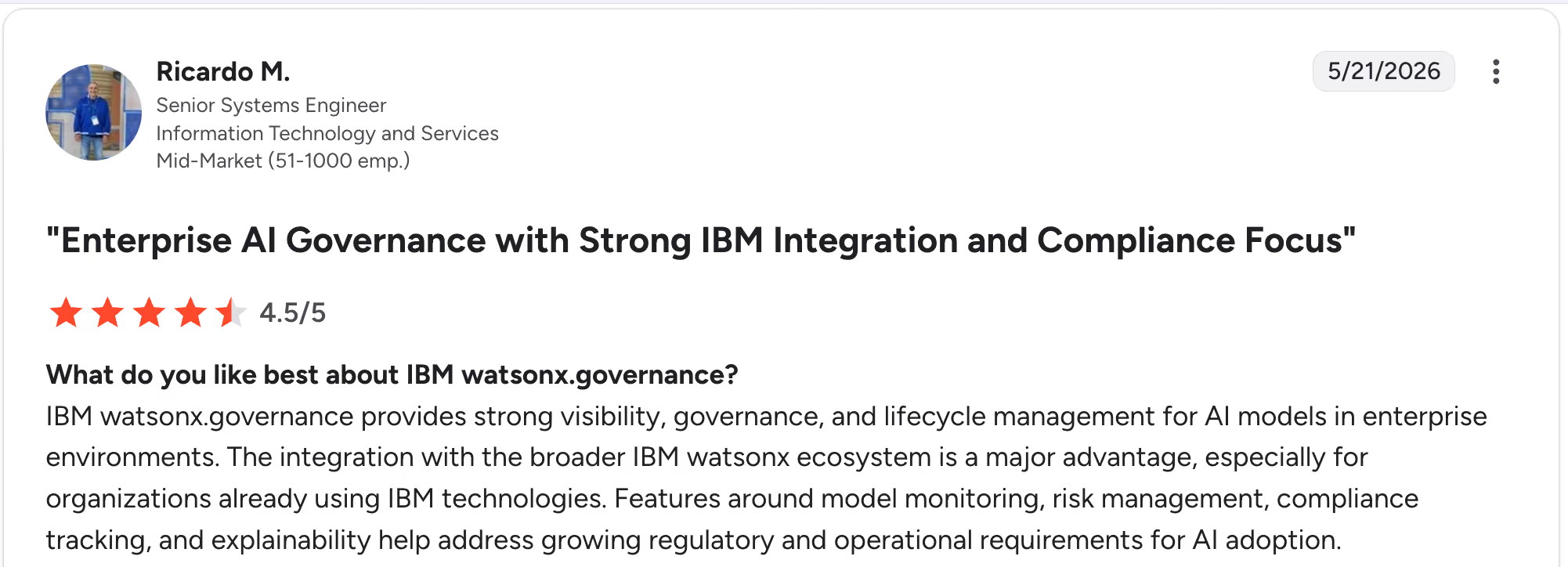
“IBM watsonx.governance provides strong visibility, governance, and lifecycle management for AI models in enterprise environments. The integration with the broader IBM watsonx ecosystem is a major advantage, especially for organizations already using IBM technologies.” Ricardo M, G2

“Basically the steep learning curve. Improvements can be done in UI, maybe offering a lite version to smaller teams with fewer regulatory needs.” Ashish D, G2
Pricing
IBM watsonx.governance is priced monthly through the Governance console. Essentials starts at $795/month for the instance, plus $2,650/month per solution (max 1) and $53/month per concurrent user (max 25).
Standard tier raises the instance to $3,710/month and lifts the caps to 5 solutions and 200 users. Evaluations are billed separately at $0.60 per resource unit. See the IBM watsonx.governance pricing page.
Bottom line
If you already run IBM for data or risk, watsonx.governance is the obvious pick. Outside the IBM footprint, ModelOp delivers similar governance depth without the platform lock-in.
2. OneTrust AI Governance for privacy and compliance teams
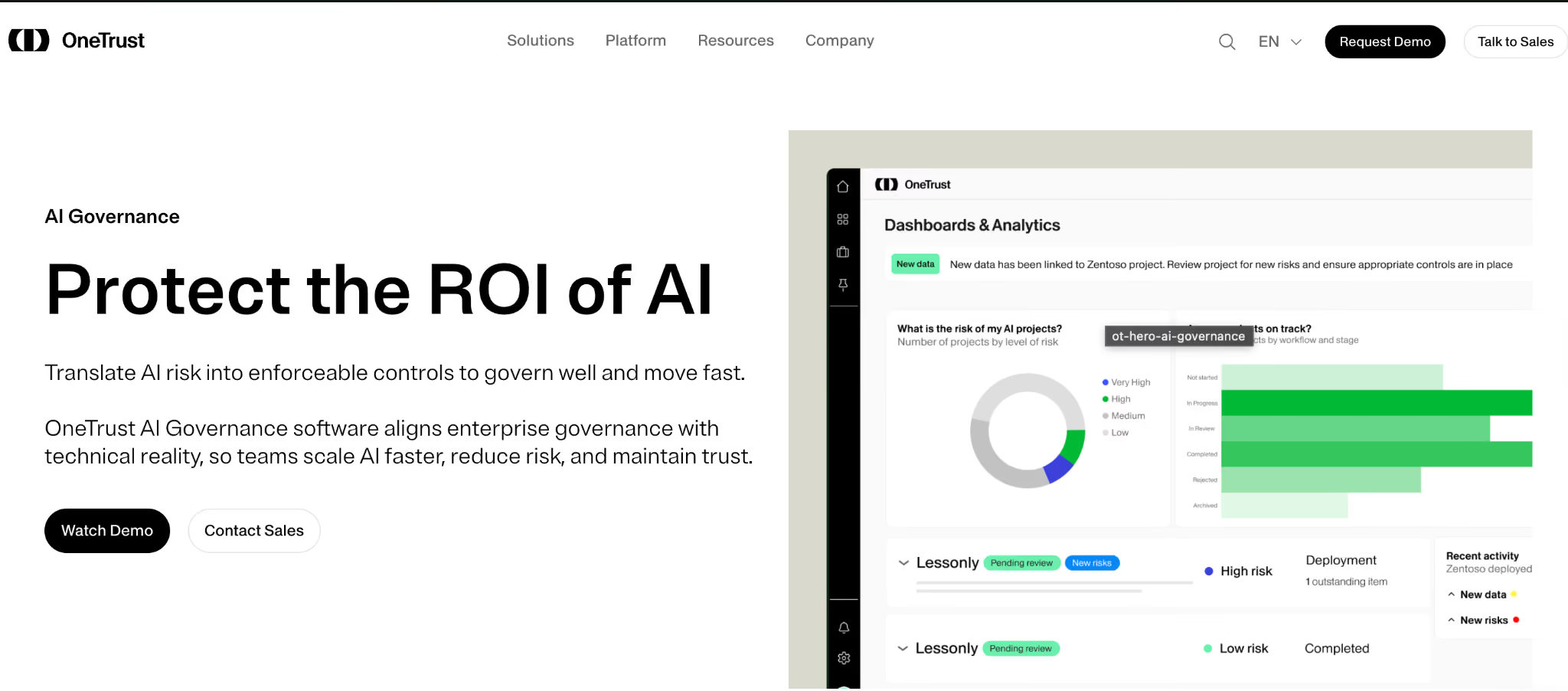
What it does: OneTrust AI Governance extends OneTrust’s privacy and GRC platform to cover AI risk, with a focus on AI inventory, impact assessments, and regulatory mapping.
Best for: Privacy and compliance teams that already use OneTrust for GDPR, CCPA, or third-party risk and want to add AI governance to the same console.
OneTrust came at AI governance from the privacy side, and it shows. The use case intake, DPIA-style assessments, and regulator templates feel familiar to compliance teams. That familiarity is the whole point.
Key features
- AI use case inventory: structured registration of every AI system across business units.
- Algorithmic impact assessments: dynamic questionnaires aligned to EU AI Act risk tiers.
- Vendor and model risk: assessments that share data with OneTrust’s third-party risk module.
- Regulator-ready reporting: pre-built reports for the EU AI Act, Colorado AI Act, and ISO 42001.
- Workflow automation: routing, approvals, and remediation tied to your existing OneTrust workflows.
Pros
- ✅ Best AI governance fit if you are already a OneTrust customer for privacy or GRC.
- ✅ EU AI Act mapping is more detailed than most competitors tested.
- ✅ The workflow engine is mature because privacy teams have used it for years.
Cons
- ❌ Weaker on technical model governance (drift, bias, lineage) than ModelOp or Holistic AI.
- ❌ Engineering teams often find the workflows compliance-heavy for day-to-day needs.
- ❌ Implementation often requires consulting help, which adds cost on top of the base license.
What users say
“The AI Governance module fits naturally into OneTrust's broader GRC and privacy ecosystem, enabling centralized intake, risk assessment, and lifecycle tracking of AI systems.” Verified User, Gartner

“The product is that the initial setup and configuration can feel a bit overwhelming, especially for teams that are new to an AI governance framework; it takes some time to fully understand all the features and align them with internal processes.” Verified User, Gartner
Pricing
OneTrust uses tiered, modular pricing metered on admin users and AI inventory size. Pricing is not published; minimum annual commitments typically start in the five-figure range. Details on metering and tiers are on the OneTrust pricing page.
Bottom line
If your compliance team owns AI governance and already runs OneTrust, this is the path of least resistance. If your ML engineers own it, look at Holistic AI first.
3. Superblocks for governing AI-built internal applications
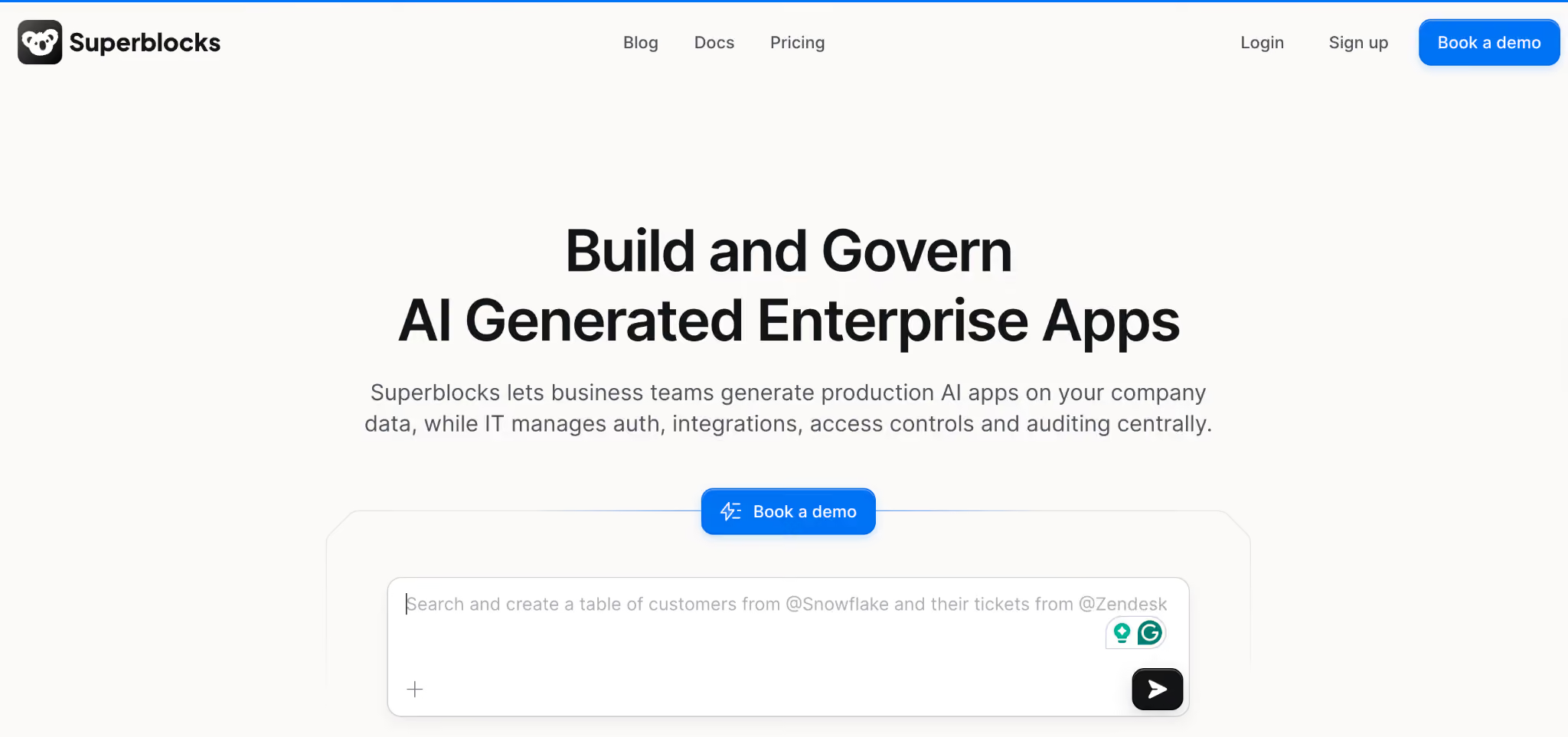
What it does: Superblocks is a governed enterprise vibe coding platform where business teams build apps with AI, IT configures the guardrails once, and every app, builder, and integration becomes queryable through the Superblocks MCP.
Best for: Enterprise IT and security leaders dealing with sprawl from consumer vibe coding tools like Replit, Lovable, and Bolt, who want a governed home for AI-generated internal apps.
Most AI governance platforms focus on the model layer or the compliance layer. Superblocks targets a different problem that emerged rapidly over the past 18 months: thousands of employees are building production-grade apps with AI, without an audit trail or security review. Superblocks governs at the application layer, where these apps actually live.
Key features
- Clark, Superblocks' AI agent, with deterministic guardrails: business users build apps in natural language, while every generation runs through pre-configured security, design, and integration policies.
- Superblocks MCP: queryable system of record for every app, builder, integration, permission, and audit event.
- Audit logs: searchable platform audit events covering build activity, queries, integration access, and package installs, with programmatic access through the Superblocks MCP server for downstream monitoring workflows.
- BYO Inference: route Clark inference through your own Snowflake or Databricks so prompts and data never leave your environment.
- Enterprise React export: every app exports as standard React code, removing vendor lock-in concerns.
Pros
- ✅ One of the few platforms tested that governs AI-generated apps end-to-end, from prompt to production.
- ✅ The MCP layer gives security teams an inventory of vibe-coded apps across the org.
- ✅ Native Git, SSO (SAML 2.0, OIDC), RBAC, and SCIM provisioning fit into existing security tooling.
Cons
- ❌ Does not replace traditional model governance for ML teams (you still need ModelOp or IBM's watsonx.governance for that layer).
- ❌ Newer to the AI governance conversation, so analyst coverage is thinner than IBM or OneTrust.
- ❌ Component library is still expanding, so deeply custom UIs may need React extensions.
What users say
“It's very easy to develop internal tooling. It offers a lot of functionality out of the box. A lot of integrations as well, such as APIs and databases. We use it internally every day.” Max H, G2

“There are some backend limitations, and components lack reusability across applications; also, it's still lacking diversity in its component offerings. Would be great to be able to import from other component libraries, such as MUI.” Oscar C, G2
Pricing
The Teams plan is $125 per AI Builder per month (monthly billing), including 100 AI credits, 50+ integrations, and one hosted app. Enterprise plans add VPC deployment, SSO, audit logs, and SCIM provisioning at custom pricing. Full breakdown on the Superblocks pricing page.
Bottom line
If your shadow AI problem looks more like the one Ray Jimenez at ShipBob described: "We have 579 active users in Replit. That is more than half our remote staff. I am having heartburn making sure these production-level apps meet the same standards we have for any other application," then Superblocks is the strongest fit on this list to solve that specific layer.
4. ModelOp for enterprise MLOps and model lifecycle governance
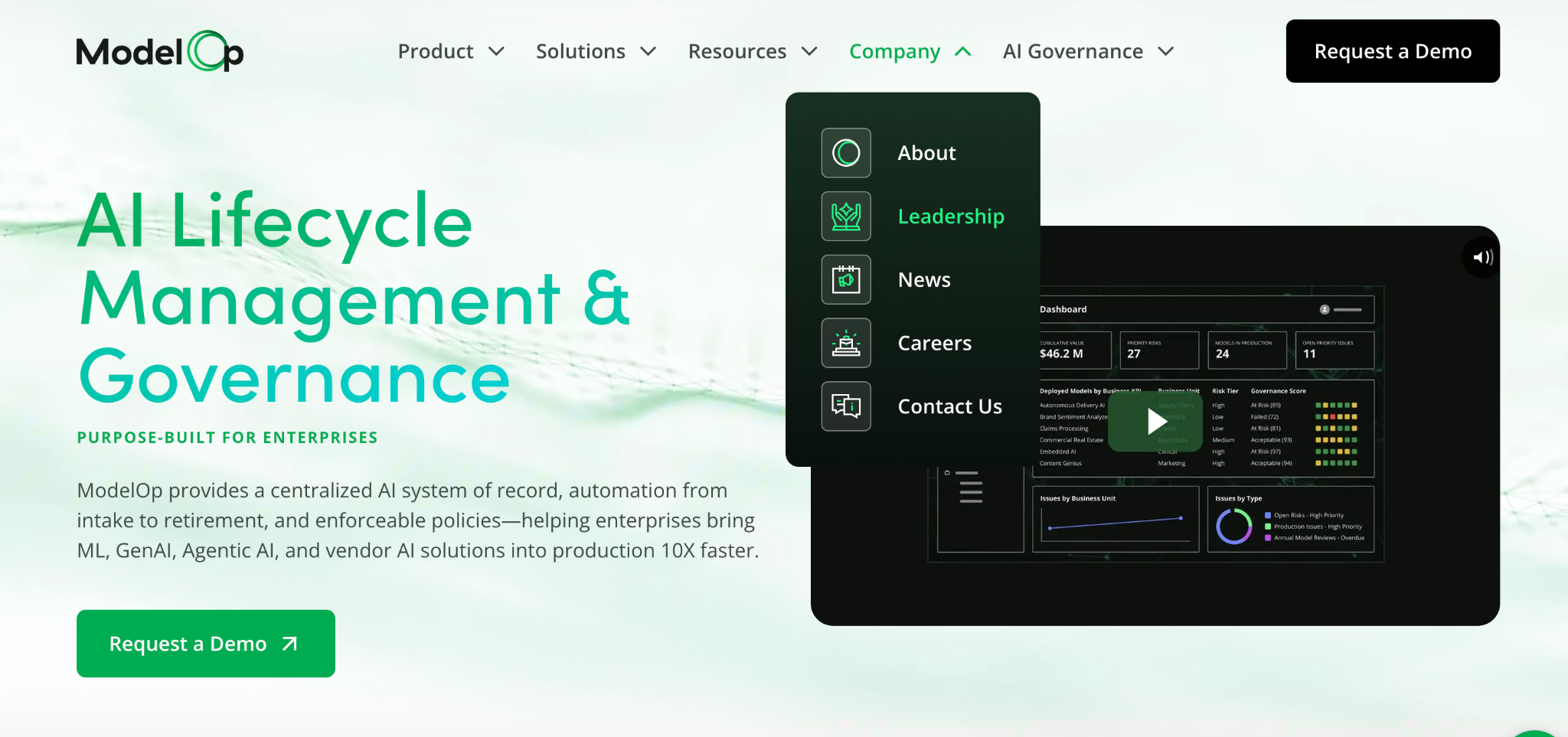
What it does: ModelOp is an enterprise model operations and governance platform that manages the full lifecycle of AI and ML models from development through retirement, with built-in monitoring, risk controls, and regulatory mapping.
Best for: Large regulated enterprises (banks, insurance, healthcare) running dozens or hundreds of models in production who need MLOps and model risk management integrated.
ModelOp has been in this space since before AI governance was a category, with deep roots in financial services model risk management.
The platform stood out for its model inventory depth and for how it integrates with risk frameworks like SR 11-7, already in use at large institutions, including GRC platforms such as ServiceNow and Archer.
Key features
- Model inventory and registry: centralized catalog of every model across cloud providers and ML platforms.
- Automated lifecycle workflows: approval gates, deployment orchestration, and retirement processes.
- Continuous monitoring: drift, performance, and bias signals piped to your existing monitoring stack.
- Regulatory mapping: SR 11-7, EU AI Act, and NIST AI RMF templates with audit-ready outputs.
- GRC integration: native connectors for ServiceNow, Archer, and other enterprise GRC platforms.
Pros
- ✅ Deep model operations capabilities for enterprises with mature MLOps practices.
- ✅ Strong fit for regulated industries with SR 11-7 model risk management requirements.
- ✅ Cloud-agnostic, working across AWS, Azure, GCP, Databricks, and on-prem deployments.
Cons
- ❌ Heavier implementation and longer time-to-value than newer governance tools.
- ❌ Less suited for organizations without a dedicated MLOps function.
- ❌ Public review coverage is thin, so reference customers do more of the work during evaluation.
What users say
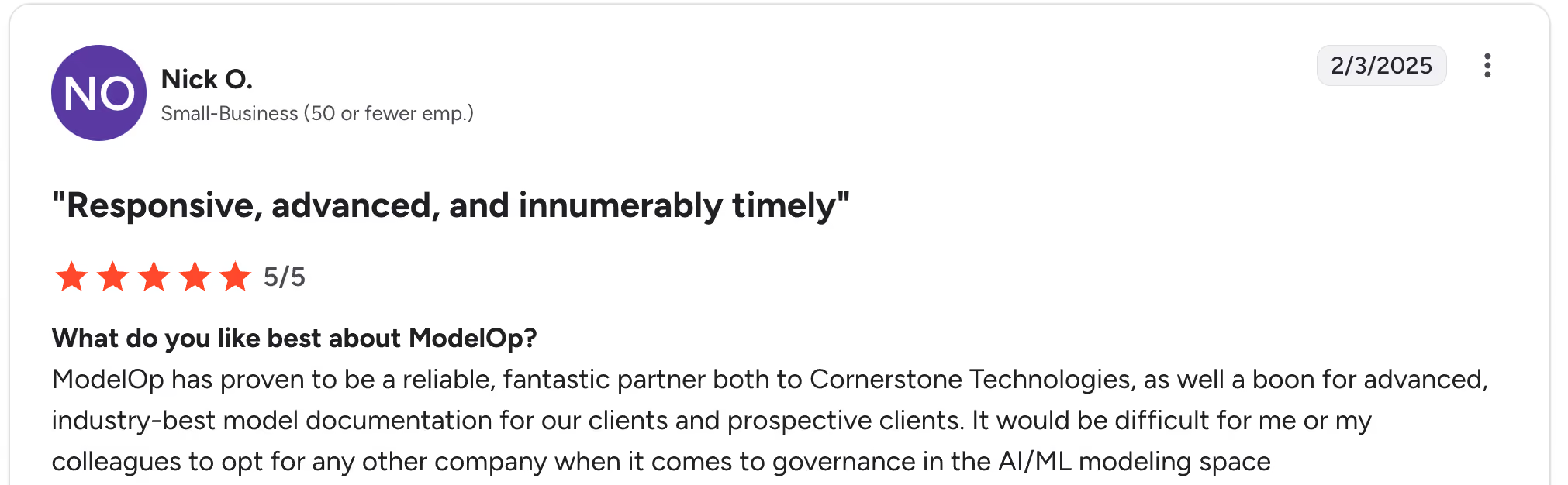
“ModelOp has proven to be a reliable, fantastic partner both to Cornerstone Technologies, as well as a boon for advanced, industry-best model documentation for our clients and prospective clients.” Nick O, G2

“ModelOp can feel overwhelming at times for newcomers. It takes some time to get a handle on all the platform's features.” Ian B, G2
Pricing
ModelOp is sold as an annual subscription with consumption-based pricing tied to the number of models or AI solutions managed. Custom quotes only.
AWS Marketplace lists a non-production instance publicly; production pricing is via private offer. Start at ModelOp's contact page.
Bottom line
If you operate dozens or hundreds of ML models in production at a regulated enterprise, ModelOp is the platform with the strongest model-operations heritage of the platforms tested. For organizations newer to AI governance, lighter platforms will move faster.
5. Holistic AI for external AI risk assessments
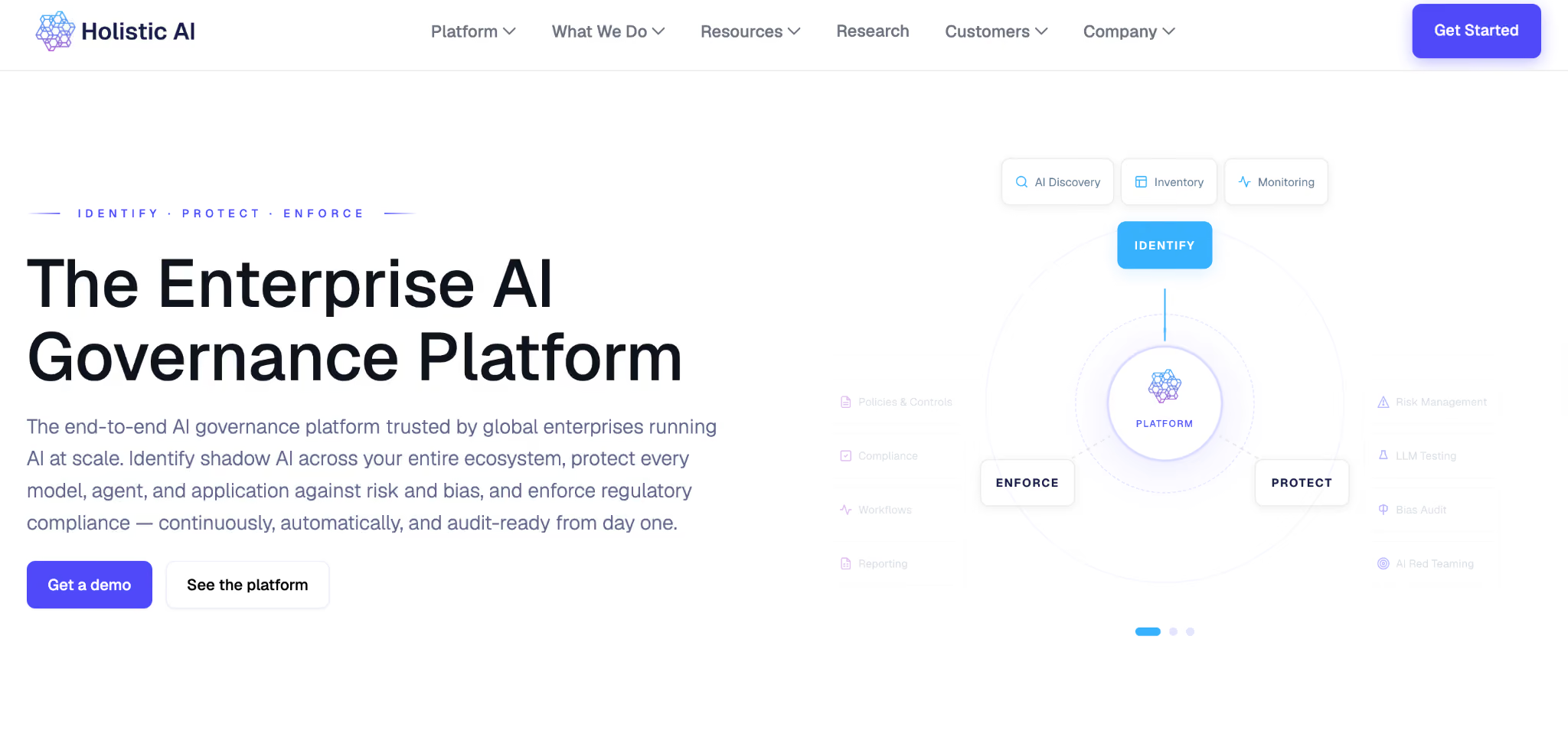
What it does: Holistic AI focuses on risk assessment, bias auditing, and third-party AI certification, with a platform that lets enterprises and regulators independently evaluate AI systems.
Best for: Organizations that need defensible third-party assessments of AI fairness, resilience, and compliance, especially in hiring, lending, and other high-stakes use cases.
The UK-based team behind Holistic AI has been deep in algorithmic auditing since before the current AI hype cycle. It is the tool I would choose if my AI were subject to external scrutiny by regulators, plaintiffs, or auditors.
Key features
- Bias and fairness testing: statistical assessment across demographic groups with documentation suitable for regulators.
- Resilience and security tests: evaluations for adversarial resilience, privacy leakage, and model integrity.
- NYC Local Law 144 support: built-in bias audit workflows for the New York automated employment decision tool law.
- EU AI Act conformity assessments: structured workflows for high-risk AI systems under the EU AI Act.
- Open-source AI risk library: publicly available taxonomy of AI risks that the platform maps to.
Pros
- ✅ Strongest technical bias and resilience testing among the platforms tested.
- ✅ Specific support for high-stakes, regulated use cases such as hiring algorithms.
- ✅ Open-source contributions give credibility with regulators and auditors.
Cons
- ❌ Less suited as a day-to-day governance platform for hundreds of internal AI use cases.
- ❌ The user interface is dense and designed for technical risk teams, not general compliance staff.
- ❌ Limited public user reviews on G2 and Gartner, so customer references matter for procurement.
What users say

“Strong focus on regulatory compliance. Good monitoring of models and risk assessment. Audit-ready.” Verified User, Gartner

“Complex initial setup, learning curve and limited customization in some areas.” Verified User, Gartner
Pricing
Holistic AI does not publish pricing. Quotes are tailored to the number of AI systems audited, the regulatory framework in scope, and whether you need assessment-only or platform access. Request a quote on the Holistic AI demo page.
Bottom line
If you need defensible third-party audits of specific high-risk AI systems, Holistic AI is the strongest pick of the platforms tested. For everyday portfolio governance across hundreds of use cases, pair it with watsonx.governance or ModelOp.
6. AWS SageMaker AI Governance for MLOps teams on AWS
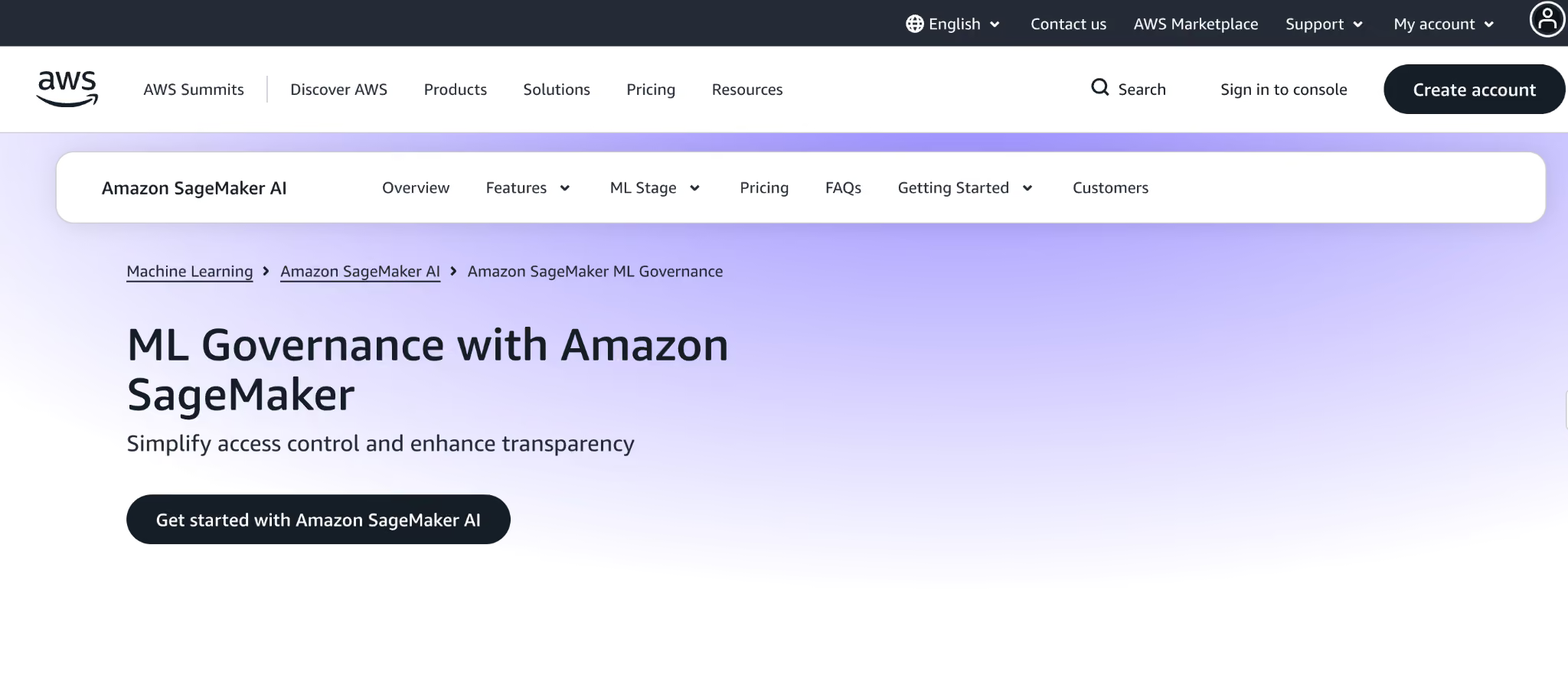
What it does: AWS SageMaker AI Governance is a set of native AWS capabilities (Role Manager, Model Cards, Model Dashboard) that provide documentation, access control, and monitoring for ML workloads within SageMaker.
Best for: MLOps and data science teams that already run training, deployment, and monitoring inside SageMaker and want governance close to where the models live.
SageMaker AI Governance is a collection of governance tools built directly into SageMaker. Everything lives next to your model artifacts, training jobs, and endpoints, which means zero integration work for teams already on AWS. Coverage ends at the AWS boundary.
Key features
- Role Manager: simplified IAM persona setup for data scientists, ML engineers, and auditors.
- Model Cards: standardized model documentation with intended use, evaluation, and ethical considerations.
- Model Dashboard: unified monitoring across models for drift, quality, and bias signals.
- Model Monitor integration: continuous monitoring of data quality, model quality, and feature attribution drift.
- Clarify integration: bias detection and explainability reports tied to specific models.
Pros
- ✅ Zero integration work for teams already on SageMaker.
- ✅ Strong technical monitoring (drift, bias, explainability) at no extra license cost.
- ✅ Model Cards format aligns with what regulators and customers ask for.
Cons
- ❌ No governance for non-AWS or non-SageMaker AI workloads.
- ❌ Weak on policy-as-code, vendor risk, and cross-functional workflows compared to IBM watsonx.governance.
- ❌ Underlying SageMaker compute costs scale quickly for large training jobs.
What users say
“What I like most about Amazon SageMaker is how it brings the entire machine learning workflow into one unified, managed environment.” Verified User, Gartner

“The interface can feel overwhelming at first, especially if you're not deep into the AWS ecosystem already.” Verified User, Gartner
Pricing
Role Manager, Model Cards, and Model Dashboard are included with SageMaker AI at no separate license cost. Underlying SageMaker compute, Model Monitor jobs, and storage are billed at standard pay-as-you-go rates. Full breakdown on the SageMaker AI pricing page.
Bottom line
If your ML is heavily on SageMaker, turn this on first before paying for a dedicated AI governance platform. With models across multiple platforms, you still need a cross-stack tool like ModelOp.
7. Securiti for unified data and AI governance
What it does: Securiti combines data security, privacy, and AI governance into a single platform, with controls that cover data discovery, AI model risk, and regulatory mapping across both data and AI.
Best for: Organizations that treat AI and data governance as a single problem, especially regulated industries handling sensitive customer data at scale.
Securiti built its early reputation in privacy automation (DSR fulfillment, data mapping, sensitive data discovery), and its AI governance module extends that foundation to AI risk.
The platform’s edge treats AI governance as a downstream layer of data governance, on the premise that you cannot govern what AI does until you know what data it touches.
Key features
- AI system inventory: discovery and risk classification of every AI model and application across the enterprise.
- Sensitive data discovery: scanning of training datasets and inference pipelines for regulated and proprietary data.
- Model risk assessments: EU AI Act conformity workflows and ISO 42001 readiness.
- Privacy automation: DSR handling and consent management extended to AI-trained data.
- Regulatory mapping: pre-built coverage of EU AI Act, GDPR, CCPA, ISO 42001, and NIST AI RMF.
Pros
- ✅ Unified data plus AI governance is a strong fit for regulated industries.
- ✅ Mature privacy automation gives a head start on regulator-ready reporting.
- ✅ Strong sensitive data discovery applied to AI training and inference pipelines.
Cons
- ❌ Less depth on technical model governance like drift and lineage than ModelOp.
- ❌ Best value comes from adopting more of the broader Securiti platform beyond AI governance alone.
- ❌ Learning curve for advanced features can slow initial deployment.
What users say
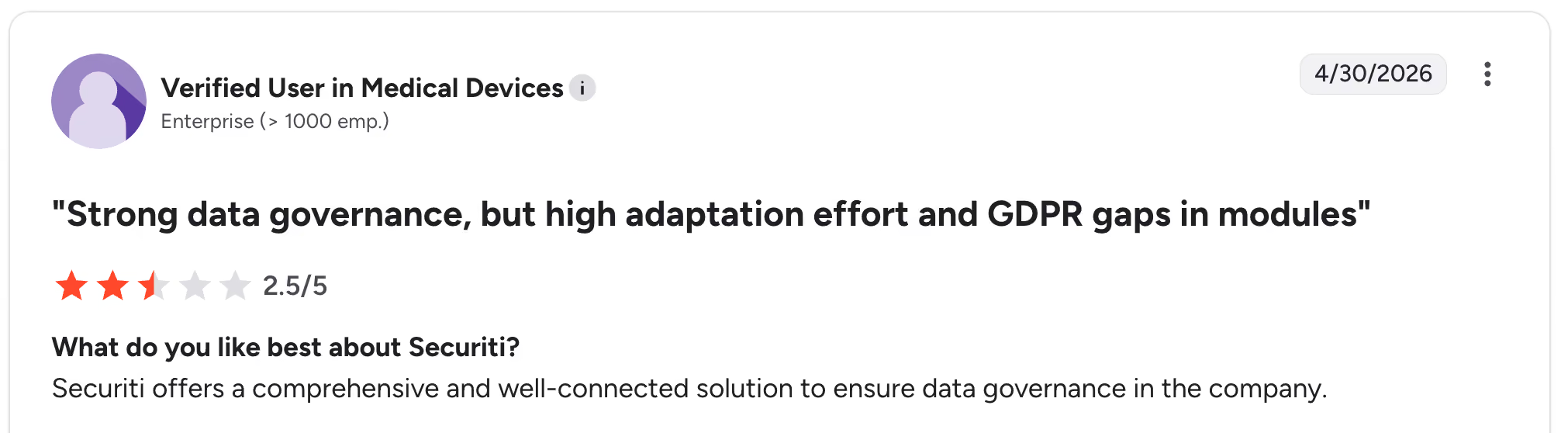
“Securiti offers a comprehensive and well-connected solution to ensure data governance in the company.” Verified User, G2

“The user interface is not the most user-friendly. It took a little time to understand where everything was in the platform.” Garrison C, G2
Pricing
Securiti uses modular pricing based on the data and AI use cases you procure. Public pricing is not listed; quotes scale with data volume and module count. Details on procurement are on the Securiti pricing page.
Bottom line
If your data governance and AI governance teams sit close together (or are the same people), Securiti gives you one platform for both. For pure AI governance without the data security wrapper, Holistic AI will be cleaner.
Which AI governance solution should you choose?
Most enterprises end up with a stack, not a single tool. Here is how to map the decision based on what problem actually keeps you up at night.
Choose IBM watsonx.governance if you:
- Already run watsonx.ai, Cloud Pak for Data, or OpenPages.
- Need AI risk reporting that feeds enterprise GRC frameworks.
- Have the budget and patience for a heavier platform play.
Choose OneTrust AI Governance if you:
- Have a privacy or compliance team that already owns OneTrust for GDPR or third-party risk.
- Care more about regulatory mapping than technical model monitoring.
- Want to add AI governance with the lowest organizational friction.
Choose Superblocks if you:
- Are seeing sprawl from vibe coding tools like Replit, Lovable, and Bolt.
- Need a governed home for AI-built internal apps with audit logs and RBAC.
- Want to empower business teams to build safely instead of blocking them.
Choose ModelOp if you:
- Run dozens or hundreds of ML models in production with mature MLOps practices.
- Operate in a regulated industry where SR 11-7 model risk management applies.
- Need a cloud-agnostic platform that works across AWS, Azure, GCP, and on-prem.
Choose Holistic AI if you:
- Deploy AI in hiring, lending, or other high-stakes regulated use cases.
- Need defensible third-party bias and resilience audits.
- Have a technical risk team that can drive the platform.
Choose AWS SageMaker AI Governance if you:
- Run most of your ML inside SageMaker already.
- Need Model Cards and drift monitoring close to the models.
- Are not ready to pay for a separate governance vendor.
Choose Securiti if you:
- Manage data governance and AI governance under the same team.
- Need to discover sensitive data in AI training and inference pipelines.
- Want a single platform that bridges privacy automation and AI risk.
Skip this category entirely if:
- Your AI footprint is one or two pilots (spreadsheets and a Notion page are fine until you scale).
- You are a regulated business with no current AI use (start with a policy and an inventory).
Final verdict
For most enterprises, the right answer is a combination. IBM watsonx.governance or ModelOp for model and lifecycle governance. AWS SageMaker for platform-native coverage inside the AWS footprint.
Add Superblocks for the AI-built application layer that legacy governance platforms do not address.
If you can only pick one starting point, buy where your biggest current risk lives, and layer in the rest as adoption grows.
To see how Superblocks handles the AI-built apps your business teams are already shipping, our Quickstart Guide walks through the setup in a few minutes, or you can book a demo to talk through how it fits your stack.
Frequently asked questions
What are AI governance solutions?
AI governance solutions are platforms that track, control, and audit how AI gets built, deployed, and used. They cover policies, risk controls, model lineage, audit evidence, and regulatory mapping for frameworks like the EU AI Act, NIST AI RMF, and ISO 42001, increasingly extending to AI-generated apps built with vibe coding tools and autonomous agents.
What is the difference between AI governance and AI compliance?
AI governance is the broader operating model for managing AI risk, including policies, roles, workflows, and tooling. AI compliance maps AI use cases to specific regulations and proves conformance. Compliance is one outcome of good governance.
Do I need a dedicated AI governance platform, or can I extend my existing GRC tool?
Yes, most enterprises need both a dedicated AI governance platform and a GRC tool. Dedicated platforms handle technical model risks, such as bias testing and drift monitoring; GRC tools, such as OneTrust, handle policy mapping and AI inventory.
How are AI governance solutions different from data governance tools?
AI governance solutions and data governance tools differ in scope: AI governance solutions cover models, applications, and AI decisions, while data governance tools cover the datasets feeding them. Securiti bridges both; ModelOp and Holistic AI focus only on the AI layer.
Which AI governance solution is best for enterprises?
The best AI governance solution depends on which layer you need to govern. IBM watsonx.governance leads for enterprises on the IBM stack, ModelOp for mature MLOps practices, and Superblocks for the application-governance layer covering AI-built internal apps. Most large enterprises end up running one model-layer tool and one application-layer tool side by side.
At Virgin Voyages, non-technical teams now build their own AI apps, with IT governance fully intact. The result: 15+ production apps, seven departments onboard, and zero dedicated frontend engineers.
At Matthews, a marketing manager with zero coding background built an app that auto-generates offering memorandums, cutting turnaround from days to hours. See how the brokerage is putting AI builders on every team, with full governance intact.


Stay tuned for updates
Get the latest Superblocks news and internal tooling market insights.
Request early access
Step 1 of 2
Request early access
Step 2 of 2

You’ve been added to the waitlist!
Book a demo to skip the waitlist
Thank you for your interest!
A member of our team will be in touch soon to schedule a demo.
production apps built
days to build them
semi-technical builders
traditional developers
high-impact solutions shipped
training to get builders productive
SQL experience required
See the full Virgin Voyages customer story, including the apps they built and how their teams use them.

"Those tools are great for proof of concept. But they don't connect well to existing enterprise data sources, and they don't have the governance guardrails that IT requires for production use."
Table of Contents

Multiple authors
Power Apps vs Power Automate vs Superblocks: Key Differences
Power Apps and Power Automate work well for Microsoft-centric teams, but Superblocks offers more flexibility. Check key features and pricing to choose wisely.
.png)