AI governance models are the operating structures that decide who holds authority over AI across a company. Four structures cover the options, from centralized to decentralized, with federated and hybrid in between. Governing individual machine learning models is a separate topic.
To write each section, I read AWS's prescriptive guidance on governance models, Gartner's February 2026 abstract on choosing an operating model, and the 2022 hourglass paper from Turku School of Economics. I chose those three because each one describes who holds authority, which is the question this guide answers.
I then checked every framework in the table below against its own primary page.
Each model gets a breakdown of who owns policy, who owns execution, and where it breaks down. A decision guide then matches the four to company size, regulatory exposure, and who builds your AI.
AI governance models: the quick answer
An AI governance model assigns decision rights over AI. It settles who writes the policy, who applies it to real systems, and who is accountable when something goes wrong.
Key difference: The four models differ in how much authority sits with one central team and how much sits with the teams building and using AI.
Gartner calls choosing an AI governance operating model a critical strategic decision, one that sets who holds authority and who answers for AI outcomes.
These models describe organization-level structures. Tracking one model's accuracy, drift, and retirement is a narrower job, and it belongs to ML model governance.
AI governance models at a glance
Here's how the four models divide ownership:
Centralized AI governance model
A centralized AI governance model puts one enterprise-wide authority in charge of AI policy, approvals, and oversight. AWS credits it with strong control, consistent enforcement, and simpler compliance management.
How ownership splits:
- Policy owner: One enterprise-wide authority.
- Execution owner: The same central team, which reviews and approves each use case.
- Breaks down when: Adoption outgrows the team's review capacity and requests start queuing.
AWS says this model works well in highly regulated industries and for organizations early in their AI journey. Platforms like LLM gateways support it by centralizing access to models.
Federated AI governance model
A federated AI governance model delegates responsibility to business units while keeping them aligned through shared standards. AWS lists faster innovation, closer alignment with business needs, and scalability as the benefits.
Who owns what:
- Policy owner: Each business unit, within enterprise-wide standards.
- Execution owner: The same business units, which review and monitor their own AI use.
- Breaks down when: Units read the shared standards differently, and enterprise-wide visibility slips.
AWS places federated governance in large enterprises with diverse business units and mature IT governance. That maturity matters because shared standards hold only when every unit applies them the same way.
Hybrid AI governance model
A hybrid AI governance model combines central oversight with federated execution. A central team writes the policy framework, and business units apply it.
The split of duties:
- Policy owner: A central team that writes the framework and rules for high-risk use.
- Execution owner: Business units, which run low-risk AI under local autonomy.
- Breaks down when: The central team and business units blur their responsibilities.
In AWS's description, enterprise-wide standards cover high-risk agents while local teams handle low-risk applications, so risk tiers make the split workable.
The central team keeps a system of record listing each approved AI use case and its tier, and an AI governance platform can host that system of record.
AWS calls hybrid a fit for most enterprise organizations, though success depends on clear divisions of responsibility and strong communication between the two sides.
Decentralized AI governance model
A decentralized AI governance model lets each team set its own AI rules, with no shared enterprise baseline. Decisions happen close to the use case, so teams move quickly.
Where the work sits:
- Policy owner: Each team or business unit.
- Execution owner: The same team, with no outside review.
- Breaks down when: Standards diverge from team to team, and leadership cannot see which AI systems are running.
Without a shared baseline, teams adopt AI tools independently, and shadow AI follows. Security and compliance teams then have no list of what is running.
This model fits a small company with few AI use cases and little regulatory exposure, where a central review would cost more than it saves.
AI governance models compared: key differences
Three practical differences separate the four models.
Speed of approval
A centralized model sends every request through one team, so approval time grows with the queue. Federated and decentralized models decide locally and skip that wait.
A hybrid model gives low-risk use cases locally and reserves central review for high-risk ones.
Consistency of controls
Centralized governance applies one standard to every team. Decentralized governance has no common standard to apply.
Federated governance sits between them. Each unit applies shared standards in its own way, and AWS calls inconsistent policy interpretation the resulting risk.
Visibility into AI use
A central team sees every AI request because every request reaches it. Federated models depend on units reporting upward, and AWS notes that enterprise-wide visibility becomes harder.
A decentralized model has no reporting duty, so visibility depends on each team volunteering the information.
The three layers of AI governance
The AIGA framework from Turku School of Economics takes a different view. Its hourglass model, published in 2022, splits governance into three layers, each with its own requirements.
The three layers:
- Environmental layer: Requirements from outside the company, ranked from binding to informal, such as hard law, voluntary principles, and stakeholder pressure.
- Organizational layer: Management turns those outside requirements into strategy, values, and risk tolerance, with roles such as a chief AI officer.
- AI system layer: Designers and developers apply governance to each system across its lifecycle.
The four models in this guide are choices on the organizational layer, because they decide who holds authority inside the company. ML model governance sits mostly on the AI system layer.
AI governance frameworks and your operating model
Eight of the ten frameworks below sit on the environmental layer, the laws and principles set outside your company. Only NIST AI RMF and ISO/IEC 42001 speak to how a company organizes itself.
How the ten frameworks map to the layers:
None of the ten sets a required operating model. The EU AI Act comes closest, since its risk tiers line up with the tiered split in hybrid governance.
NIST's GOVERN function calls for documented roles, responsibilities, and accountability structures. ISO/IEC 42001 sets requirements for an AI management system.
The U.S. entries have changed the most since 2025. The 2023 U.S. AI executive order was revoked in January 2025, and NIST is revising the AI RMF.
Colorado replaced its 2024 AI Act with SB26-189, which passed in May 2026, and developer duties start January 1, 2027.
Which AI governance model fits your organization?
Match the model to three facts about your company.
By organization size
A small company with a handful of AI use cases can run centralized governance, because one reviewer still sees everything. AWS also says that model suits organizations early in their AI journey. If the company faces little regulation, decentralized governance can work too.
Large enterprises with diverse business units need delegation. AWS ties federated governance to mature IT governance. Where that maturity is still being built, a hybrid model keeps central oversight in place.
Our enterprise AI governance guide covers the committees and roles that support either one.
By regulatory exposure
The more of your AI falls under binding rules, the more control belongs at the center.
The EU's Digital Omnibus on AI, in force since July 27, 2026, moved the start of obligations for Annex III high-risk systems to December 2, 2027.
A company with a few regulated systems and many low-risk ones fits hybrid governance, with central review covering the regulated systems and local teams handling the rest.
A company whose AI is mostly regulated may stay centralized, since one team can then apply the same strict review everywhere.
By builder population
If only a platform team builds AI, centralized review works because every build reaches the same reviewers. Once business users build their own apps, those reviewers become the bottleneck.
AWS defines a citizen developer as a business user who creates AI applications without specialized technical skills. It advises starting them with limited capabilities and extending permissions as they show competence.
That pattern is federated building inside a hybrid model, where business teams build and the center sets the limits.
Quick match by situation:
- Centralized: Few AI use cases, heavy regulation, or a program that has recently started.
- Federated: Several business units with mature IT governance of their own.
- Hybrid: A mix of regulated and low-risk AI across many teams, including business builders.
- Decentralized: A small company with low regulatory exposure and few AI systems.
Governance frameworks must adapt as the technology and an organization's capabilities mature, according to AWS. Revisit the choice as AI use grows, because a review process designed for a few use cases slows down once many teams are building.
Our guide to governance best practices covers the routines that support that review.
The four pillars of AI governance
Guides name the pillars differently. Palo Alto Networks lists fairness, accountability, transparency, and privacy, while BSI names data governance, model lifecycle management, risk and compliance, and monitoring and auditing.
This guide uses the Palo Alto Networks list and groups security with privacy.
The four pillars used here:
- Accountability: A named owner answers for each AI system's outcomes.
- Transparency: People affected by an AI system can see what it does and why.
- Fairness: Teams test systems for biased outcomes before launch and after.
- Security and privacy: Access controls and data protections cover what AI systems read and produce.
Each model spreads these duties differently. A centralized model gives accountability to one team, while a federated model gives it to every business unit. Our guide to AI governance covers the principles in depth.
Put a hybrid AI governance model into practice with Superblocks
No single model wins outright. Each one trades control for speed in a different place.
Superblocks is a governed enterprise vibe coding platform. Builders describe an app to Clark, the Superblocks AI agent, and the app runs on the company's existing data and systems.
IT sets the rules once, and the platform applies existing access controls and row-level permissions to what business teams build. That is federated building under central governance.
Role-based access control comes with Teams, while audit logs, SSO, and VPC deployment are Enterprise features.
I tested the hybrid split in a Superblocks demo workspace that came with sample integrations. I asked Clark for an internal request tracker with a submit form and a manager approval queue, to see whether central rules hold when a business-team builder creates the app. The steps below show what happened.
Step 1: Ask Clark for the app.
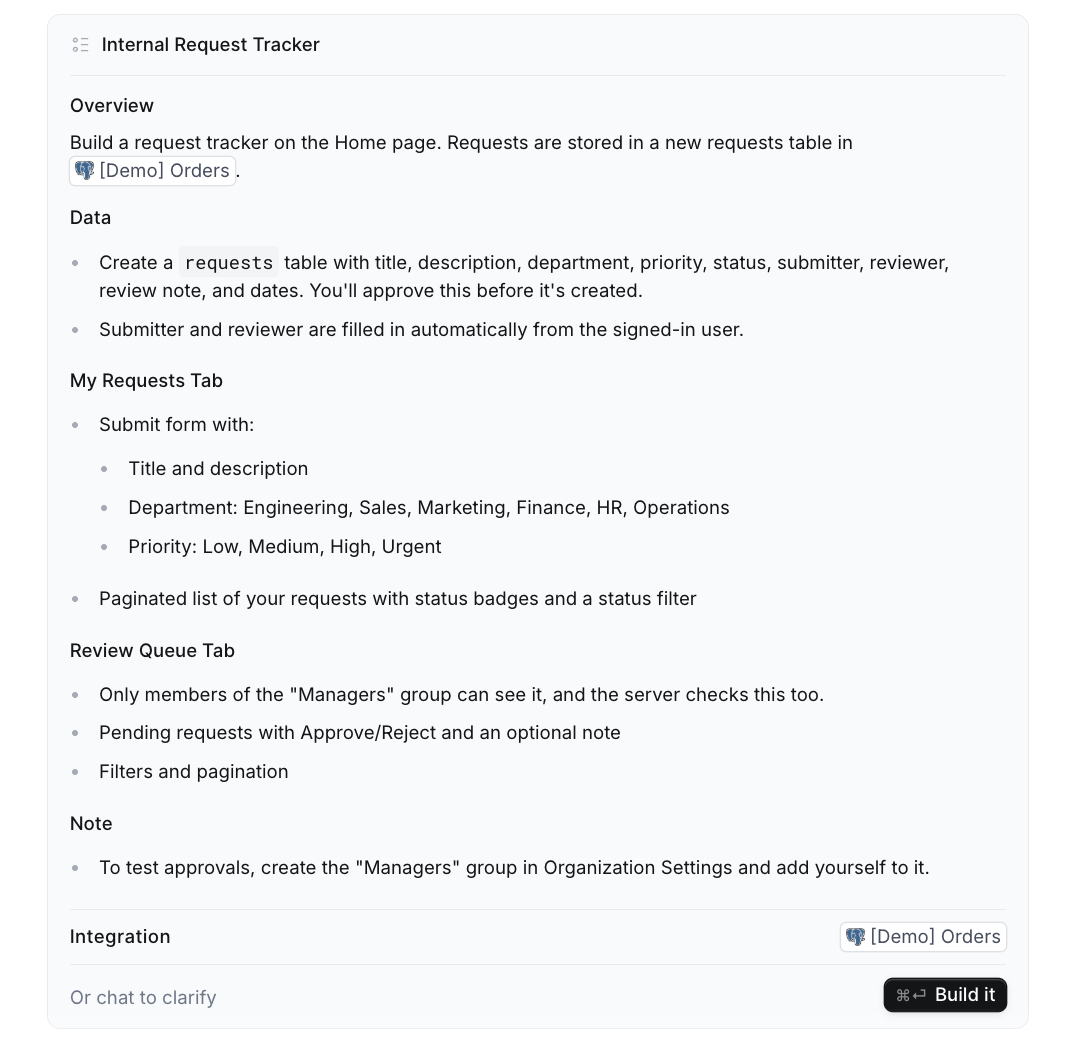
I described the request tracker to Clark. It inspected the connected database and returned a plan before building anything. The plan limited the Review Queue to members of a Managers group and said the server checks this too.
Step 2: See what the data owner allows.
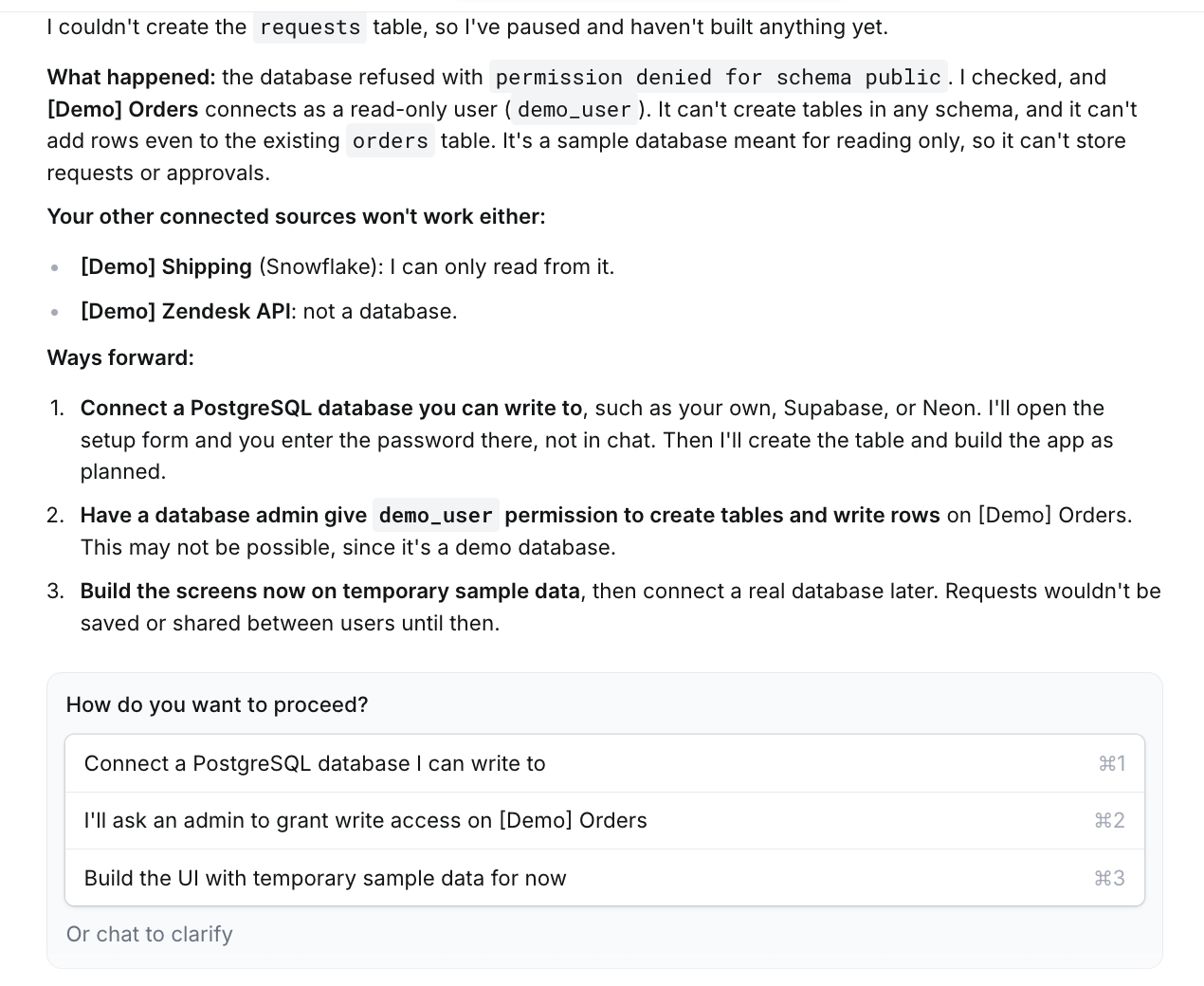
Clark checked the connected [Demo] Orders database and found that its user, demo_user, could not create tables or write rows. The database returned "permission denied for schema public," and Clark stopped and reported the block. The app could only do what the data owner allowed.
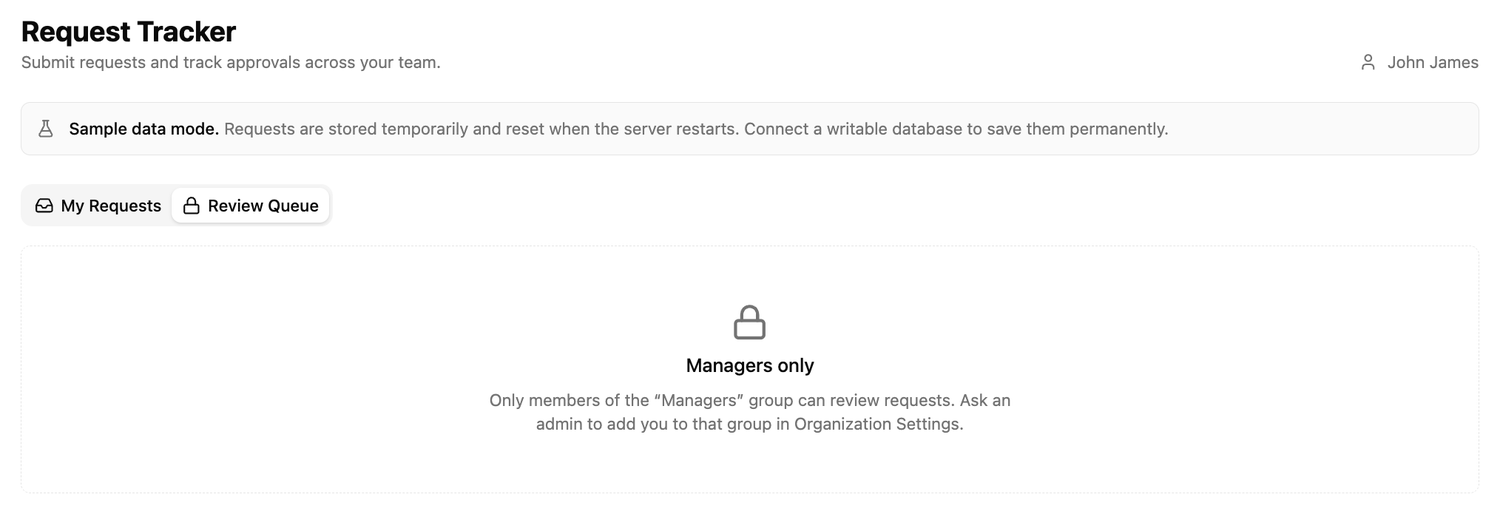
Step 3: Open the Review Queue before any group exists.
I built the demo on sample data and opened the Review Queue before creating a group. It showed a "Managers only" message that sent me to an admin.
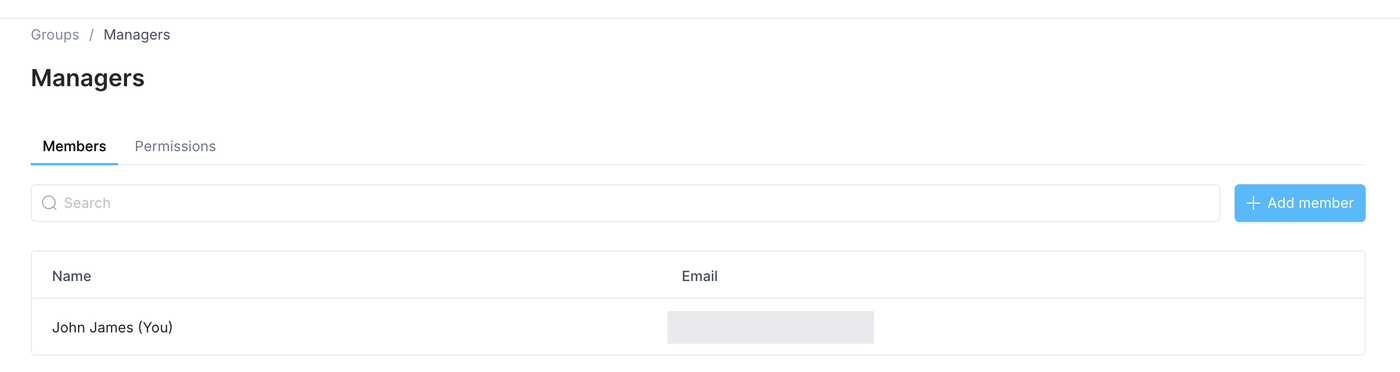
Step 4: Create the Managers group.
In Admin, the Groups page listed no groups at first. I created a group named Managers and added my account.
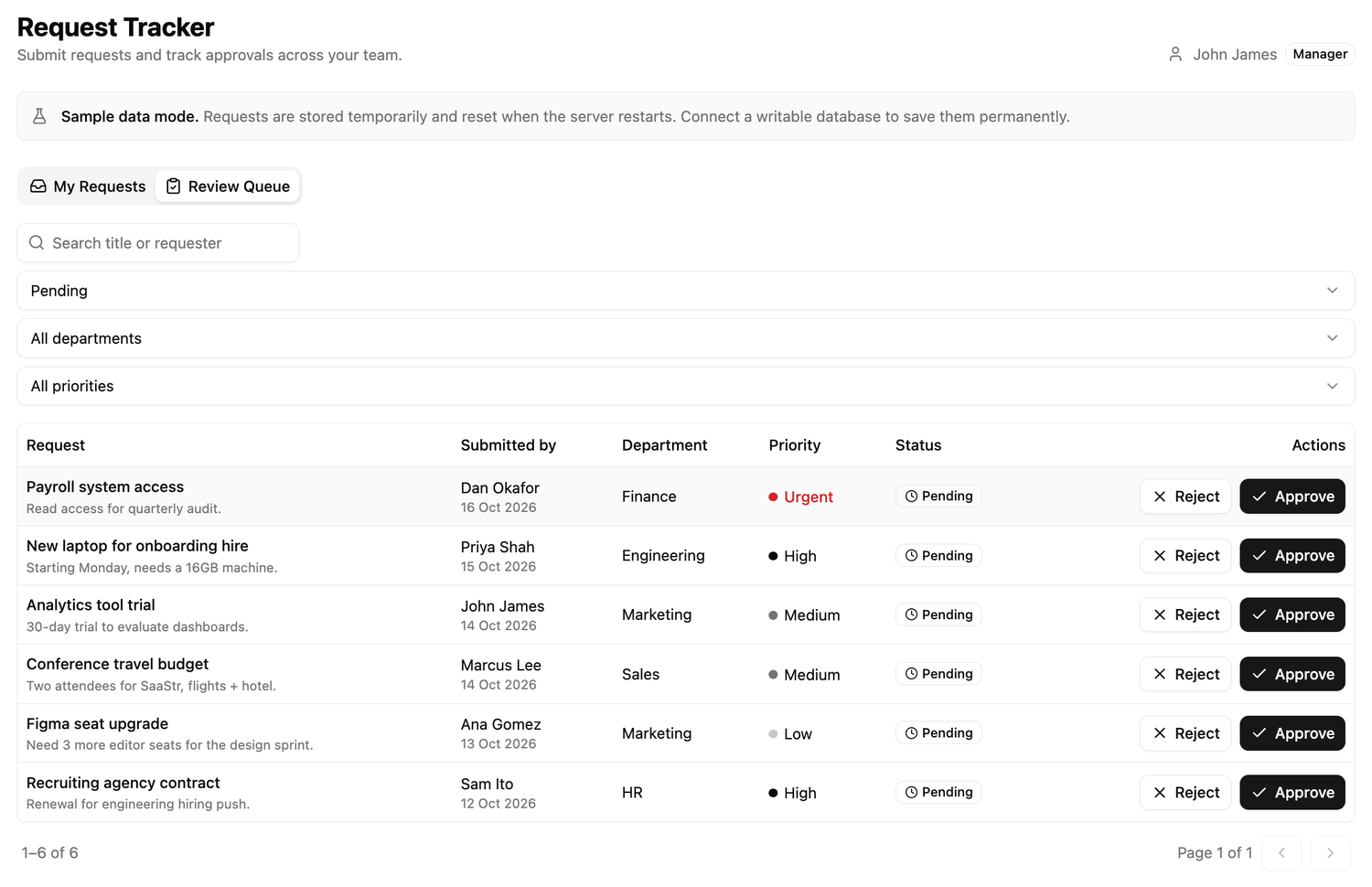
Step 5: Open the queue as a manager.
After I joined the group, a Manager badge appeared next to my name, and the queue opened with Approve and Reject buttons.
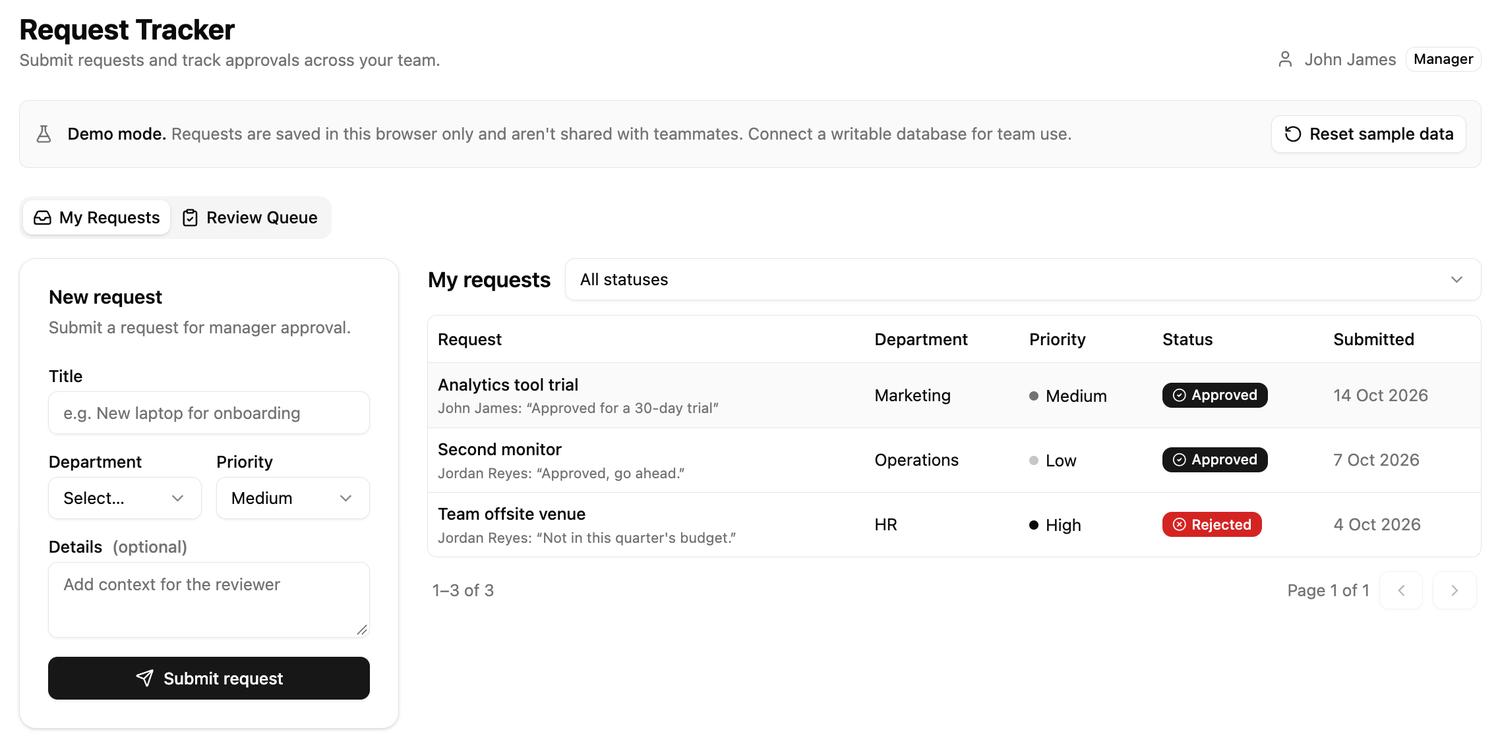
Step 6: Approve a request.
I approved a request, and the first build had a bug. The server accepted my approvals, but the next list still showed the request as Pending. Clark traced it to the demo's temporary server memory, which resets on every call, and I switched the demo to browser storage. The approval and my note then appeared under My Requests.
Step 7: Check the audit trail.
The Audit Logs page listed Clark's app updates and file creations under my name, with timestamps. Plan & Usage showed 13.37 Governed Agent Units used that day. My workspace ran on a proof-of-concept plan, so these tests say nothing about which paid plan includes each feature.
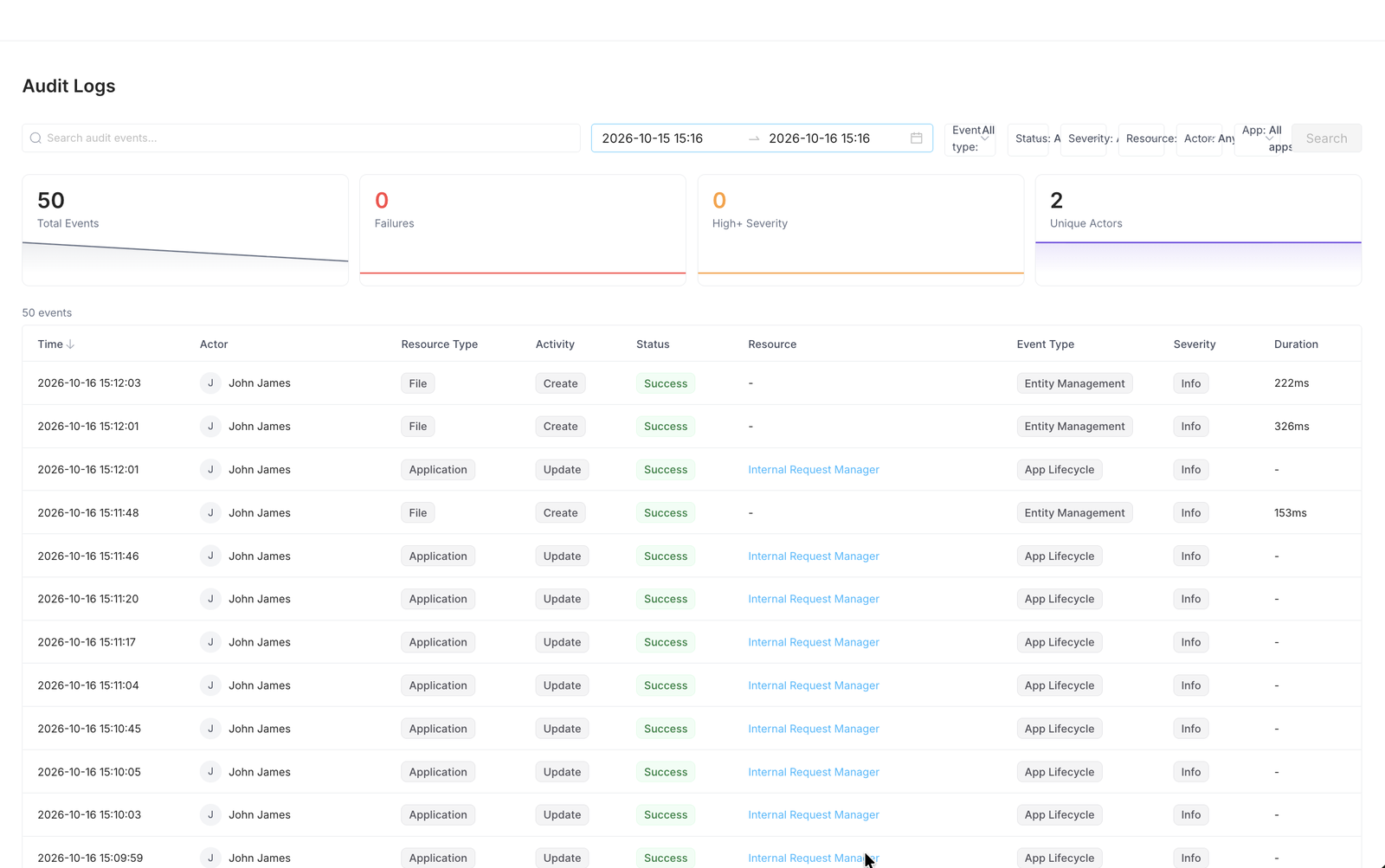
The hybrid split held. The admin and the data owner set the limits, and the app a builder created followed them. A team that wants shared approvals needs a writable database, which the sample data could not provide.
For a customer example, Matthews Real Estate lets business teams build internal apps while IT keeps central governance. Teams in four departments have built six apps that more than 800 agents use, and one of them cut offering memorandum turnaround from 3-5 days to about 12 hours.
Ryan Casey, Matthews' VP of Product Innovation, said: "We don't have any shadow IT work happening."
What each side gets:
- IT: Access rules set once and applied to the apps business teams build.
- Builders: A way to describe an app to Clark and refine it visually or in code.
- Compliance: Audit logs on Enterprise that record activity on the platform.
Start with the Introduction to Superblocks for an overview of how IT governs apps that business teams build on company data.
Or book a demo to see how Superblocks fits your AI governance model.
Frequently asked questions
What is AI model governance?
AI model governance is the practice of managing each machine learning model from training through retirement, covering validation, monitoring, and documentation. It works at a narrower level than the organization-wide models above. See our guide to ML model governance.
What are the four pillars of AI governance?
The four pillars of AI governance are accountability, transparency, fairness, and security and privacy, though sources frame them differently. BSI names data governance, model lifecycle management, risk and compliance, and monitoring and auditing.
What is the difference between centralized and federated AI governance?
The difference between centralized and federated AI governance is who holds authority. A centralized model gives one team control of policy and approvals, while a federated model gives business units responsibility under shared standards.
Which AI governance model is best?
No single AI governance model is best, because the right choice depends on company size, regulatory exposure, and who builds AI. AWS calls hybrid a fit for most enterprise organizations and says centralized works well in highly regulated industries.
What software helps enforce an AI governance model?
Superblocks helps enforce an AI governance model for AI-built internal apps, applying role-based access control and row-level permissions to what business teams build. AI governance platforms cover AI inventory and risk across the wider portfolio.
At Virgin Voyages, non-technical teams now build their own AI apps, with IT governance fully intact. The result: 15+ production apps, seven departments onboard, and zero dedicated frontend engineers.
At Matthews, a marketing manager with zero coding background built an app that auto-generates offering memorandums, cutting turnaround from days to hours. See how the brokerage is putting AI builders on every team, with full governance intact.


Stay tuned for updates
Get the latest Superblocks news and internal tooling market insights.
Request early access
Step 1 of 2
Request early access
Step 2 of 2

You’ve been added to the waitlist!
Book a demo to skip the waitlist
Thank you for your interest!
A member of our team will be in touch soon to schedule a demo.
production apps built
days to build them
semi-technical builders
traditional developers
high-impact solutions shipped
training to get builders productive
SQL experience required
See the full Virgin Voyages customer story, including the apps they built and how their teams use them.

"Those tools are great for proof of concept. But they don't connect well to existing enterprise data sources, and they don't have the governance guardrails that IT requires for production use."
Table of Contents


Multiple authors
Hardcoded Secrets: How to Find, Fix, and Prevent Them [2026]
Hardcoded secrets linger in Git history after you delete the line. Learn how to detect, rotate, and purge them, and catch new ones before they merge.