After two years of watching enterprise sprawl from Replit, Lovable, and Bolt, here are the 7 best low-code app platforms scored on the AI governance features they need in 2026. Each one earns its place for a different buyer.
7 best low-code app platforms for AI governance at a glance
The platforms below were ranked by how well they deliver the nine AI governance features that determine whether low-code AI scales safely or becomes the next shadow IT problem.
How I evaluated these low-code app platforms
I scored each platform across the nine AI governance features that consistently came up in conversations with 40+ enterprise IT and security leaders evaluating low-code platforms in 2025 and 2026.
The nine features used as the evaluation framework:
- Centralized RBAC with SSO and SCIM: who can build, edit, deploy, and access data.
- AI prompt and output guardrails: what the AI assistant is allowed to generate.
- BYO inference and data sovereignty: where prompts and data are processed.
- End-to-end audit logging: every build, query, change, and AI generation is recorded.
- Policy-as-code and design system enforcement: standards configured once, applied everywhere.
- App inventory and observability: visibility into every app.
- Compliance framework alignment: SOC 2, HIPAA, GDPR, EU AI Act readiness.
- Git integration and change management: source of truth for AI-generated apps.
- Code export and portability: what happens when you want to leave.
Each platform was tested through demos, trial environments, customer interviews, and analyst write-ups.
Across the seven evaluations, one divide kept getting sharper: AI-native platforms and platforms that bolted AI onto pre-AI architectures are solving meaningfully different problems.
1. Retool for mature internal tools governance
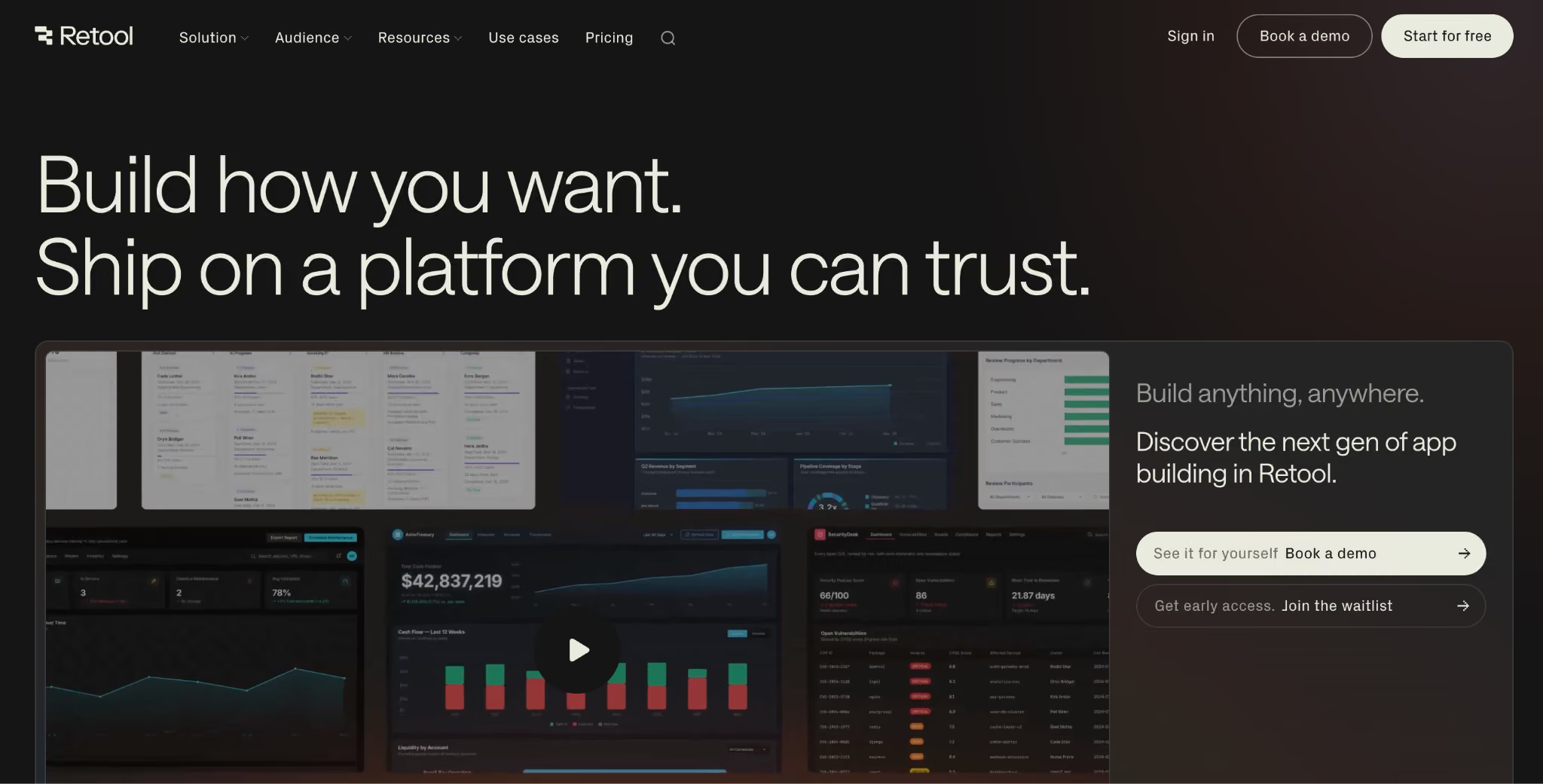
What it is: Retool is the longest-running internal tools platform in the low-code AI category, with a mature governance layer and AI features added over the past two years.
Best for: Established engineering teams that already use Retool for internal tools and want to extend AI app building under the same governance umbrella.
Retool has the strongest brand awareness in the low-code internal tools space and a proven track record at scale with companies such as DoorDash, Brex, and Lyft.
The governance story is strong for traditional low-code use cases. AI governance specifically is newer territory, and the AI features tend to feel layered on top of a pre-AI architecture.
AI governance feature breakdown
- RBAC/SSO/SCIM: Strong, with granular permissions and identity provider integration.
- AI guardrails: Retool AI generates code, with limited centralized policy enforcement today.
- BYO inference: Limited, primarily uses Retool's hosted models.
- Audit logging: Detailed event logging across the platform.
- Policy-as-code: Standards are typically enforced through review workflows instead of declarative policy.
- App inventory: Available through admin UI, less suited for external querying.
- Compliance: SOC 2 Type II, HIPAA, GDPR.
- Git integration: Available, with Retool's proprietary version control as the default.
- Code export: Limited, apps live inside Retool's runtime.
Pros
- ✅ Most mature internal tools governance among the AI-era platforms tested.
- ✅ Strong RBAC and audit logging meet SOC 2 and HIPAA baseline requirements.
- ✅ Large component library and template gallery shorten build time.
Cons
- ❌ AI features feel retrofitted rather than built natively.
- ❌ Limited code export creates lock-in concerns for governance-sensitive buyers.
- ❌ BYO inference is more limited than the AI-native platforms tested.
What users say
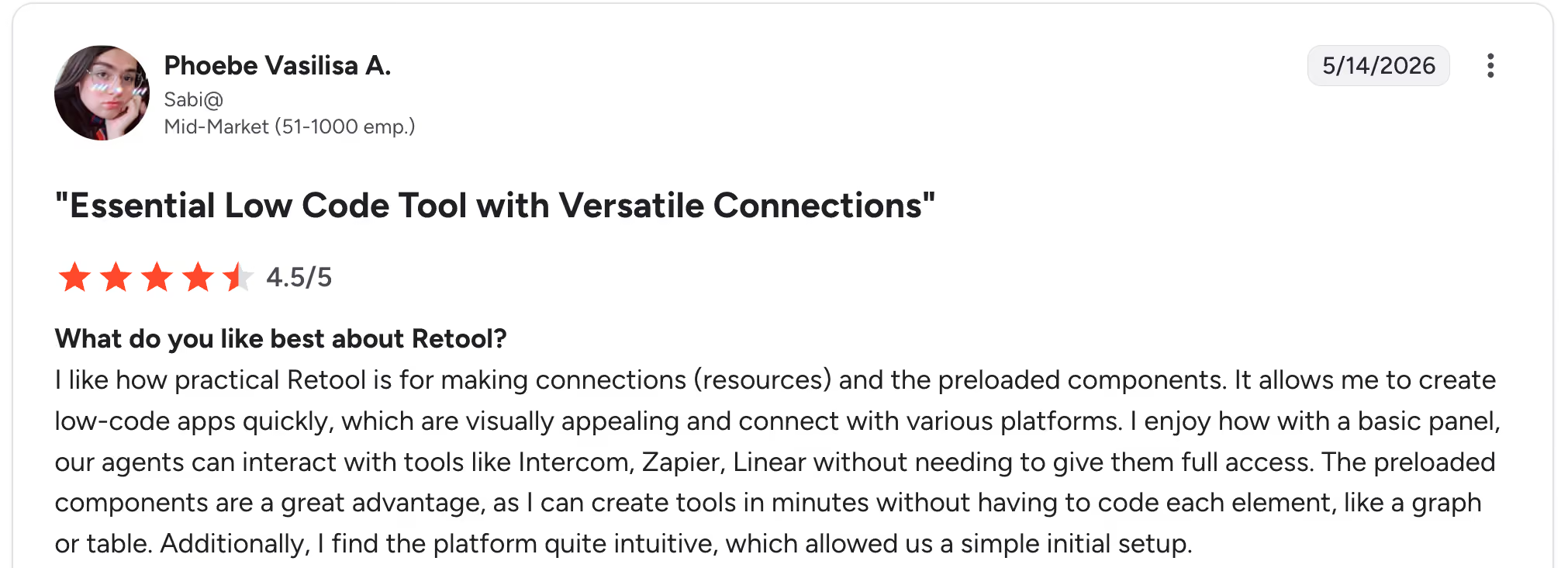
"I like how practical Retool is for making connections (resources) and the preloaded components. It allows me to create low-code apps quickly, which are visually appealing and connect with various platforms." Phoebe Vasilisa A, G2

"One downside of Retool is that it can feel limiting when you’re trying to handle more complex workflows or bulk product uploads, and it sometimes ends up requiring extra manual steps." Zizo L, G2
Pricing
Retool has a free tier for up to 5 users; Team at $12/builder + $7/internal user per month; and Business at $65/builder + $18/internal user per month, with Enterprise custom pricing. See Retool pricing for current plans.
Bottom line
If you're already on Retool and your AI ambitions are modest, the existing governance layer covers most of your needs.
If AI app building is the primary goal, evaluate Superblocks or Mendix against Retool on the AI-specific features.
2. Superblocks for AI-native enterprise governance
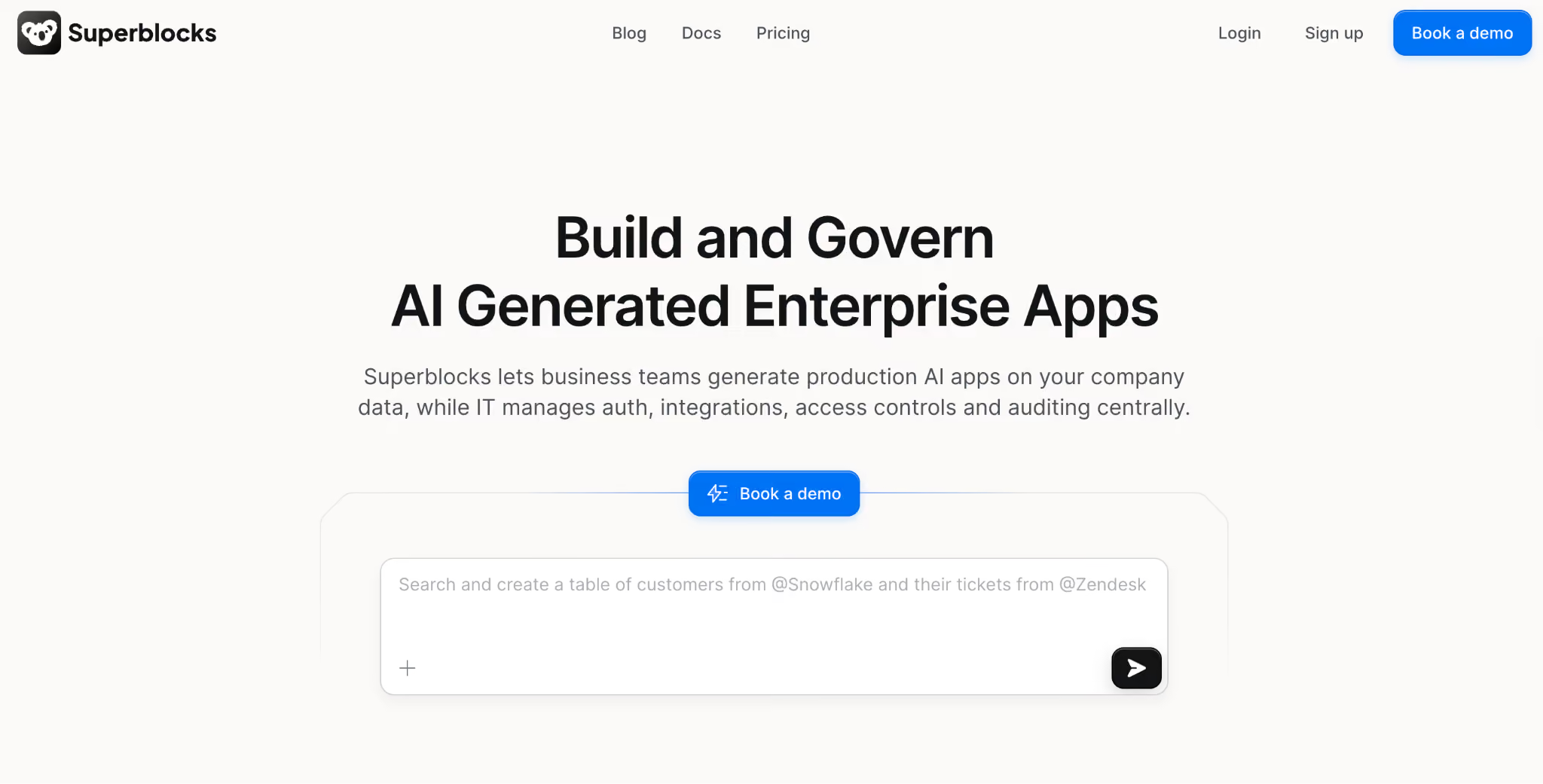
What it is: Superblocks is a governed enterprise vibe coding platform where business teams build apps with AI, while IT configures the guardrails once.
Best for: Enterprise IT and security leaders dealing with AI app sprawl from consumer vibe coding tools, looking for a governed home with all 9 AI governance features built in.
Every app, builder, and integration becomes queryable through the Superblocks MCP, giving security teams a system of record for vibe-coded apps. Customers, including VetSource and NHS Royal Surrey, use the platform for governed AI app development.
Superblocks lands at #1 because every governance capability in the framework above exists as a first-class platform feature, not a paid add-on or a roadmap promise.
The strongest signal in testing was how Clark AI generations run through deterministic guardrails (security, design, integration) before producing code. That is the difference between probabilistic and enforceable governance.
AI governance feature breakdown
- RBAC/SSO/SCIM: Native SSO and SCIM with permissions at the integration, environment, and resource level.
- AI guardrails: Clark AI applies pre-configured policies to every generation.
- BYO inference: Route Clark through your own Snowflake, Databricks, or Azure OpenAI deployment.
- Audit logging: Every build, query, integration access, package install, and AI generation logged.
- Policy-as-code: Centralized design systems and integration patterns enforced platform-wide.
- App inventory: Superblocks MCP exposes apps, builders, integrations, and audit events as a queryable system of record.
- Compliance: SOC 2 Type II, HIPAA, ISO 27001, GDPR.
- Git integration: Native GitHub and GitLab with pull request workflows.
- Code export: Enterprise React mode exports apps as standard React code.
Pros
- ✅ Every one of the 9 governance features is built into the platform as a native capability, not added on top of older architecture.
- ✅ The MCP gives security teams a queryable inventory of vibe-coded apps across the org.
- ✅ Code export removes the vendor lock-in objection that blocks most low-code deals.
Cons
- ❌ Newer in the market than Mendix or OutSystems, so analyst coverage is thinner.
- ❌ No built-in database means you bring your own data sources from day one.
- ❌ The component library and template gallery are smaller than Retool's today.
What users say
"Front-end components are feature-rich and are easily customizable, significantly reducing dev time for simple applications. Great customer support. Very easy for a beginner to get started." Oscar C, G2

"The built AI agent in the IDE can at times be a bit too intrusive, and an accidental keystroke to accept suggestions can lead to some unwanted code." Verified User, G2
Pricing
Superblocks offers a 14-day free trial, then Teams at $125 per AI Builder per month (monthly-billed). Enterprise pricing is custom. See Superblocks pricing for current plans.
Bottom line
If your AI governance problem is the wave of AI-built internal apps across your org, Superblocks is a strong fit for an end-to-end answer.
For ML model governance or legacy app modernization, consider other options here paired with a dedicated tool.
3. Microsoft Power Apps for Microsoft-centric organizations
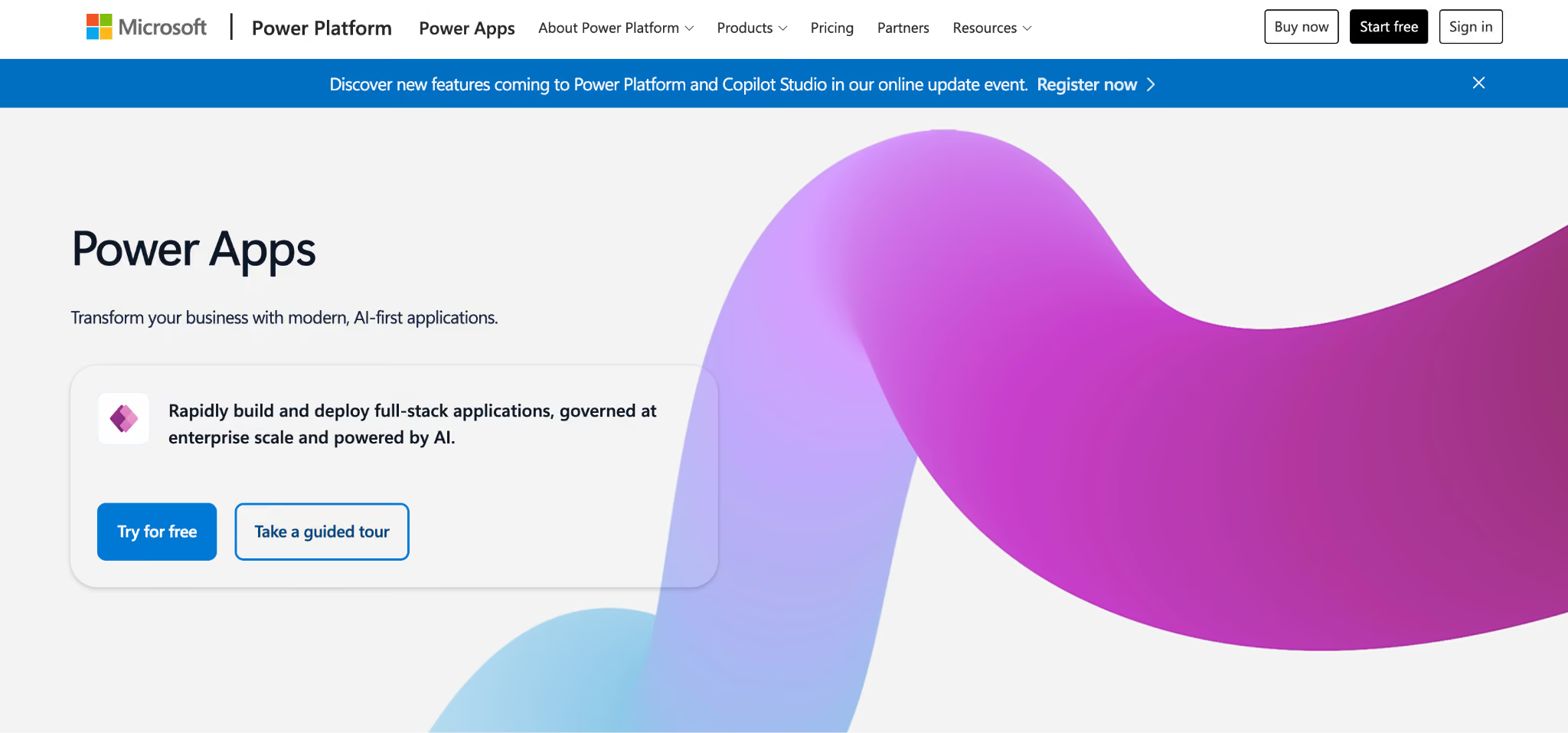
What it is: Microsoft Power Apps is a low-code application platform within the Microsoft Power Platform, with governance managed through the Power Platform admin center and AI capabilities enabled by Copilot.
Best for: Organizations already standardized on Microsoft 365 E5, Azure AD, and Purview that want low-code AI app building under existing Microsoft governance.
Power Apps has the largest installed base of any low-code platform, which is both its strength and its constraint. The governance story is excellent inside the Microsoft ecosystem and limited outside it.
The integration with Microsoft Purview DSPM for AI for shadow AI detection and DLP for prompts is uniquely strong here, since both products ship from the same vendor.
AI governance feature breakdown
- RBAC/SSO/SCIM: Native Azure AD integration with environment-level DLP policies.
- AI guardrails: Copilot operates within Microsoft Responsible AI guardrails.
- BYO inference: Limited, uses Microsoft-hosted Azure OpenAI.
- Audit logging: Strong through Power Platform admin center and Purview.
- Policy-as-code: Environment policies, DLP policies, and CoE Starter Kit templates.
- App inventory: CoE Starter Kit provides app inventory and governance dashboards.
- Compliance: Inherits Microsoft's certifications (SOC 2, HIPAA, FedRAMP, GDPR).
- Git integration: Available through Power Platform Pipelines, with some limitations.
- Code export: No, apps are tied to the Power Platform runtime.
Pros
- ✅ Native integration with Microsoft 365, Azure AD, and Purview DSPM for AI runs deeper here than in any other platform tested.
- ✅ CoE Starter Kit provides templates and dashboards for low-code governance.
- ✅ Inherits Microsoft's compliance posture, which is hard to beat for regulated industries.
Cons
- ❌ Limited flexibility outside the Microsoft stack.
- ❌ No real code export means apps depend on the Power Platform runtime.
- ❌ Pro-code developers often find the platform restrictive.
What users say
"What I like best about Microsoft Power Apps is how quickly you can turn an idea into a working application without deep coding knowledge." Arkajit D, G2

"At times, it has loading issues. Also, whenever we update something in an automated flow, we then need to update and refresh it in the Power Apps connection, and republish the app again." Achu S, G2
Pricing
Microsoft retired the Per App plan in January 2026 for new non-CSP customers. Power Apps Premium is $20/user/month (billed annually), with a $12/user/month volume rate for 2,000+ seats.
Pay-As-You-Go is $10/active user/app/month via Azure. See the Power Apps pricing page for current plans.
Bottom line
If you're a Microsoft shop, Power Apps with Purview DSPM for AI is the path of least resistance.
If you operate across multiple clouds or need code portability, the lock-in here is significant.
4. Mendix for model-driven enterprise governance
What it is: Mendix is a model-driven, low-code enterprise platform owned by Siemens, with strong lifecycle governance and AI capabilities via Mendix AI Assist.
Best for: Large enterprises with model-driven development workflows, compliance teams that prefer formal governance frameworks, and Siemens or SAP environments.
Mendix has been a Gartner Magic Quadrant leader in low-code for years and brings a heavy enterprise architecture mindset to AI app development.
Governance here is structured and formal. The platform suits organizations that already think in terms of architecture boards, design authorities, and formal SDLC.
AI governance feature breakdown
- RBAC/SSO/SCIM: Strong, integrates with major identity providers and supports complex role hierarchies.
- AI guardrails: Mendix AI Assist generates within model-driven constraints.
- BYO inference: Available for some AI capabilities, varies by use case.
- Audit logging: Detailed, with exports to enterprise SIEM tools.
- Policy-as-code: Strong, design system governance and reusable components are core platform features.
- App inventory: Available through Mendix Control Center.
- Compliance: SOC 2, ISO 27001, HIPAA, GDPR, FedRAMP Moderate.
- Git integration: Available, with Mendix's model-merge approach.
- Code export: Limited, apps run in Mendix Runtime.
Pros
- ✅ Strongest formal governance framework among the platforms tested.
- ✅ Broadest compliance certifications of the platforms tested for regulated industries.
- ✅ Model-driven approach standardizes architecture across teams.
Cons
- ❌ Steep learning curve and significant onboarding investment.
- ❌ AI features are newer and less differentiated than the vibe coding platforms tested.
- ❌ Heavy platform play creates significant operational commitment.
What users say
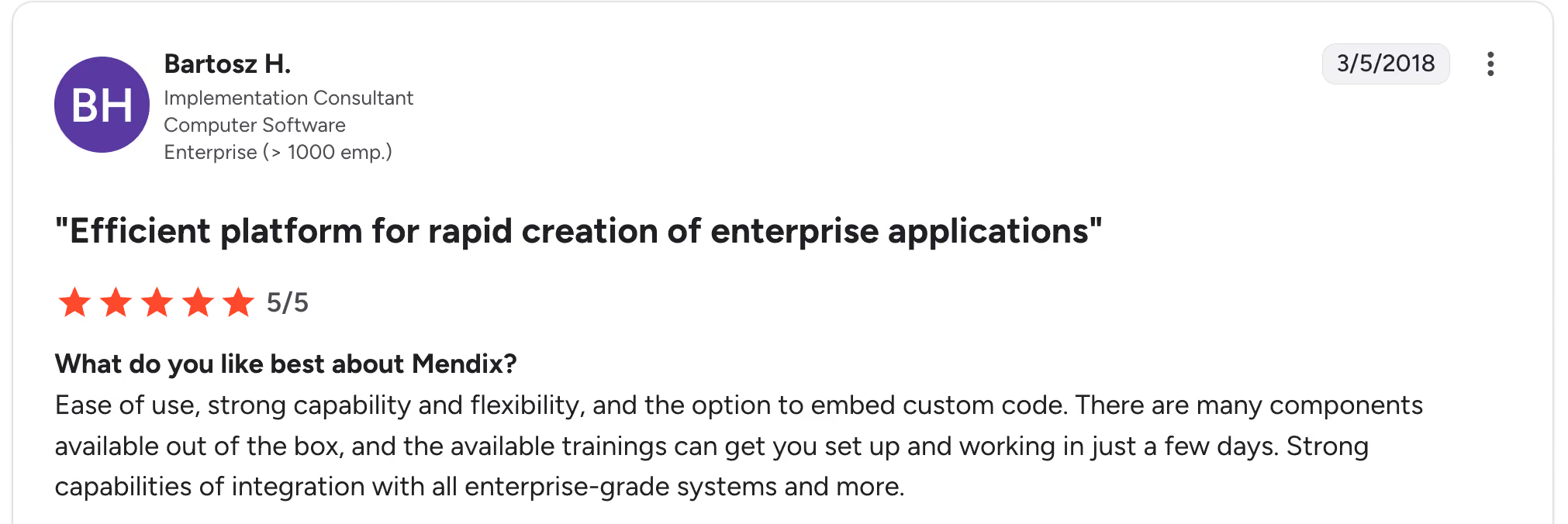
"Ease of use, strong capability and flexibility, and the option to embed custom code. Strong capabilities of integration with all enterprise-grade systems and more.” Bartosz H, G2

"I don't like the support ticket system in Mendix because it takes at least two weeks to get a reply. If they improve the ticket system, it will be very helpful for me." Krishnakumar S, G2
Pricing
Mendix Standard runs $1090/month, and Premium is a custom enterprise plan. See Mendix pricing for current plans.
Bottom line
If you have a large enterprise architecture function and need formal AI governance with deep compliance certifications, Mendix is a strong fit.
If you want speed and developer-friendly AI features, lighter platforms will move faster.
5. OutSystems for legacy enterprise modernization with AI
What it is: OutSystems is an enterprise low-code platform with deep AI capabilities through AI Mentor and Project Neo, focused on modernizing legacy enterprise systems.
Best for: Large enterprises with significant legacy application portfolios looking to modernize while adding AI capabilities under formal governance.
OutSystems has been a Gartner low-code leader for over a decade and has invested heavily in AI features over the past two years.
The governance story is mature for traditional enterprise app development. AI-specific governance is still catching up to the AI-native platforms.
AI governance feature breakdown
- RBAC/SSO/SCIM: Strong enterprise identity integration with environment-level permissions.
- AI guardrails: AI Mentor and Project Neo operate within OutSystems best practices.
- BYO inference: Limited, primarily uses OutSystems-hosted AI services.
- Audit logging: Strong through the LifeTime management console.
- Policy-as-code: Available through Architecture Dashboard and TrueChange.
- App inventory: LifeTime provides portfolio-wide visibility.
- Compliance: SOC 2, ISO 27001, HIPAA, GDPR.
- Git integration: Available, pairs with OutSystems' proprietary version control.
- Code export: Limited, apps run in OutSystems Cloud or on-prem runtime.
Pros
- ✅ Deep enterprise governance and lifecycle management.
- ✅ Strong fit for modernizing legacy systems with AI.
- ✅ Mature DevOps workflows through LifeTime.
Cons
- ❌ AI features are still maturing compared with the AI-native platforms tested.
- ❌ Limited code portability creates lock-in concerns.
- ❌ High price point and longer time-to-value than the lighter platforms tested.
What users say
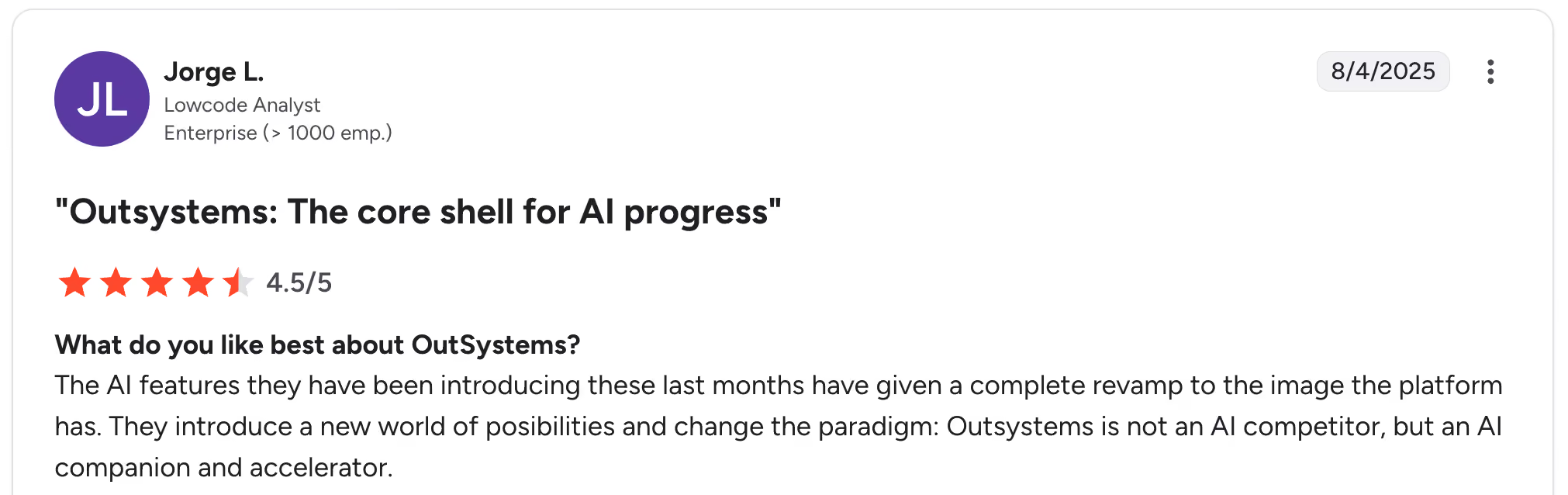
"The AI features they have been introducing these last months have given a complete revamp to the image the platform has. They introduce a new world of possibilities and change the paradigm." Jorge L, G2

"Debugging complex issues can sometimes be less transparent compared to traditional coding, especially when abstraction hides underlying behavior." Hiren R, G2
Pricing
OutSystems offers a free Evaluation Edition (10-day trial, up to 100 end users). Developer Cloud (ODC) and Enterprise plans are quote-only via OutSystems sales. See the OutSystems pricing page for current plans.
Bottom line
If you're modernizing legacy enterprise systems and need a heavy platform with mature governance, OutSystems remains a strong choice.
If AI app building is the primary goal, AI-native platforms move faster on the features that matter.
6. Appsmith for open-source flexibility
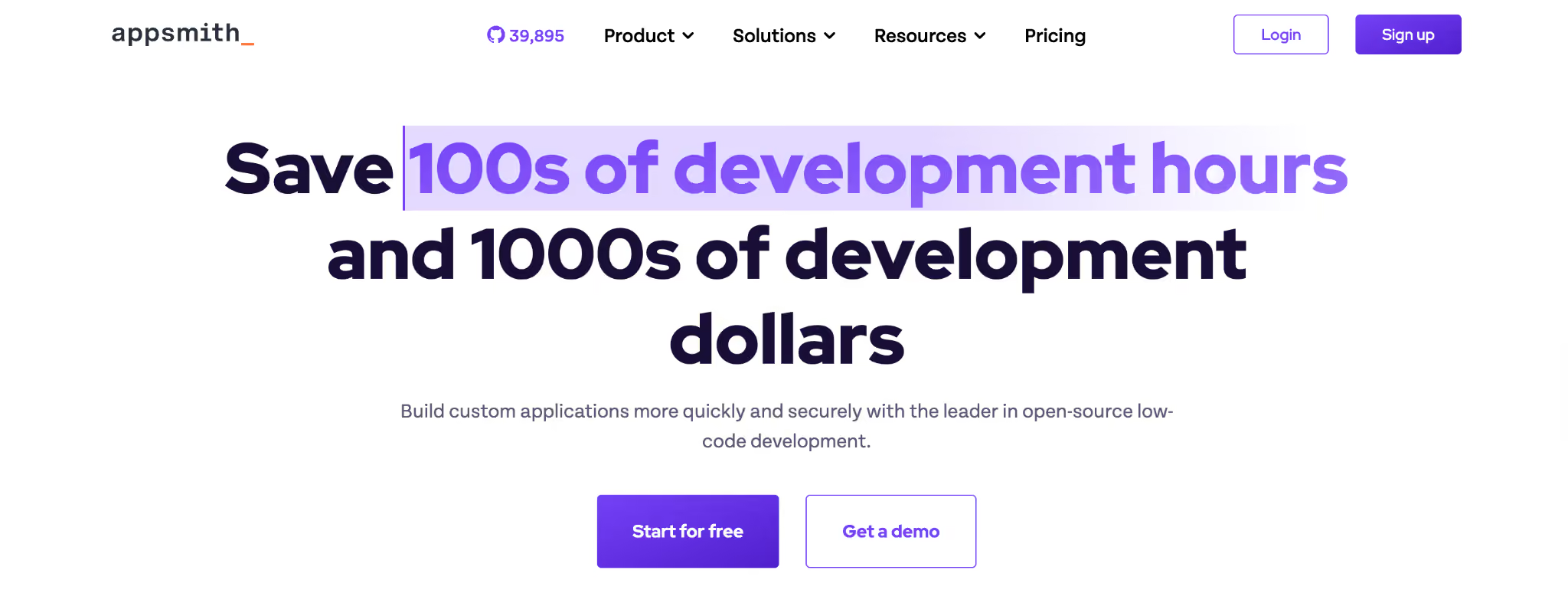
What it is: Appsmith is an open-source low-code platform with self-hosted and cloud options, plus AI capabilities through Appsmith AI for app generation.
Best for: Teams that want low-code AI app building with the flexibility of open source, including the option to self-host and audit the platform itself.
Appsmith's biggest governance advantage is structural: you can audit the platform code, self-host inside your network, and avoid most vendor lock-in concerns by design.
The trade-off is that some governance capabilities, such as SCIM, advanced audit logging, and certain AI features, are available in the paid tier.
AI governance feature breakdown
- RBAC/SSO/SCIM: SSO in open source, SCIM in paid Business and Enterprise tiers.
- AI guardrails: Appsmith AI is newer and has less centralized policy enforcement than enterprise platforms.
- BYO inference: Self-hosted deployment supports BYO inference patterns.
- Audit logging: Available in Business and Enterprise tiers.
- Policy-as-code: Limited, relies on Git-based change management for enforcement.
- App inventory: Available through Workspaces, less suited for cross-org querying.
- Compliance: SOC 2 Type II for cloud, self-hosted compliance is your responsibility.
- Git integration: Strong native Git workflow for change management.
- Code export: Apps are open-source-friendly and self-hostable.
Pros
- ✅ Open-source license removes most vendor lock-in concerns.
- ✅ Self-hosted option lets you audit and control the platform itself.
- ✅ Active community and transparent roadmap.
Cons
- ❌ Enterprise governance features like SCIM and advanced audit logs require paid tiers.
- ❌ AI capabilities lag the AI-native platforms tested.
- ❌ Self-hosting governance overhead is your problem, not the vendor's.
What users say
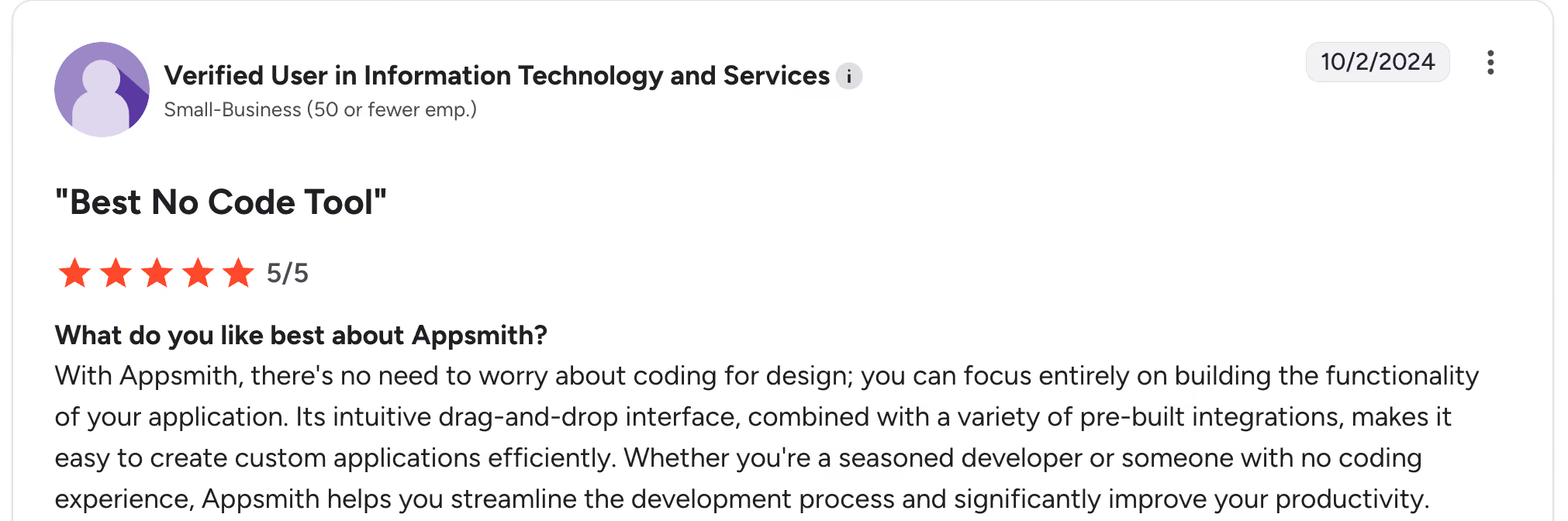
"With Appsmith, there's no need to worry about coding for design; you can focus entirely on building the functionality of your application." Verified User, G2

"Another challenge is positioning widgets exactly in the middle; arranging objects in a grid layout can be tricky." Carlos S, G2
Pricing
Appsmith has a free open-source tier, Business at $15/user/month (up to 99 users), and Enterprise starting at $2,500/month for 100 users. See Appsmith pricing for current plans.
Bottom line
If you need an open-source low-code option with self-hosting flexibility, Appsmith is the clear pick.
If you want AI-native governance out of the box, commercial AI-native platforms move faster on the features that matter specifically for AI.
7. ServiceNow App Engine for IT teams already on ServiceNow
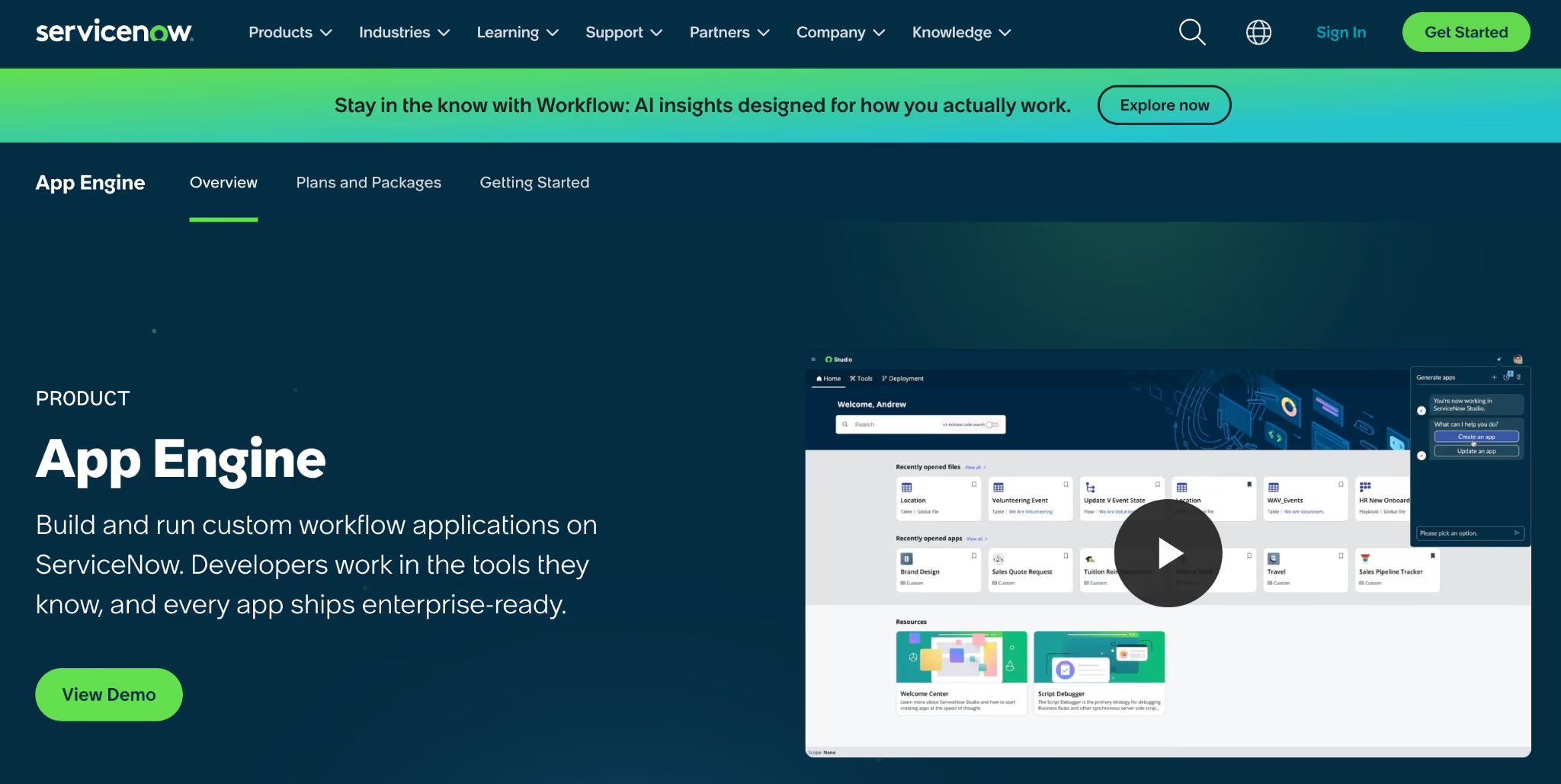
What it is: ServiceNow App Engine is the low-code app development capability inside the ServiceNow platform, with Now Assist providing AI app building tied into ITSM, ITOM, and GRC modules.
Best for: IT teams that already run ServiceNow for IT service management and want low-code AI apps under the same governance and identity model.
App Engine has the unique advantage of being built into the same platform that already governs your IT workflows. AI governance benefits from ServiceNow's existing ITSM, change management, and GRC capabilities.
The constraint is also obvious. If you're not on ServiceNow, the platform doesn't make economic sense as a standalone low-code play.
AI governance feature breakdown
- RBAC/SSO/SCIM: Strong, inherits ServiceNow's enterprise identity and access controls.
- AI guardrails: Now Assist applies ServiceNow's responsible AI framework.
- BYO inference: Available through Now Assist BYO LLM capabilities.
- Audit logging: Strong, ties into ServiceNow's audit framework.
- Policy-as-code: Available through ServiceNow flow designer and policy engines.
- App inventory: Strong through ServiceNow CMDB integration.
- Compliance: SOC 2, FedRAMP High, HIPAA, ISO 27001, multiple regional certifications.
- Git integration: Available through Studio source control.
- Code export: Limited, apps live inside the ServiceNow platform.
Pros
- ✅ Strongest integration with ITSM, change management, and GRC workflows among the platforms tested.
- ✅ Broadest compliance breadth of the platforms tested through ServiceNow inheritance.
- ✅ CMDB integration gives unique app-to-infrastructure lineage.
Cons
- ❌ Platform pricing only makes sense if you're already a ServiceNow customer.
- ❌ Code lock-in to the ServiceNow platform.
- ❌ The developer experience is less appealing than on the AI-native platforms tested.
What users say
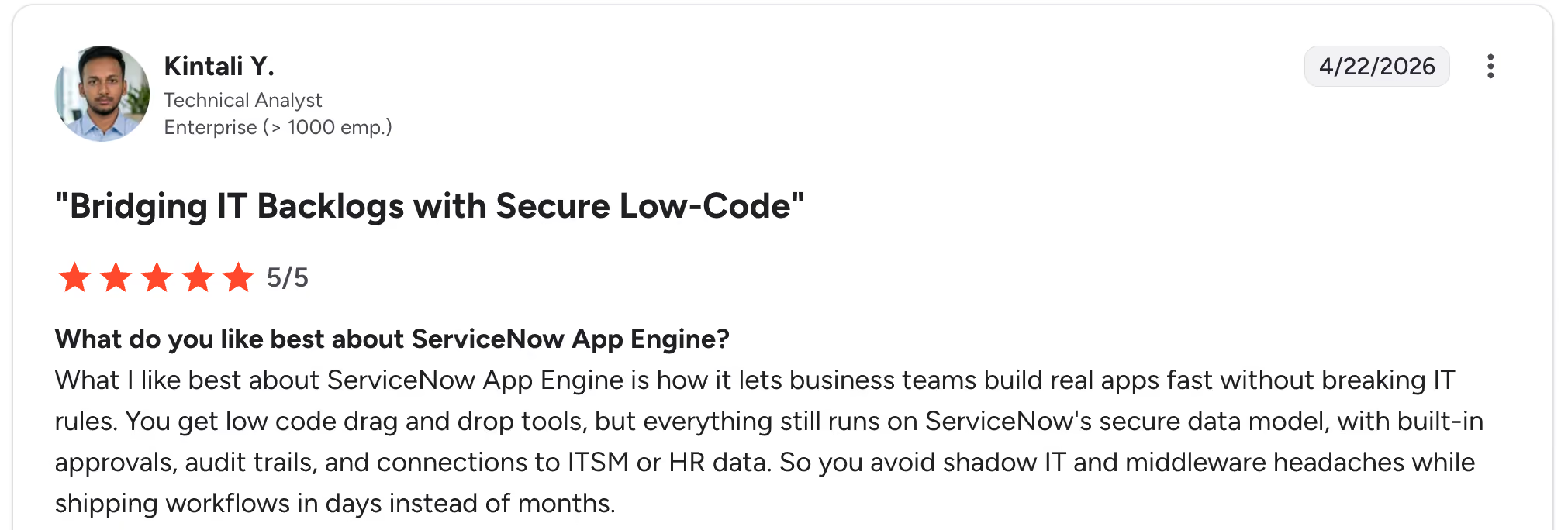
"What I like best about ServiceNow App Engine is how it lets business teams build real apps fast without breaking IT rules. You get low-code drag-and-drop tools, but everything still runs on ServiceNow's secure data model, with built-in approvals, audit trails, and connections to ITSM or HR data." Kintali Y, G2

"It does have some limitations, such as restricted UI customization and a steep learning curve when it comes to handling complex workflows and debugging." Paramesh B, G2
Pricing
ServiceNow does not publish App Engine pricing publicly. See the ServiceNow App Engine pricing page to contact sales.
Bottom line
If ServiceNow is already your IT system of record, App Engine is the obvious low-code add-on. If you're choosing a low-code platform without an existing ServiceNow footprint, look elsewhere first.
Which low-code app platform should you choose?
Most enterprises don't pick one platform forever. The pick depends on where AI governance pressure is highest and which existing investments you want to extend.
Choose Superblocks if you:
- Are seeing AI app sprawl from consumer vibe coding tools and need a governed alternative.
- Want all 9 AI governance features as first-class capabilities, not roadmap items.
- Need code export and BYO inference for data sovereignty.
Choose Retool if you:
- Already run Retool for internal tools and want incremental AI features.
- Need the most mature traditional low-code governance available.
- Value a large component library and template gallery.
Choose Microsoft Power Apps if you:
- Are a Microsoft 365 E5 shop wanting governance through Purview DSPM for AI.
- Need the broadest compliance certification footprint.
- Don't need significant integration outside the Microsoft ecosystem.
Choose Mendix if you:
- Have a large enterprise architecture function and prefer formal governance.
- Need the deepest compliance certifications in the category.
- Can invest in significant onboarding and architecture planning.
Choose OutSystems if you:
- Are modernizing legacy enterprise systems alongside AI app building.
- Need mature DevOps and lifecycle management.
- Have a budget for a heavy platform play.
Choose Appsmith if you:
- Want open-source flexibility and self-hosted control.
- Have the engineering capacity to operate the platform yourselves.
- Don't need the deepest enterprise governance features out of the box.
Choose ServiceNow App Engine if you:
- Already run ServiceNow and want low-code under the same governance.
- Need tight integration with ITSM, change management, and GRC.
- Have a ServiceNow-led IT strategy already in place.
Final verdict
The 7 platforms above cover most of the AI governance picture, and the right pick depends on where your AI app pressure is loudest today.
If you're starting fresh and AI-native governance is the primary requirement, Superblocks is the strongest pick.
If you have heavy existing investment in Microsoft, ServiceNow, or Mendix, extending those platforms is usually the more pragmatic move.
The honest answer for most large enterprises is two platforms running in parallel: an AI-native option for vibe coding sprawl and an existing enterprise platform for legacy workloads.
For a quick look at how Superblocks handles AI governance in practice, see our Quickstart Guide, or book a demo to test it with your own stack.
Frequently asked questions
What are the most important AI governance features in low-code app platforms?
The highest-priority AI governance features for low-code app platforms are centralized RBAC, AI guardrails, BYO inference, and audit logging. Beyond those, mature platforms also ship policy-as-code, app inventory, compliance alignment, Git integration, and code export.
How is AI governance different from traditional low-code governance?
AI governance differs from traditional low-code governance by adding controls over what the AI is allowed to generate, where AI inference occurs, what data the AI sees during generation, and how AI-generated code is reviewed before it reaches production.
Which low-code app platform has the best AI governance features?
The low-code app platform with the most AI governance features as first-class capabilities is Superblocks. Mendix offers the broadest range of formal compliance certifications, and Microsoft Power Apps integrates most deeply with Purview DSPM for AI.
Do open-source low-code app platforms support AI governance features?
Yes, open-source low-code app platforms like Appsmith support several AI governance features (Git integration, self-hosting, basic SSO). Enterprise capabilities like SCIM, advanced audit logging, and AI policy enforcement typically require paid commercial tiers.
How much do AI-governed low-code app platforms cost?
AI-governed low-code app platform costs range from free open-source tiers (Appsmith) to custom enterprise pricing. Per-user plans tested land at $12 to $125 per user per month, while enterprise platforms like Mendix start at $1090/month and OutSystems is quote-only.
At Virgin Voyages, non-technical teams now build their own AI apps, with IT governance fully intact. The result: 15+ production apps, seven departments onboard, and zero dedicated frontend engineers.
At Matthews, a marketing manager with zero coding background built an app that auto-generates offering memorandums, cutting turnaround from days to hours. See how the brokerage is putting AI builders on every team, with full governance intact.


Stay tuned for updates
Get the latest Superblocks news and internal tooling market insights.
Request early access
Step 1 of 2
Request early access
Step 2 of 2

You’ve been added to the waitlist!
Book a demo to skip the waitlist
Thank you for your interest!
A member of our team will be in touch soon to schedule a demo.
production apps built
days to build them
semi-technical builders
traditional developers
high-impact solutions shipped
training to get builders productive
SQL experience required
See the full Virgin Voyages customer story, including the apps they built and how their teams use them.

"Those tools are great for proof of concept. But they don't connect well to existing enterprise data sources, and they don't have the governance guardrails that IT requires for production use."
Table of Contents
.png)

Multiple authors
Insurance Legacy System Transformation: 2026 Guide
Insurance legacy system transformation doesn’t always require a full rebuild. Learn how insurers extend core systems with automation and orchestration.