
AI agents now take autonomous actions across enterprise systems, creating a monitoring gap that traditional governance tools struggle to cover. Here are the 9 best AI agent governance platforms in 2026, compared across features, pricing, and use-case fit.
9 best AI agent governance platforms: quick comparison
The table below summarizes how the platforms compare on the dimensions that matter most when governing autonomous agents at enterprise scale.
How I researched these AI agent governance platforms
I reviewed each platform's product documentation, customer case studies, and verified user reviews on G2 and Gartner Peer Insights. For platforms with public product walkthroughs or webinars, I watched the demo to validate the feature claims.
The evaluation criteria covered:
- Agent discovery: whether the platform finds every agent running in your environment, including shadow agents in SaaS tools.
- Runtime guardrails: how well the platform enforces policies on agent actions at execution time, beyond pre-deployment.
- Observability: the depth of monitoring, logging, and alerting on agent behavior.
- Compliance coverage: out-of-the-box mappings to EU AI Act, NIST AI RMF, ISO 42001, and other frameworks.
- Integration breadth: how well the platform connects to common AI infrastructure (AWS Bedrock, Vertex AI, Azure OpenAI, LangChain, OpenAI Agents).
This research approach helped me see which platforms hold up under real enterprise requirements versus which look strong only in marketing.
1. Fiddler AI: Best for AI observability with audit-grade governance
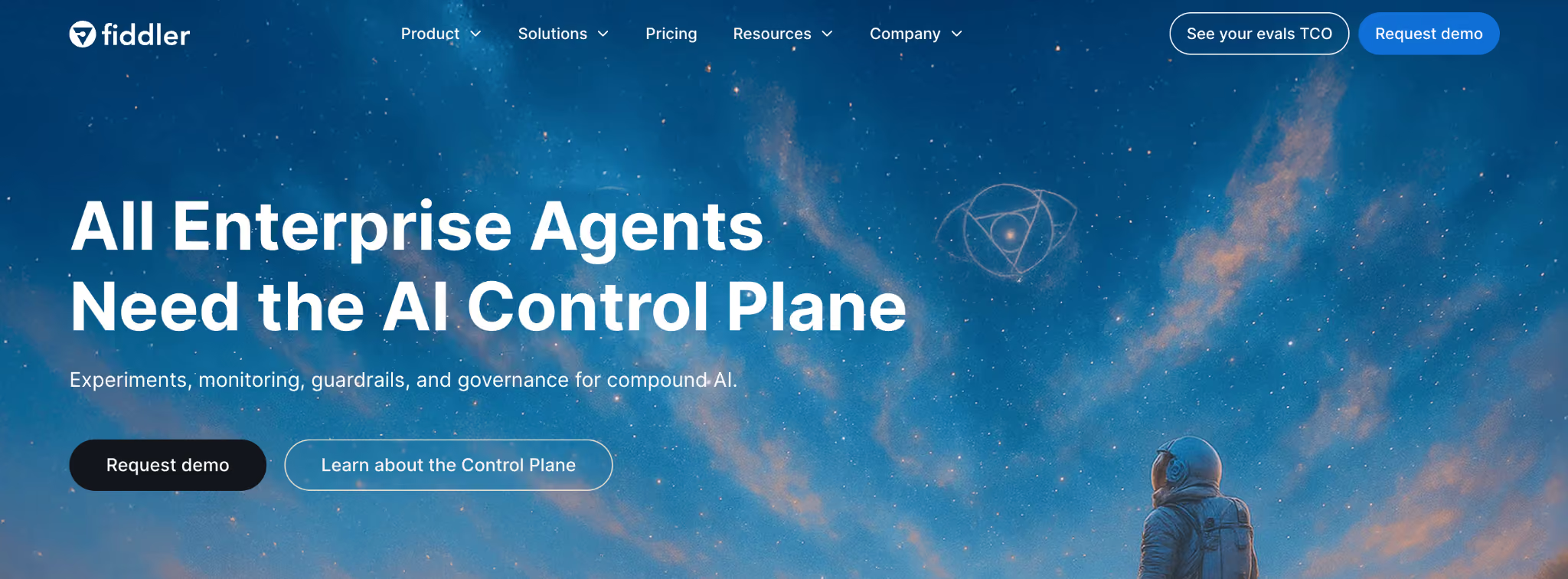
What it does: Fiddler AI is an enterprise AI observability and security platform that provides centralized governance for AI agents and predictive models, with audit-grade evidence trails for regulated industries.
Best for: Enterprises in regulated industries (financial services, healthcare) that need observability across AI agents alongside compliance-grade audit trails.
Fiddler's strength is observability depth. The platform records every agent's behavior, actions, and decisions to generate audit evidence aligned with frameworks such as GDPR, HIPAA, NAIC, and SR 11-7.
The Trust Service adds runtime guardrails on top of monitoring, closing the gap between detecting issues and preventing them.
Key features
- Trust Service runtime guardrails: Enforce policies and approval workflows on AI agents, with real-time alerts when behavior deviates from acceptable patterns.
- Audit-grade evidence trails: Records every agent action and decision for evidence aligned with GDPR, HIPAA, NAIC, SR 11-7, and other regulatory frameworks.
- Multi-agent observability: Visibility into agent workflows, behaviors, and decision paths across multi-agent applications, including inter-agent trust scoring.
Pros and cons
Pros:
- ✅ Mature platform with deep observability and explainability features.
- ✅ Strong fit for regulated industries with rigorous audit requirements.
- ✅ Trust Service adds enforcement on top of observability, unusual in this category.
Cons:
- ❌ Roots in model monitoring mean agent-native discovery is less mature than ADG-first platforms.
- ❌ Enterprise pricing is opaque (contact sales).
What users say
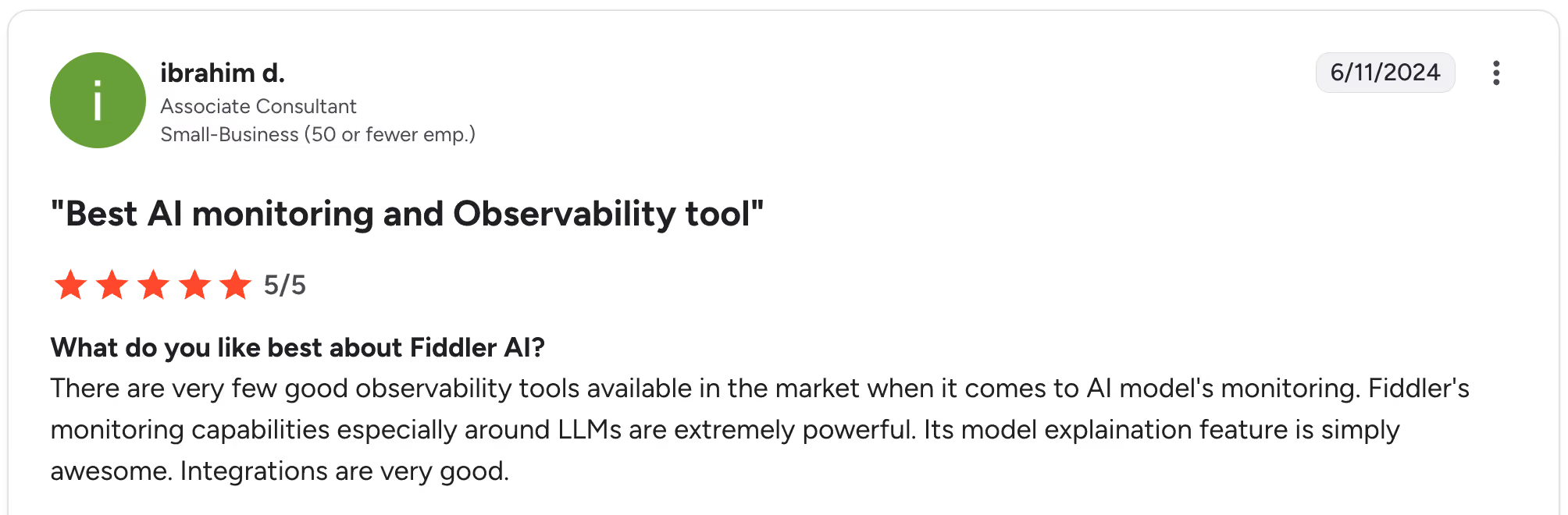
“There are very few good observability tools available in the market when it comes to AI models' monitoring. Fiddler's monitoring capabilities, especially around LLMs, are extremely powerful.” Ibrahim D, G2

“I wish there were a free version with a subset of features.” Verified User, G2.
Pricing
Fiddler AI uses custom enterprise pricing based on the number of AI systems and the deployment model. Contact sales via the Fiddler AI website to request a quote.
Bottom line
I'd recommend Fiddler to regulated enterprises that already run production AI and need audit-grade observability alongside runtime governance. Teams whose primary need is agent discovery rather than observability may find Arthur AI a closer fit.
2. Arthur AI: Best for agent discovery at multi-cloud scale
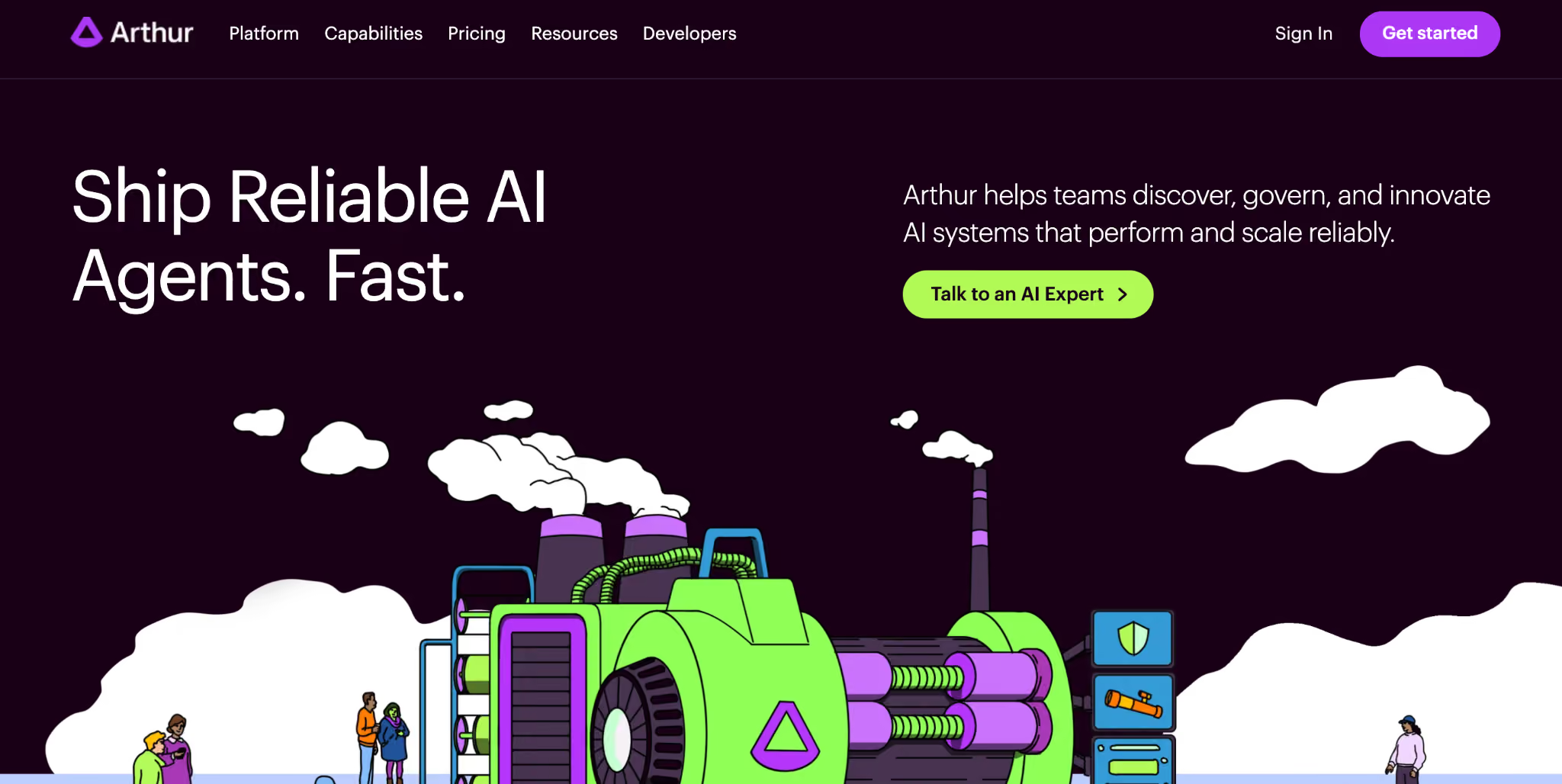
What it does: Arthur AI describes itself as the first Agent Discovery & Governance (ADG) platform, purpose-built for the agentic era from the ground up.
Best for: enterprises governing AI agents at scale across multi-cloud, multi-framework environments where shadow agents are a growing concern.
Arthur's positioning is sharper than most competitors. The platform was designed around the unique risk surface of agents that reason, call tools, and act. Discovery is strong for shadow agents in SaaS tools.
Key features
- Agent Discovery & Governance (ADG): automatically finds every agent running across your environments, including shadow agents in SaaS and custom apps.
- Continuous evaluations: runtime testing of agent behavior against safety, accuracy, and policy criteria.
- Multi-framework support: works with LangChain, LlamaIndex, OpenAI Agents, Anthropic agents, and custom frameworks.
Pros and cons
Pros:
- ✅ Purpose-built for agents from the ground up.
- ✅ Strong agent discovery capabilities catch shadow agents that others miss.
- ✅ Framework-agnostic approach works across LangChain, OpenAI Agents, and custom stacks.
Cons:
- ❌ Younger product than IBM or established AI governance platforms.
- ❌ Pricing is enterprise-only with no self-serve option.
What users say
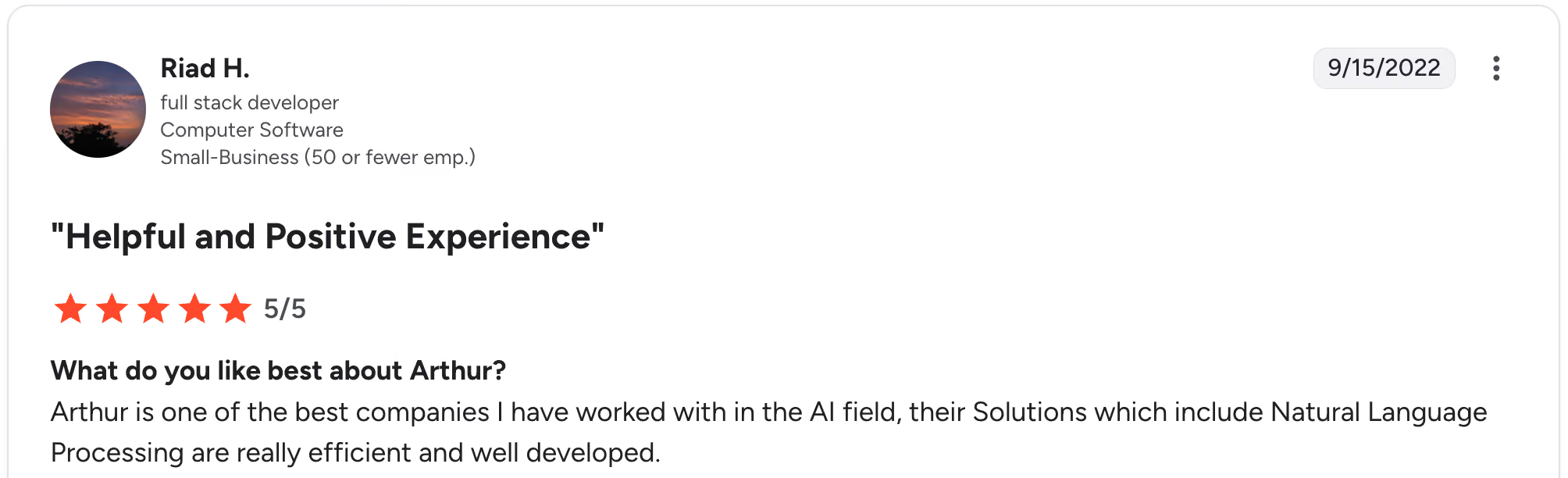
“Arthur is one of the best companies I have worked with in the AI field; their Solutions, which include Natural Language Processing, are really efficient and well developed.” Riad H, G2

“It's too costly to purchase.” Sudhir J, G2
Pricing
Arthur AI uses enterprise pricing based on organization size and the number of AI systems it governs. Contact sales through the Arthur AI pricing page for a custom quote.
Bottom line
I'd recommend Arthur to enterprises with active agent deployments across multiple cloud providers and frameworks. Teams with mostly traditional models and a few experimental agents may be served better by a broader platform.
3. IBM watsonx.governance: Best for cross-vendor AI governance
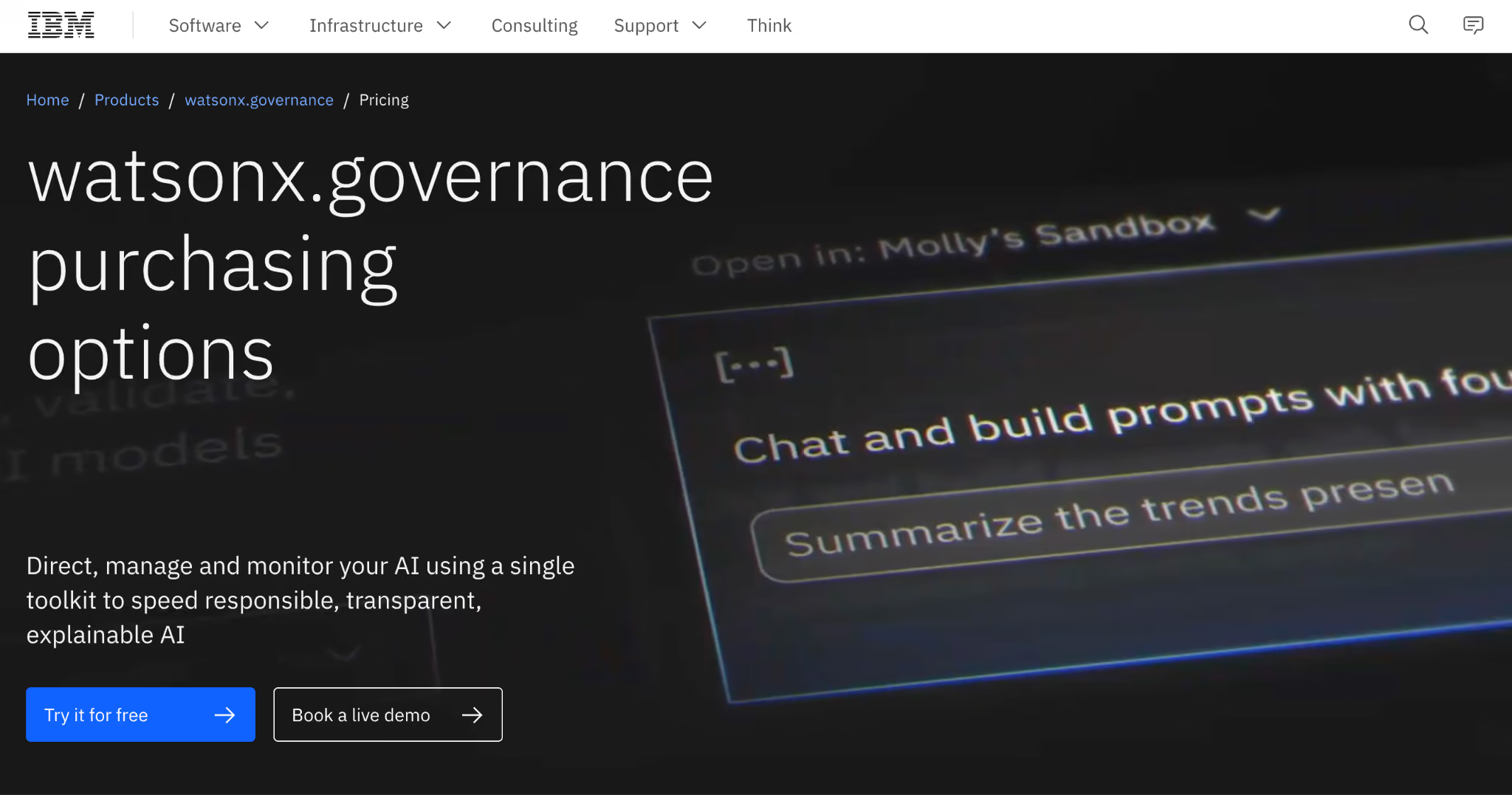
What it does: IBM watsonx.governance is an enterprise-grade AI governance product designed to manage risk and drive compliance across the full AI lifecycle, including models, applications, and agents.
Best for: large enterprises governing AI across IBM technologies and third-party platforms (OpenAI, AWS, Meta) under one governance framework.
The watsonx.governance product brings IBM's enterprise GRC heritage to AI agent governance, with deep integration into Guardium AI security for runtime threat detection. It governs AI systems regardless of where they're built or hosted.
Key features
- Cross-vendor governance: manage AI systems from IBM, OpenAI, AWS, Meta, and other vendors in one platform.
- Guardium AI security integration: detect and mitigate runtime AI threats while enforcing governance.
- Regulatory library: pre-built compliance mappings for major frameworks with automation capabilities.
Pros and cons
Pros:
- ✅ Strong enterprise heritage with deep AI lifecycle coverage.
- ✅ Works across IBM and third-party AI vendors without lock-in.
- ✅ Tight integration with Guardium for runtime security.
Cons:
- ❌ Heavier implementation effort than newer cloud-native platforms.
- ❌ Less agent-specific innovation than purpose-built ADG platforms.
What users say
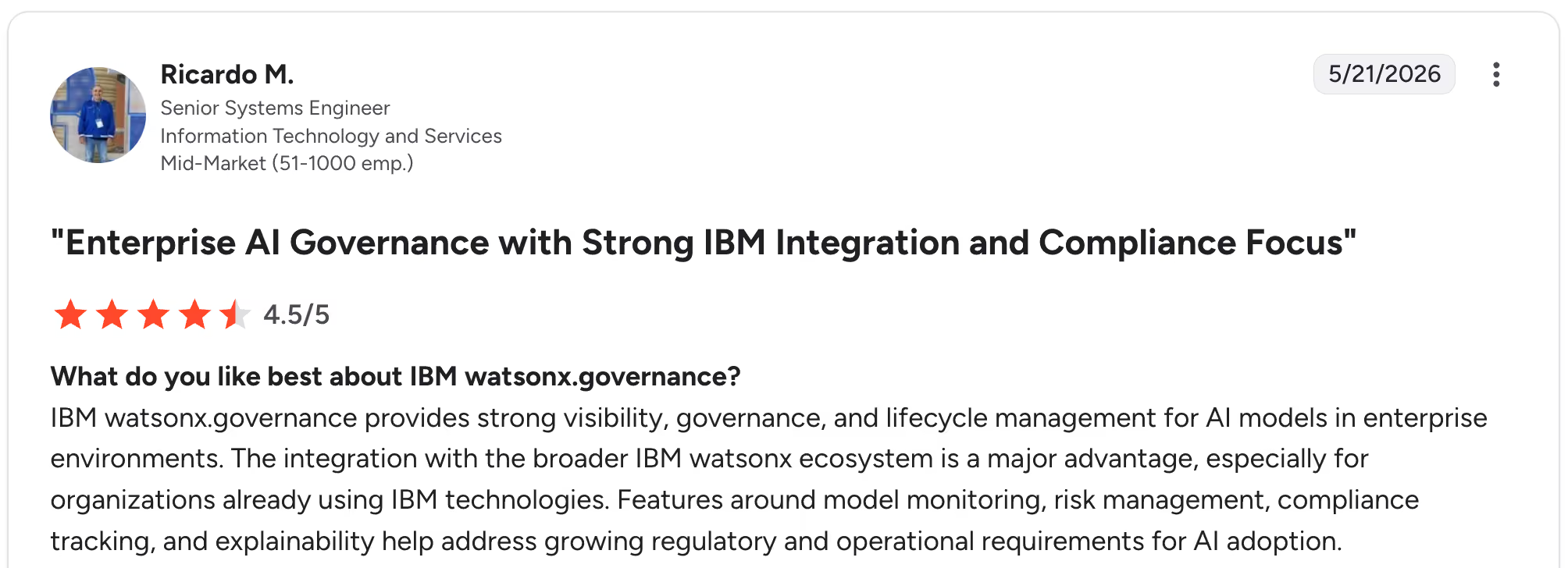
“The integration with the broader IBM watsonx ecosystem is a major advantage, especially for organizations already using IBM technologies.” Ricardo M, G2

“Basically the steep learning curve. Improvements can be done in UI, maybe offering a lite version to smaller teams with fewer regulatory needs.” Ashish D, G2
Pricing
IBM watsonx.governance uses enterprise pricing based on deployment model and selected capabilities. Contact IBM sales through the watsonx.governance pricing page for a custom quote.
Bottom line
I'd recommend watsonx.governance for large enterprises with existing IBM relationships or for those with strict regulatory requirements that need cross-vendor AI governance. Cloud-native organizations without prior IBM investment may find lighter alternatives a better fit.
4. Rubrik Agent Cloud: Best for real-time agent security and undo
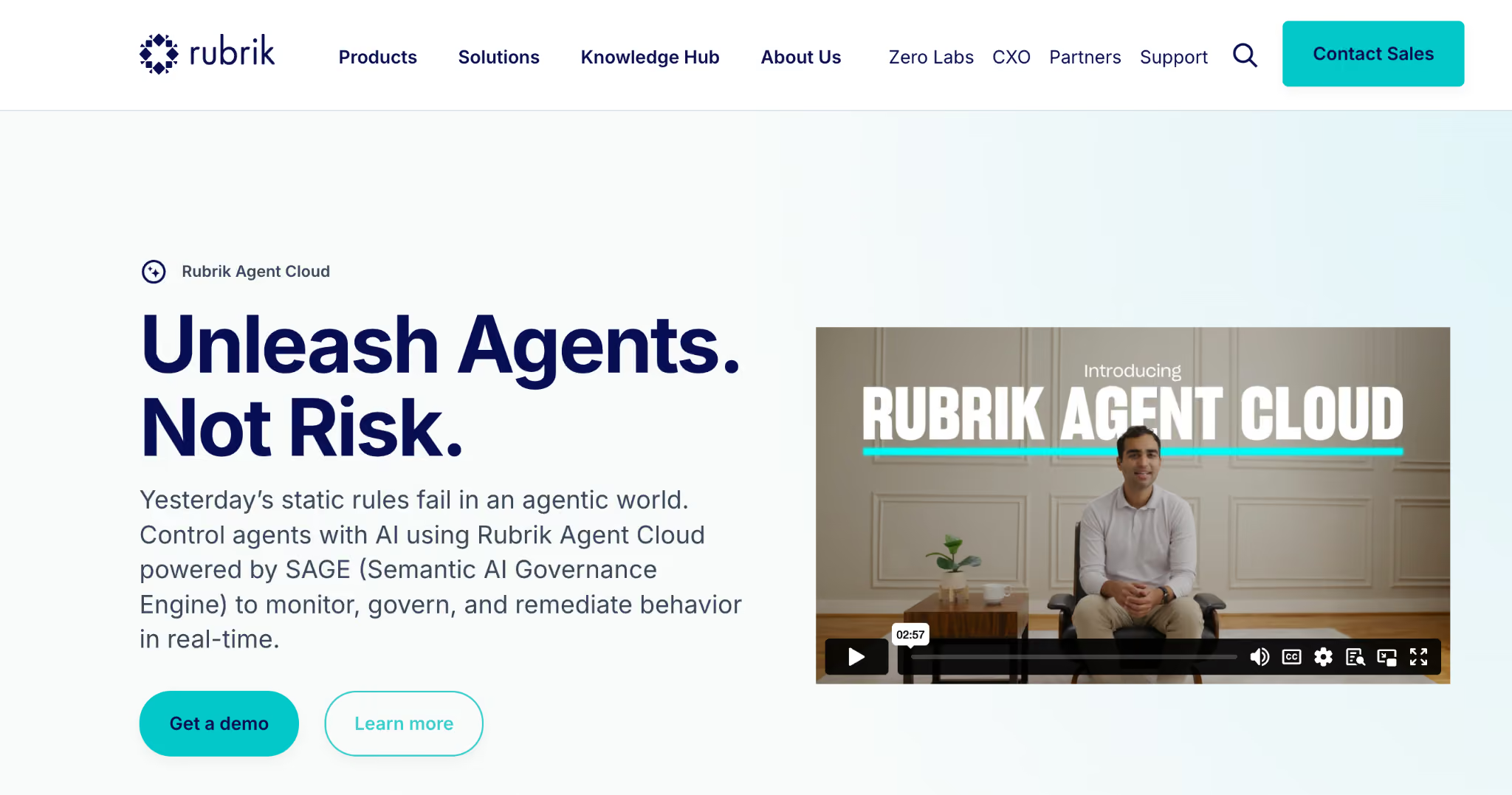
What it does: Rubrik Agent Cloud is an enterprise control layer for AI agents that provides full visibility, immutable auditability, and safe undo of unwanted AI agent actions.
Best for: enterprises that need security-grade controls on agent actions, including the ability to reverse agent decisions after the fact.
The safe undo capability is unusual in this category. Rubrik adds the ability to reverse risky agent decisions, going beyond standard detection. When combined with policy templates and real-time alerting, it serves as an active control plane for agent actions.
Key features
- Safe undo of agent actions: reverse unwanted AI agent actions when something goes wrong.
- Policy templates and custom rules: best-practice templates plus custom policy authoring with universal or scoped application.
- Immutable audit logs: tamper-resistant logging for every agent action across the platform.
Pros and cons
Pros:
- ✅ Safe undo capability is unique in the category.
- ✅ Strong integration with Rubrik's broader data security platform.
- ✅ Immutable audit trail meets strict compliance requirements.
Cons:
- ❌ Best value comes when paired with other Rubrik products.
- ❌ Newer entrant to the AI governance category than Fiddler AI or IBM.
What users say
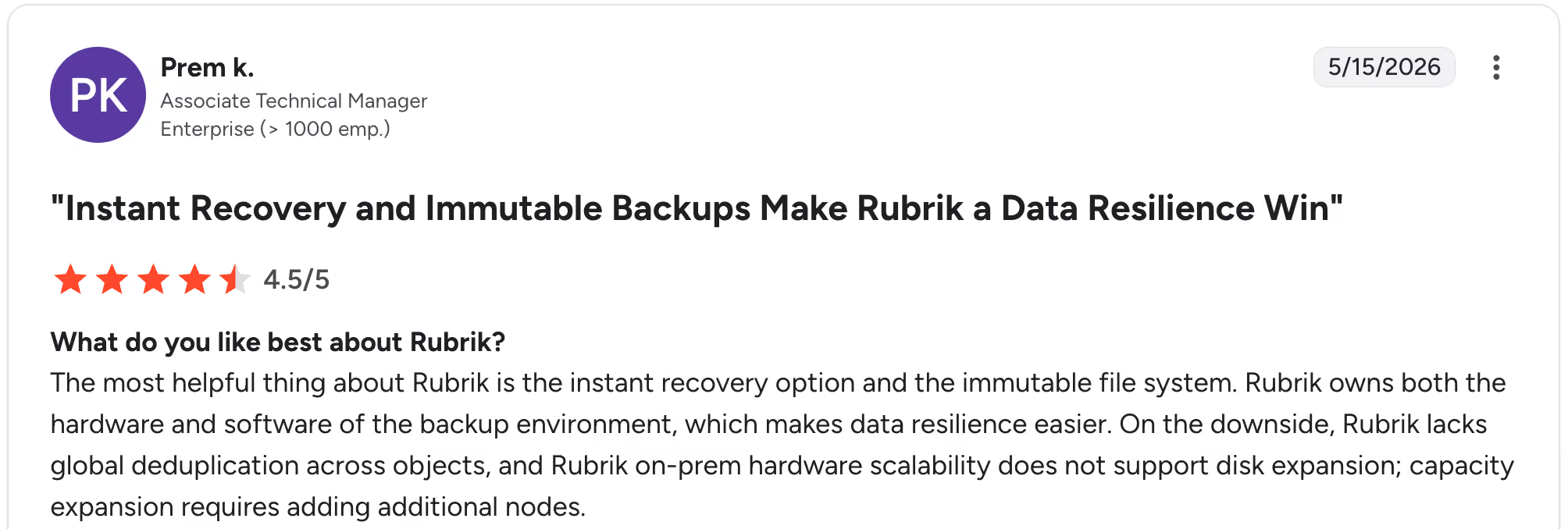
“The most helpful thing about Rubrik is the instant recovery option and the immutable file system.” Prem K, G2

“Highly expensive and uses a rigid appliance model that forces you to buy more hardware nodes even if you only need extra storage space.” Anil P, G2
Pricing
Rubrik Agent Cloud uses custom enterprise pricing and is typically bundled with other Rubrik data security products. Contact sales via the Rubrik Agent Cloud page to request a quote.
Bottom line
I'd recommend Rubrik Agent Cloud to enterprises that already run Rubrik for data security and want to extend that operational discipline to AI agents. Teams new to Rubrik may find lighter agent-only governance products easier to adopt initially.
5. Microsoft Purview: Best for Microsoft ecosystem governance
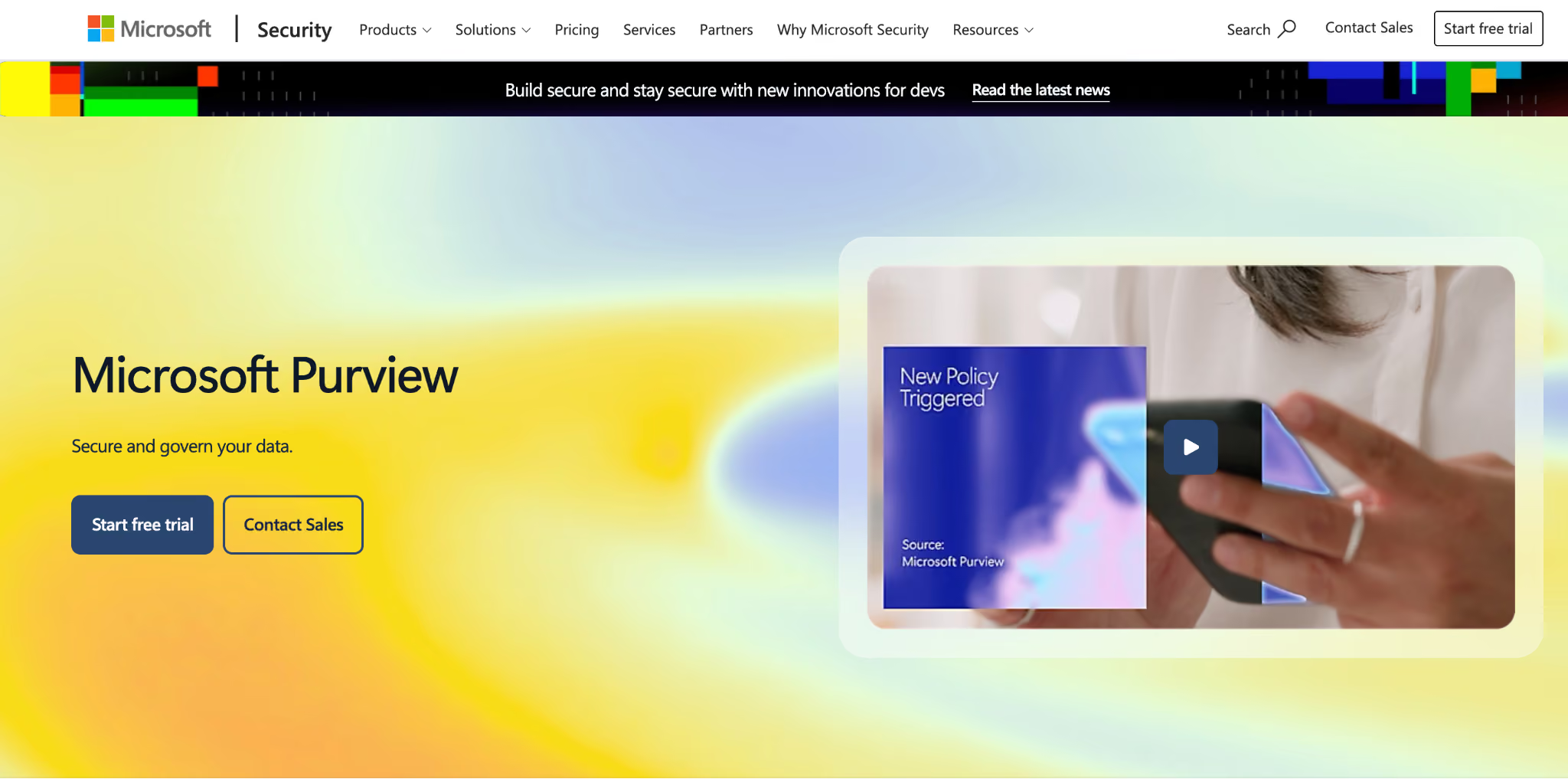
What it does: Microsoft Purview provides unified data and AI governance for organizations invested in the Microsoft ecosystem, with native integration into Microsoft 365, Azure, and Copilot.
Best for: enterprises that run primarily on Microsoft 365 and Azure and want AI governance integrated with their existing data governance posture.
Purview's strength is integration. If your organization already uses Microsoft 365 Copilot, Azure OpenAI, and Defender, Purview extends governance over those AI features with minimal configuration. The trade-off is less depth on non-Microsoft systems.
Key features
- Native Microsoft 365 integration: governance over Copilot for Microsoft 365, Copilot Studio agents, and Azure OpenAI deployments.
- Data and AI unified governance: single platform for data classification, DLP, and AI agent governance.
- Compliance automation: pre-built compliance mappings for GDPR, HIPAA, and other major frameworks.
Pros and cons
Pros:
- ✅ Deep integration with the Microsoft AI stack (Copilot, Azure OpenAI).
- ✅ Unified data and AI governance reduces tool sprawl.
- ✅ Strong compliance automation for common regulatory frameworks.
Cons:
- ❌ Less effective for non-Microsoft AI systems (LangChain, OpenAI direct API, custom frameworks).
- ❌ Pricing complexity (multiple SKUs and add-ons).
What users say
“I liked the tool’s ability to scan and map data across on-premise and cloud environments, making it easier to understand where data resides and how it’s being used.” Verified User, Gartner.

“The metadata editing function lacks flexibility and has limited customization options.” Verified User, Gartner
Pricing
Microsoft Purview Suite starts at $12/user/month (paid yearly), with additional pay-as-you-go pricing for data governance and security modules. See the Microsoft Purview pricing page for current tiers.
Bottom line
I'd recommend Microsoft Purview to enterprises running on Microsoft 365 and Azure where most AI use happens through Copilot or Azure OpenAI. If your AI portfolio spans multiple vendors and frameworks, a vendor-neutral platform like Arthur or Fiddler AI may serve you better.
6. Zenity: Best for agent security across SaaS and custom stacks
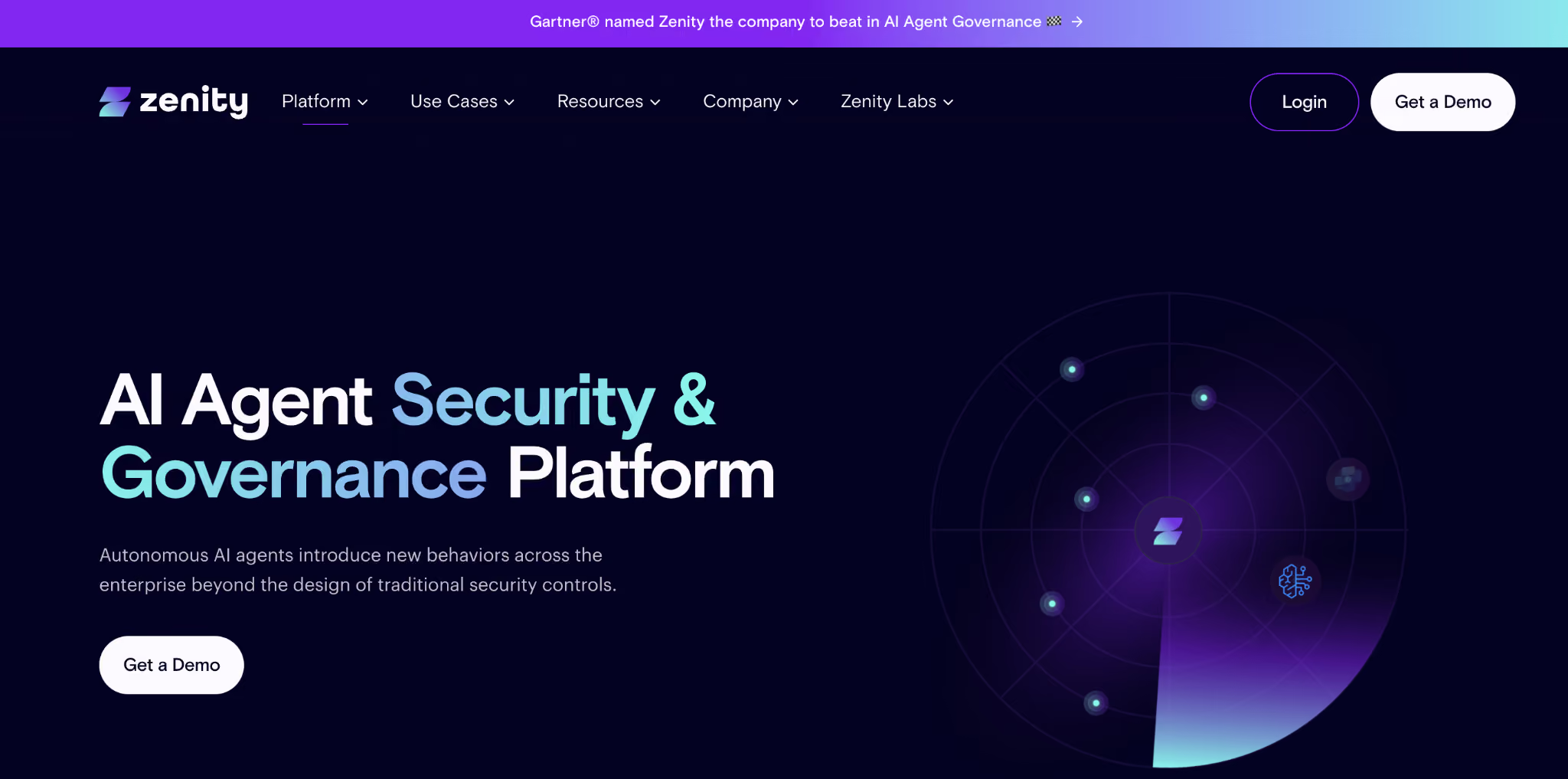
What it does: Zenity is an AI security and governance platform that discovers, monitors, and controls AI agents across SaaS, cloud, custom stacks, and endpoints.
Best for: security teams that need a unified view of every AI agent running across their environment, including those embedded in SaaS tools.
Zenity leans more toward AI security than pure governance, which fits enterprises where the CISO owns AI risk. The Correlation Agent is distinctive: it interprets agent behavior to flag intent-driven risk that simple alerts would miss.
Key features
- Cross-platform agent discovery: inventory AI agents across AWS Bedrock, Vertex AI, SaaS tools, custom stacks, and endpoints.
- Correlation Agent: interprets agent behavior to surface intent-driven risk hidden in the noise of routine alerts.
- Posture management and runtime control: both pre-deployment and runtime governance in one product.
Pros and cons
Pros:
- ✅ Strong agent discovery across diverse environments.
- ✅ Security-grade controls suit organizations where CISOs own AI risk.
- ✅ Correlation Agent surfaces context that simple alerts miss.
Cons:
- ❌ Less emphasis on regulatory mapping than Fiddler AI or IBM.
- ❌ More security-focused than governance-focused, which may not fit every team's needs.
What users say

“Strong visibility into our environment ecosystem, whether it is AI or LCNC usage.” Verified User, Gartner

“Reporting is an area that needs more work.” Verified User, Gartner
Pricing
Zenity uses custom enterprise pricing based on the number of AI systems and integrations. Contact sales through the Zenity platform page for a quote.
Bottom line
I'd recommend Zenity to security teams that need agent-level discovery and runtime controls across a heterogeneous AI environment. Teams whose primary driver is regulatory compliance may find Fiddler AI or watsonx.governance a closer fit.
7. Domino: Best for enterprise MLOps with agent governance
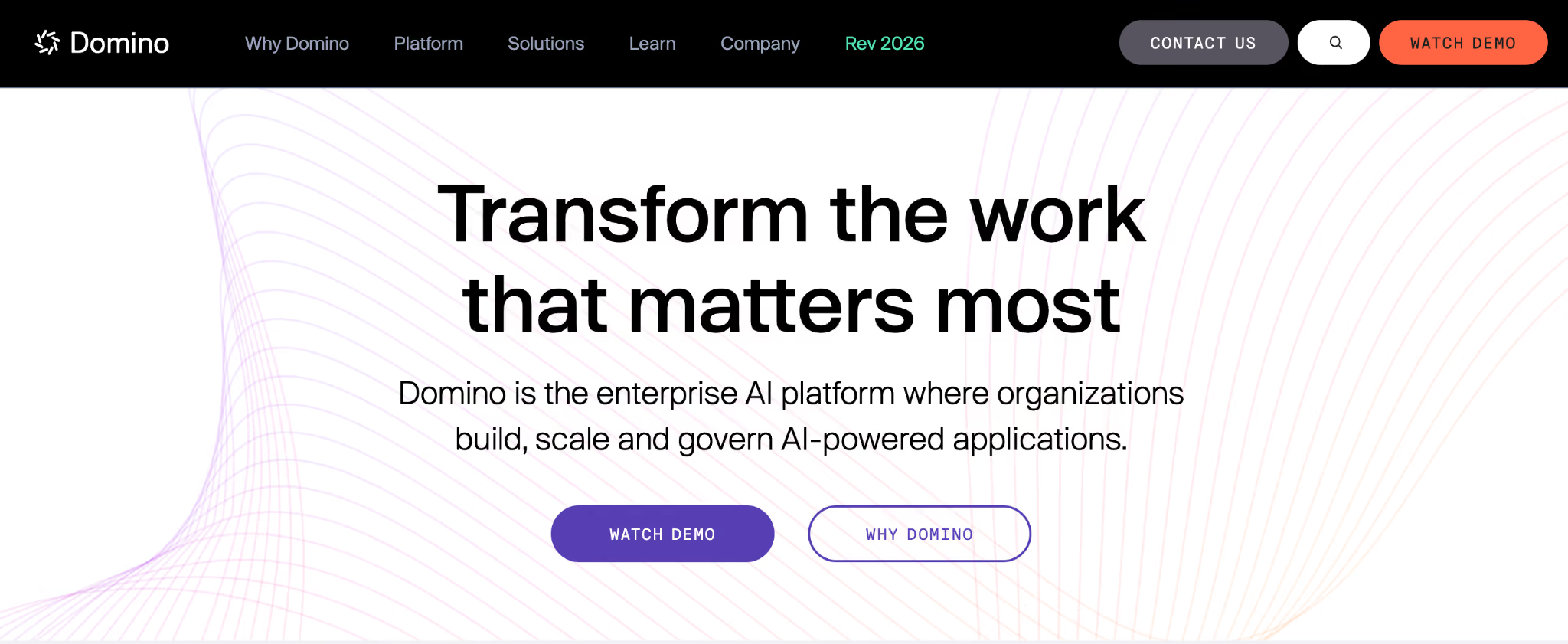
What it does: Domino is an open enterprise MLOps platform that industrializes AI across applications, models, and agents, with built-in cost optimization and governance.
Best for: enterprises that need a single platform for both MLOps and AI agent governance, especially data science teams scaling production AI.
Domino's category fit is broader than pure governance products. The platform handles model development, deployment, monitoring, and governance, consolidating several tools but requiring more buy-in from data science teams.
Governance extends to agents because the platform was designed to industrialize all AI outputs across the model and agent lifecycles.
Key features
- Unified MLOps and governance: a single platform for model development, deployment, monitoring, and governance.
- Cost optimization: built-in compute cost tracking and optimization for AI workloads.
- Open architecture: works with major frameworks and cloud providers without vendor lock-in.
Pros and cons
Pros:
- ✅ Consolidates MLOps and governance, reducing tool sprawl.
- ✅ Strong infrastructure cost visibility unusual in governance products.
- ✅ Open architecture works across major cloud providers.
Cons:
- ❌ Heavier platform than pure governance products.
- ❌ Better fit for organizations with mature data science teams.
What users say
“It's easy to deploy the system. Compatibility with cloud platforms. Handling data securely and managing data. It's easy to integrate with AWS and other cloud environments.” Shivesh R, G2

“The color combination of the user interface is not so attractive.” Anush G, G2
Pricing
Domino uses custom enterprise pricing based on the number of users, compute resources, and selected modules. Contact sales through the Domino pricing page for a quote.
Bottom line
I'd recommend Domino to enterprises with active data science teams that want one platform for MLOps and AI agent governance. Teams that need governance only (not MLOps) will find lighter alternatives, such as Arthur or Fiddler AI, easier to adopt.
8. Airia: Best for centralized orchestration and policy
What it does: Airia is an enterprise AI security, orchestration, and governance platform that manages AI agents, models, applications, and data sources within centralized workflows.
Best for: enterprises in regulated industries that need orchestration alongside policy enforcement and access management.
Airia's orchestration angle distinguishes it from pure governance platforms. The platform structures how agents interact with data sources and other systems through centralized workflows, which makes policy enforcement more consistent across the agent lifecycle.
Key features
- Workflow-based agent management: govern AI agents through centralized workflows with consistent policy enforcement.
- Policy enforcement: apply consistent policies across agents, models, and applications.
- Access management: manage who can build, deploy, and interact with AI systems.
Pros and cons
Pros:
- ✅ Orchestration approach makes policy enforcement consistent.
- ✅ Strong fit for regulated industries (financial services, healthcare).
- ✅ Manages AI agents, models, and data sources in one platform.
Cons:
- ❌ Newer entrant with a smaller customer base than established competitors.
- ❌ Orchestration approach requires more upfront design than passive monitoring.
What users say
“Airia makes it extremely easy to build agents. The UI is very friendly, which makes it easy to understand.” Robert M, G2

“Two limitations: the number of built-in integrations is still smaller than their more mature competitors and lacks some RBAC functionality.” Verified User, G2
Pricing
Airia publishes monthly tiers: Free ($0), Individual ($50/month), Team ($250/month), and Enterprise (custom pricing). Individual covers 1 user with 1,000 agent executions/month; Team adds unlimited users, 10 admins, and 10,000 executions/month. See the Airia pricing page for current limits.
Bottom line
I'd recommend Airia to enterprises in regulated industries that want to govern AI through structured orchestration. Organizations early in their AI journey may find simpler monitoring tools a good place to start.
9. Deeploy: Best for full AI lifecycle compliance
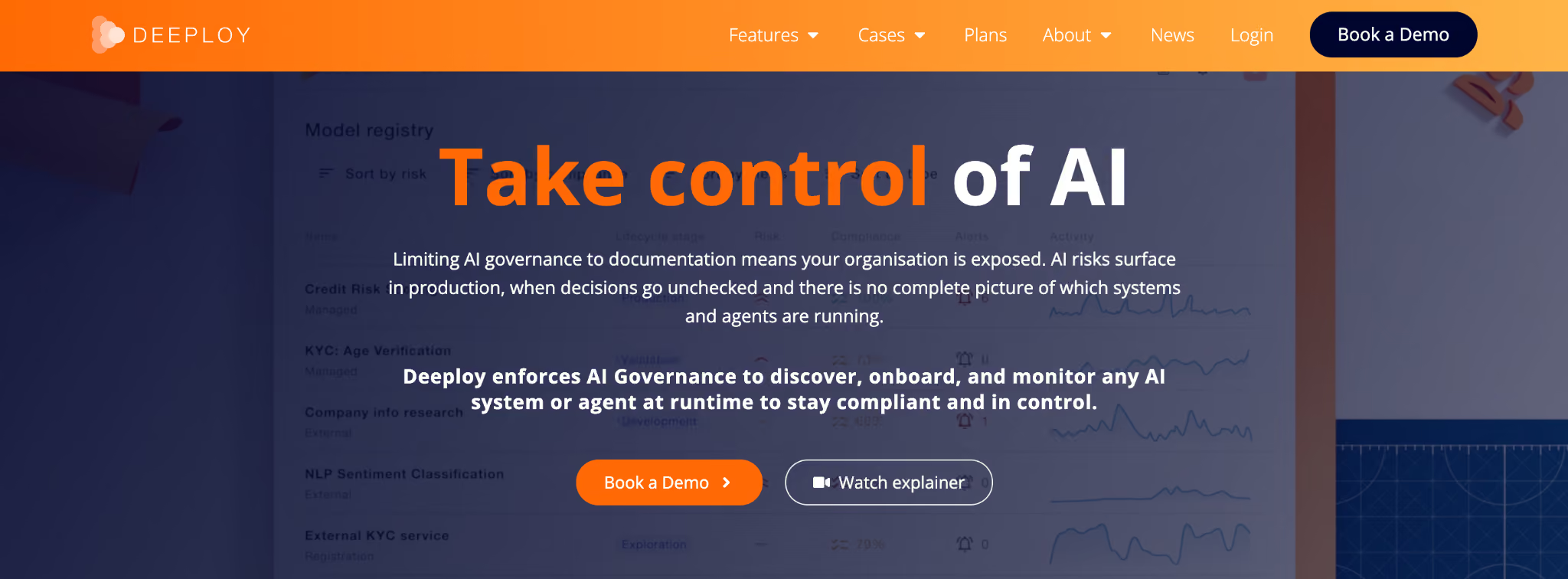
What it does: Deeploy offers an AI governance platform that embeds compliance and control across the full AI lifecycle, covering agents, ML models, and embedded AI from vendor products.
Best for: enterprises that need lifecycle compliance across diverse AI types and want to govern AI features baked into third-party products.
Deeploy's lifecycle focus matters because most enterprise AI risk lies in stages that other platforms underserve, such as decommissioning and vendor AI embedded in SaaS. The product treats compliance as continuous, monitoring AI from development through retirement.
Key features
- Lifecycle compliance: embedded compliance from development through decommissioning.
- Coverage across AI types: governs agents, ML models, and vendor-embedded AI features.
- Continuous monitoring: real-time visibility into AI behavior across the lifecycle.
Pros and cons
Pros:
- ✅ Strong lifecycle approach covers stages other platforms underserve.
- ✅ Governs vendor-embedded AI features that other platforms miss.
- ✅ Built around continuous compliance across the AI lifecycle.
Cons:
- ❌ Smaller market presence than IBM, Fiddler AI, or Arthur.
- ❌ Lifecycle approach requires more cross-functional coordination.
What users say
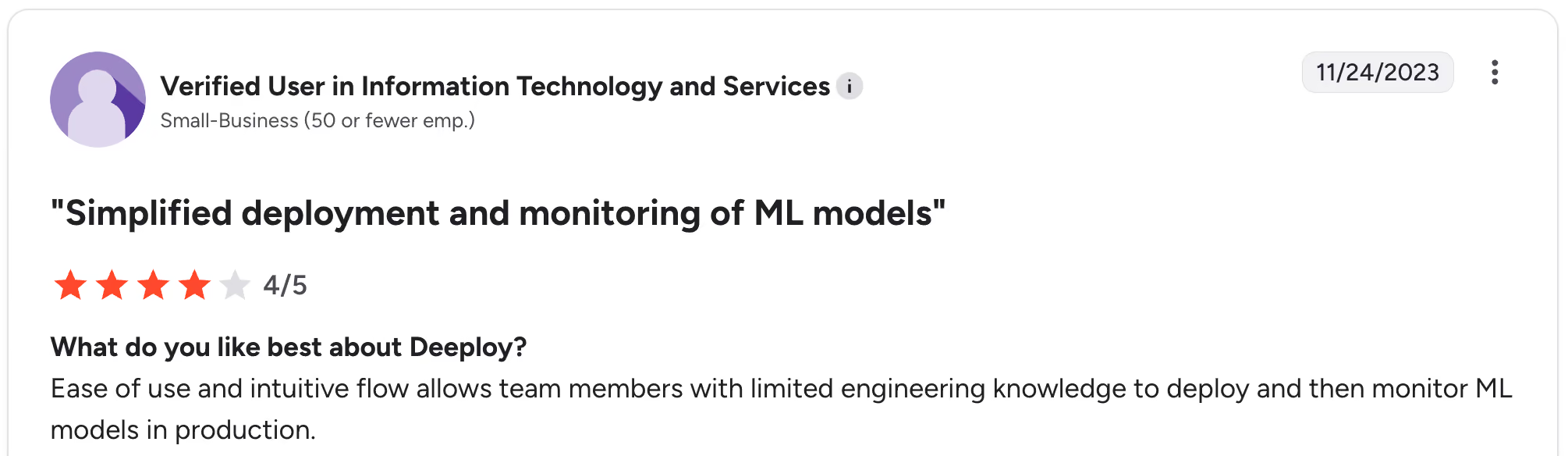
“Ease of use and intuitive flow allow team members with limited engineering knowledge to deploy and then monitor ML models in production.” Verified User, G2

“The documentation was still a bit limited.” Verified User, G2
Pricing
Deeploy uses custom enterprise pricing based on organization size and selected modules. Contact sales through the Deeploy website for a quote.
Bottom line
I'd recommend Deeploy to enterprises that want governance across their full AI portfolio, including vendor-embedded AI features in SaaS tools. Organizations focused mainly on internal AI agents may find narrower products simpler to deploy.
Which AI agent governance platform should you choose?
The 9 platforms above each emphasize different parts of the governance stack. Picking the right one comes down to where your AI risk actually sits and which functions own the program.
Choose Fiddler AI if you:
- Need strong out-of-the-box mappings to EU AI Act, NIST AI RMF, and ISO 42001.
- Run production AI in regulated industries (financial services, healthcare)
- Need audit-grade observability evidence for compliance reviews
- Want runtime guardrails layered on top of observability
Choose Arthur AI if you:
- Run agents at scale across multi-cloud and multi-framework environments.
- Need strong agent discovery (especially shadow agents in SaaS).
- Want a vendor-neutral platform designed for agents from the ground up.
Choose IBM watsonx.governance if you:
- Already have an IBM Cloud or Cloud Pak investment.
- Need to govern AI systems across IBM and third-party vendors.
- Want tight integration with Guardium AI security.
Choose Microsoft Purview if you:
- Run primarily on Microsoft 365 and Azure.
- Want AI governance integrated with existing data governance.
- Use Copilot for Microsoft 365 or Azure OpenAI as your primary AI.
Skip this category entirely if:
- Your AI use is limited to consumer ChatGPT in a small team (policy and training cover this).
- You're building your own AI agents and want governance built into the build platform (see the section below).
Final verdict
For most enterprises starting an AI agent governance program in 2026, Fiddler AI and Arthur AI are the strongest starting points. Fiddler AI wins on audit-grade observability and regulated-industry fit, while Arthur wins on agent discovery and framework neutrality.
Microsoft Purview is a good fit if your AI runs primarily on the Microsoft stack. IBM watsonx.governance fits large enterprises with existing IBM relationships. The other five products serve specific scenarios well but require clearer justification.
The category will look very different in 12 months. Agent governance is moving from “should we have it” to “we need it now,” and vendors are consolidating fast.
How Superblocks fits the related question of building governed AI agents
The 9 platforms above govern AI agents that already exist in your environment. They monitor and constrain agents that other teams build or that vendors embed in SaaS tools.
A related but distinct question is how to build your own AI agents under governance from the start.
Superblocks is an enterprise platform for building AI-generated apps and agents with governance baked into the build process.
Clark AI generates apps within a SOC 2- and HIPAA-aligned governance perimeter (RBAC, SSO, audit logs, BYO inference), with 60+ pre-vetted integrations that keep agent data within your network.
This is governance applied at build time, before agents ever go live.
If you're evaluating both questions (how to govern existing agents and how to build new ones safely), the answer is usually two platforms: one of the 9 above for monitoring, and Superblocks for building.
Explore our Quickstart Guide to see how governed agent building works, or better yet, try it for free.
Frequently asked questions
What is an AI agent governance platform?
An AI agent governance platform is software that manages the risk, security, and compliance of autonomous AI agents across their lifecycle, including agent discovery, runtime guardrails, observability, and policy enforcement aligned to regulatory frameworks.
Why do you need an AI agent governance platform?
You need an AI agent governance platform because AI agents take autonomous actions on behalf of your organization, and Gartner predicts that over 40% of agentic AI projects will be canceled by 2027 due to inadequate risk controls that such a platform addresses.
What’s the difference between AI governance and AI agent governance?
The main difference between AI governance and AI agent governance lies in the risk surface: AI governance covers static models that make predictions, whereas AI agent governance covers autonomous systems that act on behalf of users at runtime.
How much does an AI agent governance platform cost?
How much an AI agent governance platform costs varies widely: most enterprise platforms (Fiddler AI, Arthur, IBM watsonx.governance, Rubrik) use custom enterprise pricing, while Microsoft Purview starts at $12/user/month and Airia publishes tiers from Free to $250/month.
What features should an AI agent governance platform have?
An AI agent governance platform should include agent discovery (including shadow agents), runtime guardrails for actions and tool use, continuous evaluations of agent behavior, observability and audit logging, and policy mappings to the EU AI Act, NIST AI RMF, and ISO 42001.
Do small businesses need an AI agent governance platform?
No, small businesses do not need a dedicated AI agent governance platform if their AI use is limited to consumer ChatGPT or Copilot; a written policy, training, and approved tool lists are usually enough until autonomous agents handle production data.
At Virgin Voyages, non-technical teams now build their own AI apps, with IT governance fully intact. The result: 15+ production apps, seven departments onboard, and zero dedicated frontend engineers.
At Matthews, a marketing manager with zero coding background built an app that auto-generates offering memorandums, cutting turnaround from days to hours. See how the brokerage is putting AI builders on every team, with full governance intact.


Stay tuned for updates
Get the latest Superblocks news and internal tooling market insights.
Request early access
Step 1 of 2
Request early access
Step 2 of 2

You’ve been added to the waitlist!
Book a demo to skip the waitlist
Thank you for your interest!
A member of our team will be in touch soon to schedule a demo.
production apps built
days to build them
semi-technical builders
traditional developers
high-impact solutions shipped
training to get builders productive
SQL experience required
See the full Virgin Voyages customer story, including the apps they built and how their teams use them.

"Those tools are great for proof of concept. But they don't connect well to existing enterprise data sources, and they don't have the governance guardrails that IT requires for production use."
Table of Contents
%20(1).png)

Multiple authors
What Is Enterprise AI Deployment? A Complete Guide for 2026
Enterprise AI deployment is the process of moving AI from pilot to production at scale. Here's why most projects stall and how to actually ship.
%20(1).png)
%20(1).png)