

Vibe coding has exploded over the past 12 months with tools like Replit, Lovable, v0, and Claude. Now it’s the #1 attack vector in the enterprise. Business teams are building on production data, while IT has zero visibility.
No reviews. No audit logs. No permissions. No control.
At the same time, the AI threat landscape is accelerating. Recent supply chain attacks across widely used libraries like Axios and LiteLLM highlight a growing reality: attackers don’t need to hack your infrastructure, they can compromise the software packages you already trust instead.
To make matters worse, AI-powered offense can run attacks better, faster and cheaper and with greater intelligence than before. Anthropic is holding back Mythos due to its advanced cyber hacking capabilities, but it will be released soon.
So what happens when IT can’t even see the code running across its own business systems from AI-generated software? Every CIO is now facing the same question: How do I unlock the speed and innovation of employee-led AI coding, without sacrificing the security, governance, and control required to keep my business and data safe.
Enter Superblocks 2.0: Governed Enterprise Vibe Coding
Superblocks was built from the ground up to enable democratization, scale, and IT control for enterprise vibe coding. That’s why high-compliance enterprises like SoFi, Airwallex, and LinkedIn run Superblocks in production. Their high standards for data privacy and governance cannot be met by any other platform.
While many business users use AI to prototype, the real automation value exists only in production. This is where most tools fail because the majority of vibe coding platforms were designed for individual builders alone.
Superblocks is built for both builders and the teams that govern them at scale. Business users move fast within policy guardrails, while IT, InfoSec, and Platform Engineering stay in control.
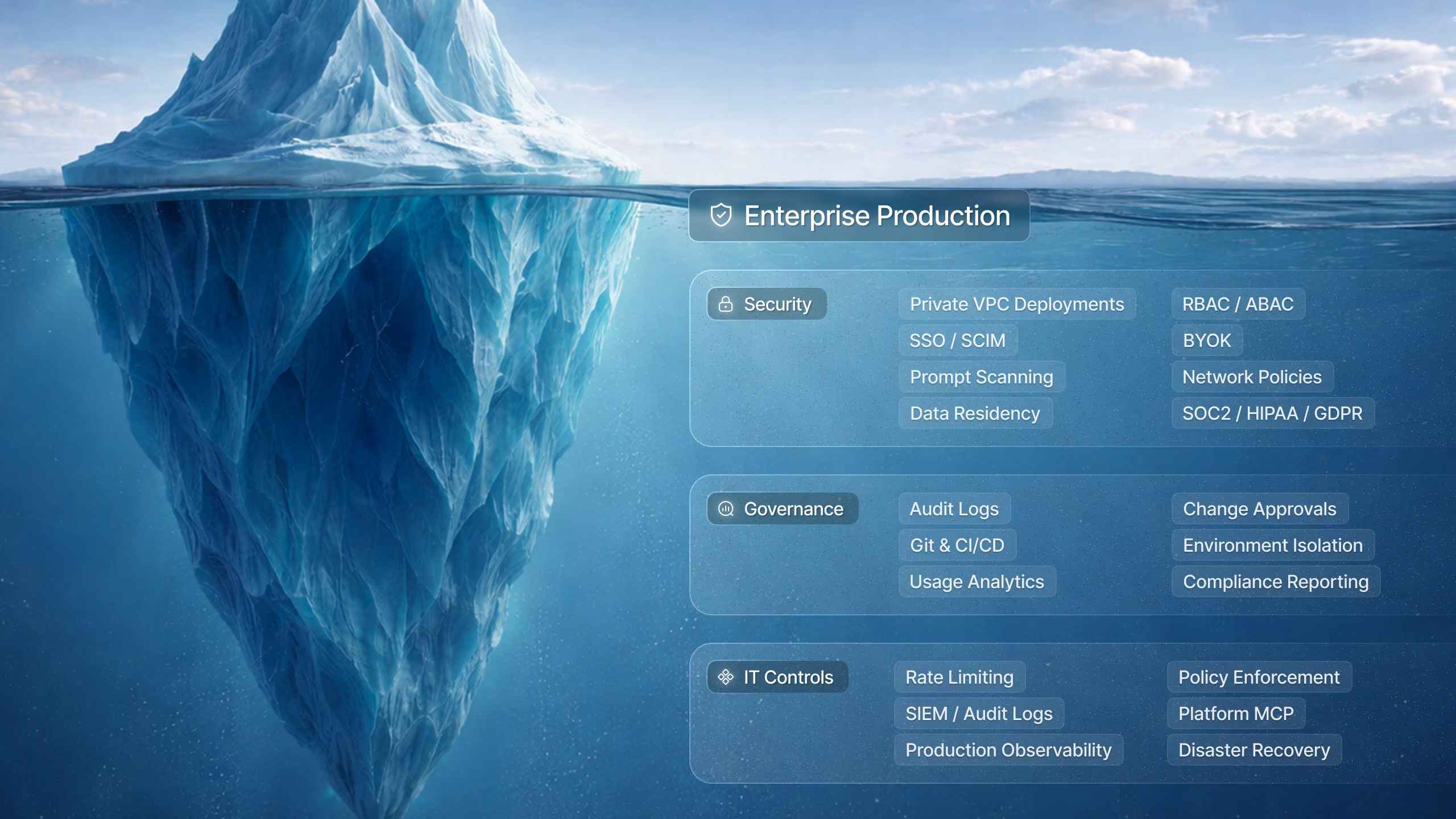
IT and Security ensure private deployments, data residency, network security, and protection against prompt injection. Secrets are never exposed, and every action is fully auditable.
Platform Engineering enforces coding standards, design systems, Git-backed source control, environment promotion, and standardized observability across every application.
Superblocks Platform MCP: Govern with AI Agents at Scale
As enterprise vibe coding scales, governance cannot be manual. AI agents are building your software. AI agents must govern it. This requires a unified platform and system of record for AI-generated software assets, including applications, workflows, scheduled jobs, and agents.
Superblocks MCP gives admins programmatic access to every entity: builders, applications, integrations, permissions, audit logs, queries, and usage events all live in one place and can be queried and acted on programmatically.
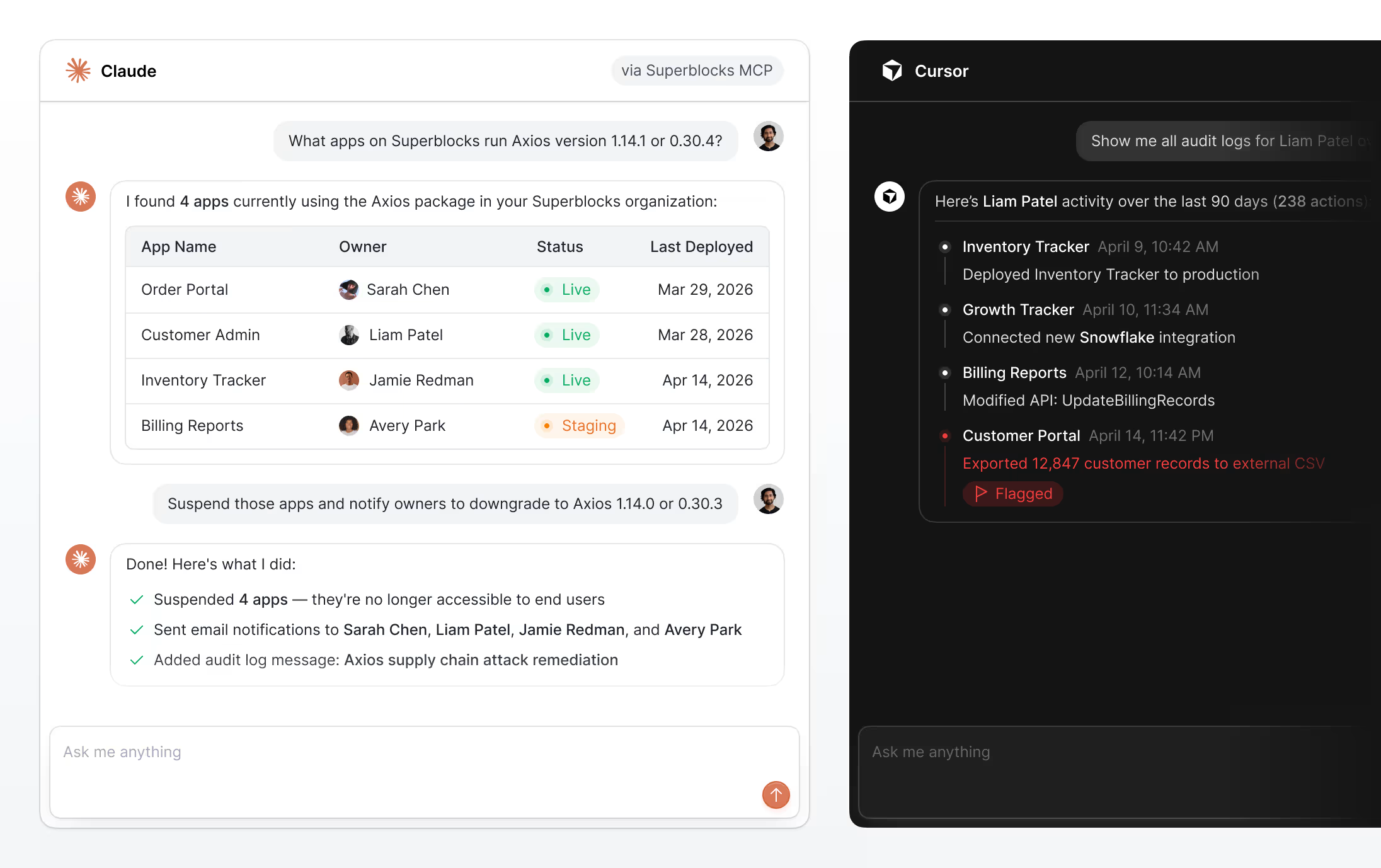
This enables AI agents that monitor, analyze, and act in real time. With Superblocks MCP, you can:
- Identify applications using a malicious package and shut them down instantly
- Detect anomalous write patterns against critical data sources
- Trigger alerts when permission rules change on sensitive systems
- Analyze usage patterns to understand which applications matter most
- Monitor and control AI and infrastructure spend at the team and individual level
Knowledge: A Context Graph for Building on Enterprise Systems
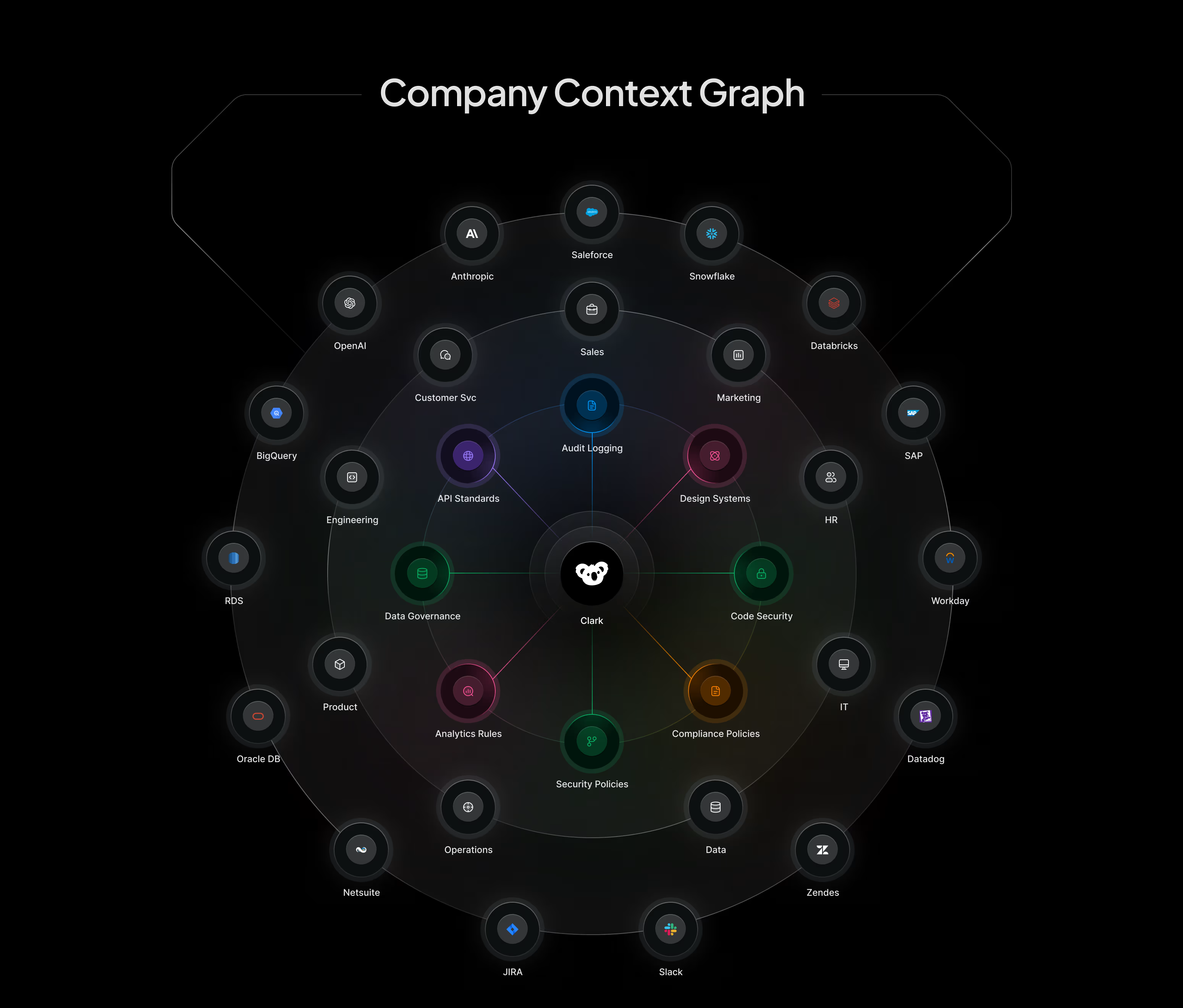
Clark, the Superblocks AI agent, includes a built-in agent memory system that allows admins to define code policies, design systems, and audit rules, while continuously learning from how your organization interacts with its systems.
As builders prompt Clark, it captures and connects knowledge across your environment. For example, a customer ID in Salesforce may map to a user ID in Snowflake. Once that relationship is known, Clark automatically remembers it. The next time anyone builds on those systems, that context is already understood — so the business user need not be an expert in the data schema at all, further unlocking democratization of development.
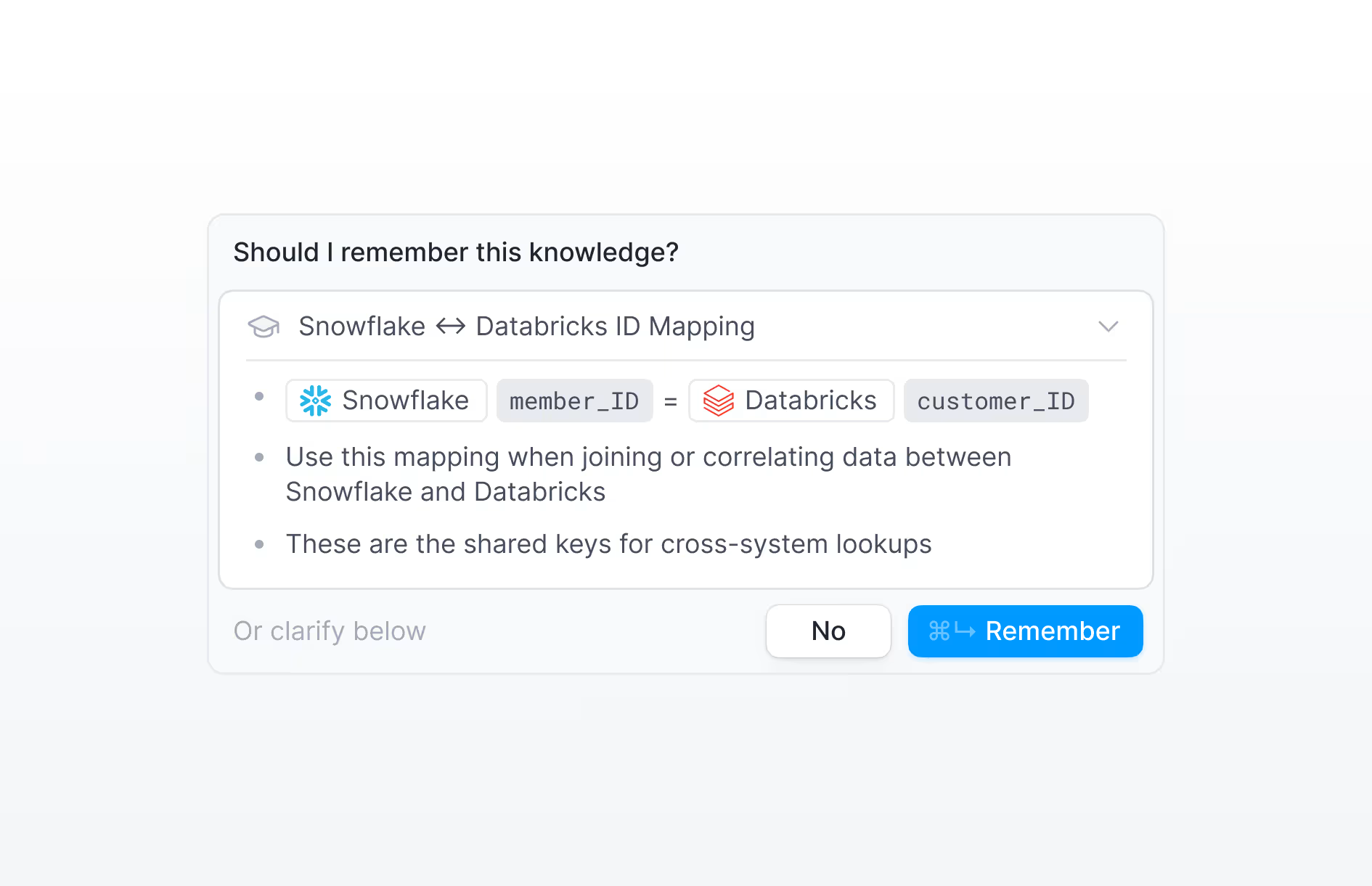
Over time, this creates a shared knowledge layer across your organization. Clark gets smarter with every use, reducing repetition and improving accuracy for every builder in your organization. Memory is managed automatically, ensuring the context graph stays relevant as your systems and data rapidly evolve with your business.
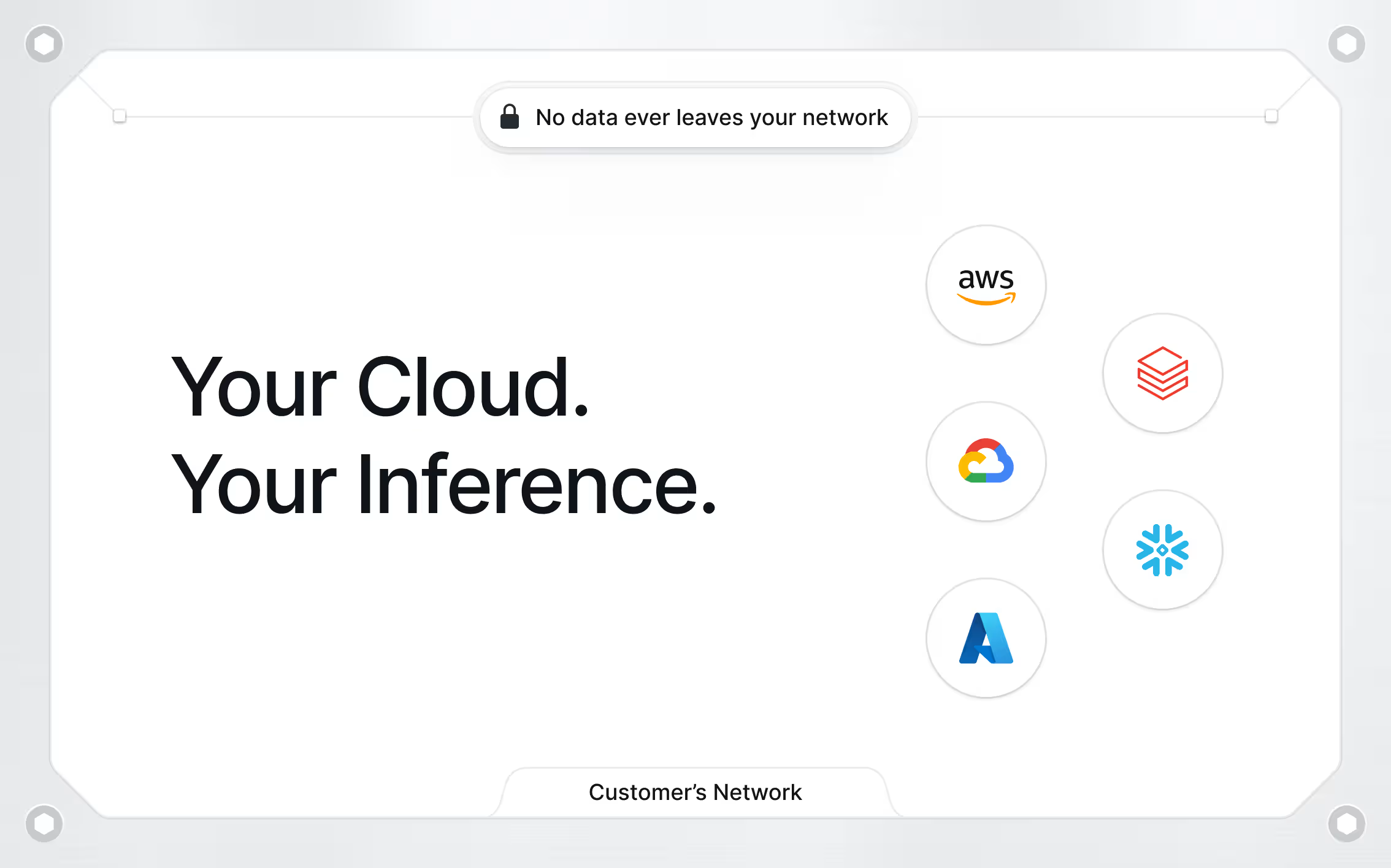
Private VPC Deployments: Your Cloud. Your Inference.
Most vibe coding platforms send your data to their cloud service. Superblocks brings AI to your data inside your VPC. No data leaves your network, meaning the AI applications themselves also stay secured in your VPC.
The Superblocks platform can be deployed fully inside your AWS VPC, with Azure and GCP support in beta. We also offer a lightweight hybrid model where the data plane runs in your VPC while the control plane runs in our cloud.
Superblocks AI agents can run on your inference with approved models from your AWS Bedrock, GCP Vertex AI, Azure AI, Snowflake Cortex, and Databricks. You stay within your cloud, your audit boundaries, and leverage your preferred pricing.
The New Era for Governed Enterprise Vibe Coding Begins
AI is changing who can build and how software gets built. The need for security, governance, and IT control has never been more important.
With Superblocks, customers are eliminating millions of SaaS spend, automating manual processes, and extending legacy systems without hiring expensive consultants.
To get started sign up to try it or book a demo.
At Virgin Voyages, non-technical teams now build their own AI apps, with IT governance fully intact. The result: 15+ production apps, seven departments onboard, and zero dedicated frontend engineers.
At Matthews, a marketing manager with zero coding background built an app that auto-generates offering memorandums, cutting turnaround from days to hours. See how the brokerage is putting AI builders on every team, with full governance intact.


Stay tuned for updates
Get the latest Superblocks news and internal tooling market insights.
Request early access
Step 1 of 2
Request early access
Step 2 of 2

You’ve been added to the waitlist!
Book a demo to skip the waitlist
Thank you for your interest!
A member of our team will be in touch soon to schedule a demo.
production apps built
days to build them
semi-technical builders
traditional developers
high-impact solutions shipped
training to get builders productive
SQL experience required
See the full Virgin Voyages customer story, including the apps they built and how their teams use them.

"Those tools are great for proof of concept. But they don't connect well to existing enterprise data sources, and they don't have the governance guardrails that IT requires for production use."
Table of Contents


Multiple authors
How to Prove AI ROI to Your Board
Login counts don't prove AI value. Here's how CIOs can show the board what AI shipped, where it's stuck, and what it is changing for the business.
%20(1).png)

%20(1).png)