Databricks Lakebase Launch Partner
Now on Databricks: build secure enterprise apps on Lakehouse, Delta Lake, and Mosaic AI
Technical and non-technical teams ship production-ready apps on Lakebase in hours, not sprints. Unity Catalog governance applies automatically.
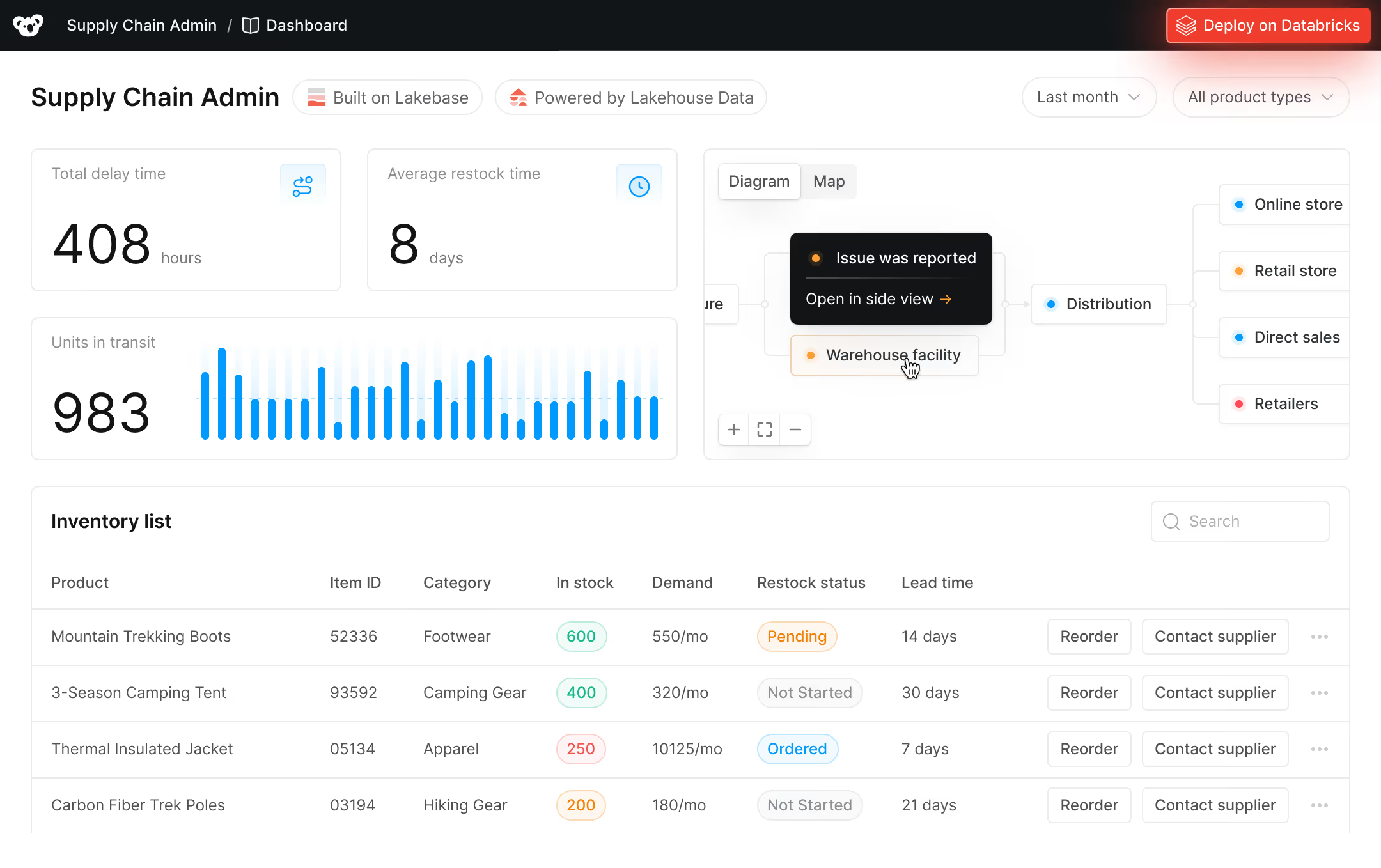





faster app delivery vs. traditional development
less maintenance with built-in governance & access controls
dedicated frontend engineers needed to ship & scale apps org-wide
How it works
Go from idea to production in hours, not sprints – in three simple steps.


Point Clark at your Databricks workspace. It inspects your schemas, tables, and Unity Catalog permissions automatically.


Describe what you want in plain English or code. Clark handles the rest – UI, queries, logic – all governed by Unity Catalog.


One-click deploy directly to Databricks. No containers, no infra tickets. Your users access apps alongside their existing workflows – production-ready from day one.
Built for the
Data Intelligence Platform
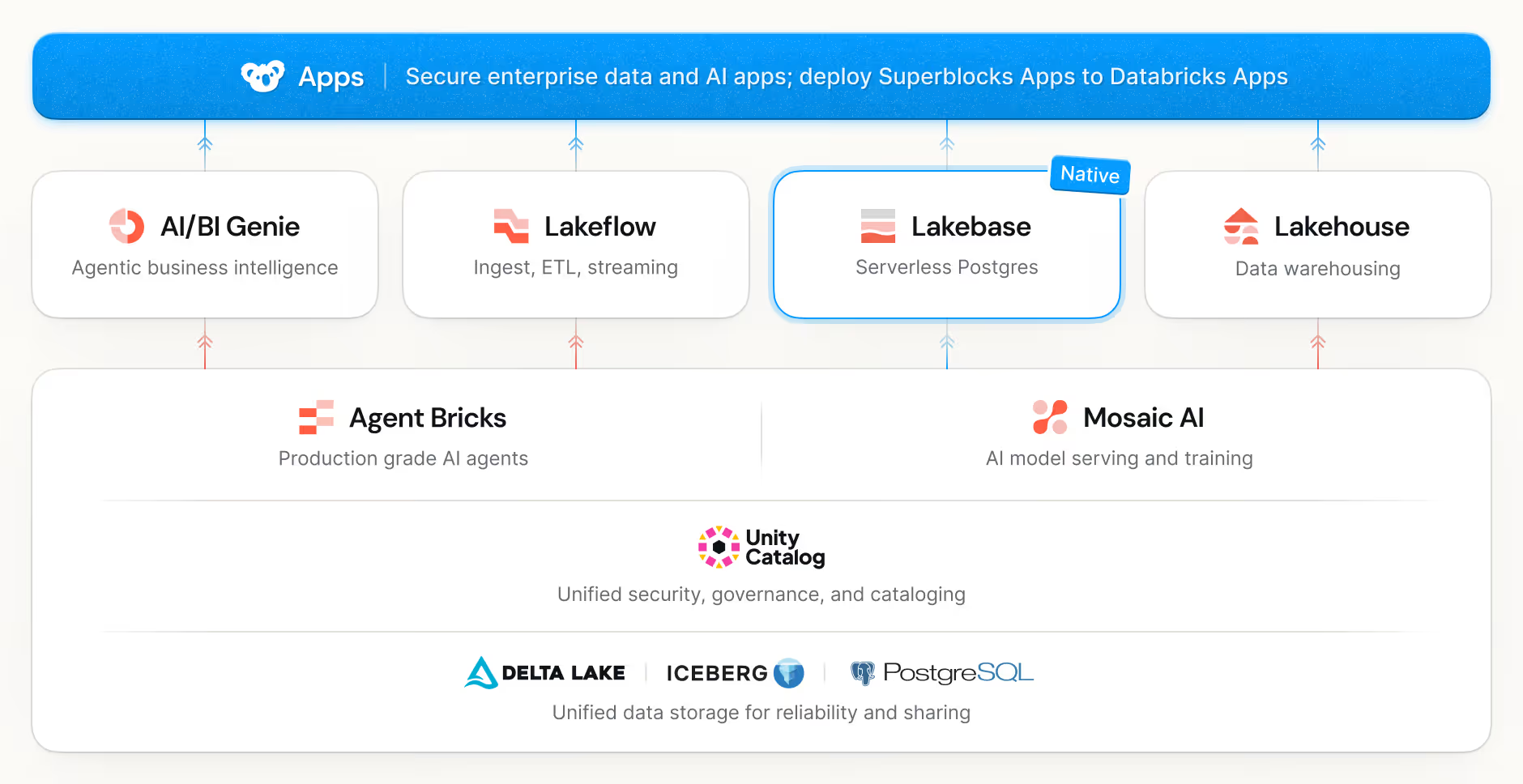
Superblocks natively connects to Lakebase, Lakeflow, Lakehouse, Agent Bricks, and Mosaic AI. For Databricks services without a native integration, Clark automatically generates REST API calls, so your teams are never blocked.
Enterprise Guardrails.
Secure by Design
Security isn't a feature you configure later — it's built into every query, every API call, every app Clark generates.

Prompt security to block malicious threats — including injection attacks against your Databricks data
SSO enforced on every application
RBAC / ABAC for integrations, apps and users — layered on top of Unity Catalog
Audit Logging on every action sent to your SIEM
Code sandboxing to isolate code generation
No training on your data

Superblocks + Databricks
Brad (CEO, Superblocks) and Justin (Head of Databricks Apps) walk through why enterprise teams are building their application layer on Databricks, and what that looks like in practice.

“If you're a Databricks customer and you've already invested in getting your data, AI, and governance state established — this is the 100x unlock of value on top of that.”

Director of Product & Head of Databricks Apps
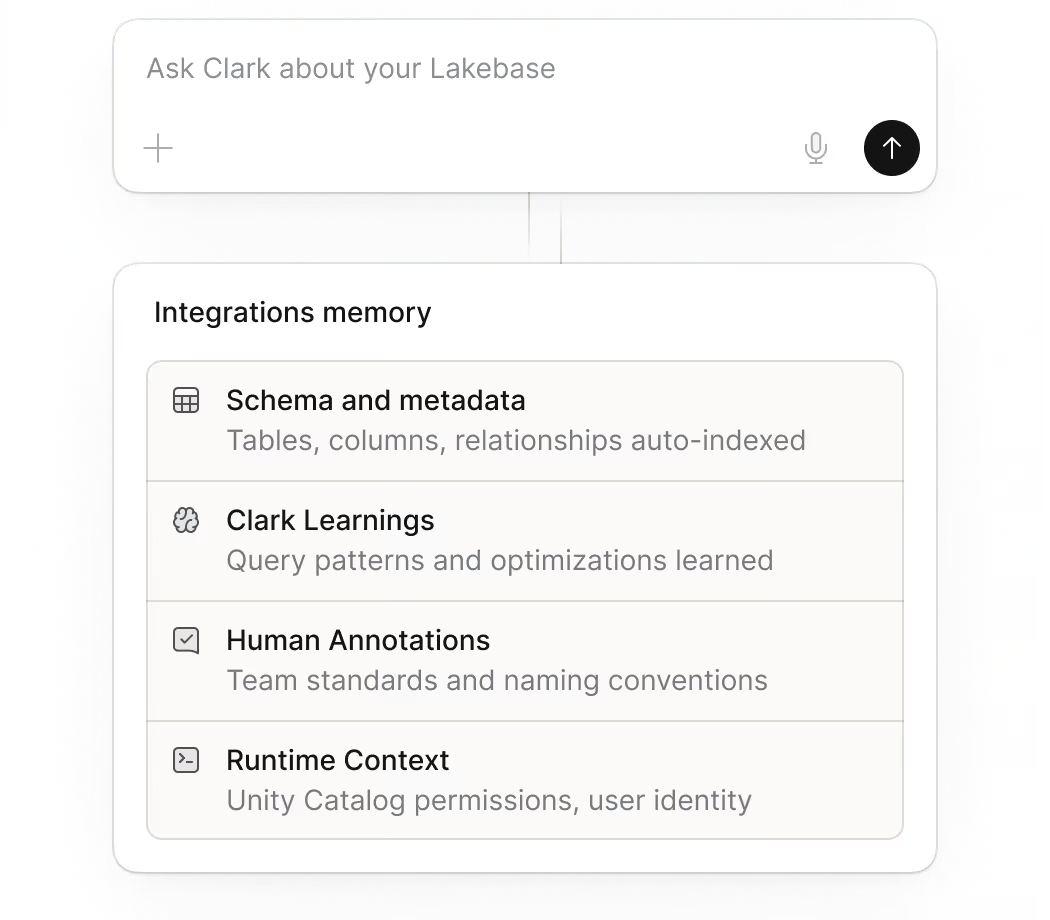
Clark learns your Lakebase. And never forgets
Clark stores and retrieves memories across every builder and every query.
Your Lakebase schemas, Unity Catalog field mappings, naming conventions, and team standards — learned automatically, shared across your entire organization.
Builder #50 benefits from everything builder #1 already discovered.
See It In Action
Watch: Build a full-stack enterprise app in 5 minutes


Talk to us about deploying your first Databricks App with Superblocks.


“Our customers have invested in building a data and AI foundation in Databricks, and are increasingly turning to applications to help democratize those investments across their organization.
With Superblocks’ integration with Databricks, they’re able to accelerate the development of these data and AI applications, without sacrificing security and governance.”


Connect to Everything. Inside and Outside Databricks
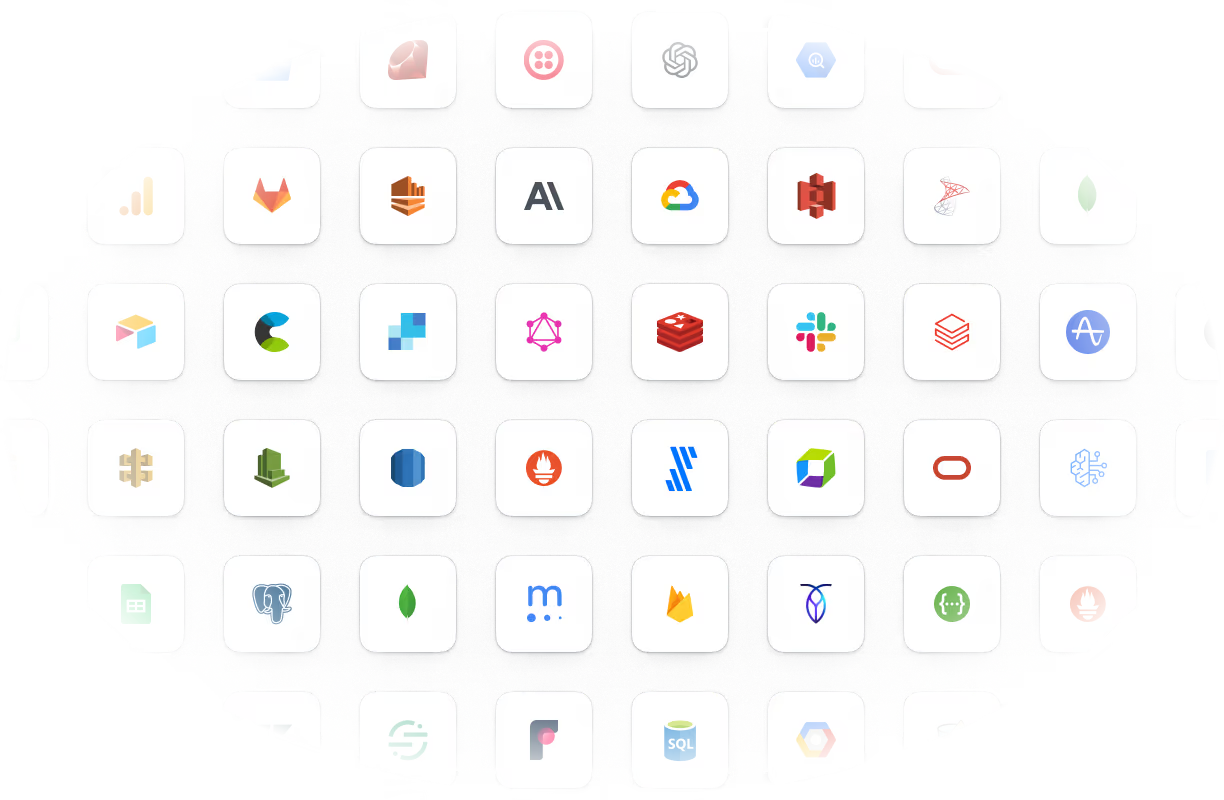
Superblocks apps integrate with your entire stack — not just Databricks. Build applications that combine Databricks data with Salesforce, Slack, OpenAI, and 50+ other services.
Other app builders on Databricks require everything to run inside the Databricks network. Superblocks gives you both: governed Databricks access and the third-party integrations your apps need.
Superblocks generates standard React code, there's no proprietary lock-in — you own your apps.
How wine.com connects Databricks + OpenAI
In this video, see how wine.com, the nation’s largest online wine retailer, rebuilt its corporate gifting platform in record time using Superblocks.

"Connecting Superblocks to Databricks allowed us to build our UI in a matter of days."
—

Greg Elenbaas, VP Engineering
Technical Documentation
For teams who want to understand the architecture
- Learn more ↗OAuth Token FederationLearn how Superblocks exchanges tokens with Databricks to maintain user identity and enforce Unity Catalog permissions across every query.
- Learn more ↗Databricks Apps WrapperUnderstand the lightweight Express wrapper that handles authentication and embeds your Superblocks application inside Databricks.
- Learn more ↗Full Technical DocumentationComplete setup guides, environment configuration, and deployment steps.




Partnership One-Pager
Get the Superblocks + Databricks overview to share with your team.