Superblocks
Replit builds your apps on its cloud. Superblocks runs them on yours, on your real data, so the apps your teams ship and the PII they touch stay inside your walls.





Replit wasn't built to keep your PII in your own cloud.
Replit ships real enterprise security. The catch is residency. Build an app on Replit and its data lives in Replit's database, on Replit's cloud. Superblocks runs in your own VPC, on the systems you already operate, so your PII stays where the rest of your production data already does.
“We have 579 active users in Replit. That's more than half our remote staff. I'm making sure these production apps meet the same standards as any other application.”
What Replit keeps outside your walls
Five places the difference shows up when you build with AI.
- Your dataEvery app ships with a built-in database on Replit's cloud.Your dataRuns in your VPC, on your existing databases.
- Your AIAgent runs on Replit's managed model stack.Your AIRuns on your Snowflake, Databricks, or Bedrock.
- Your identityApps sign in through Replit's built-in auth.Your identityUsers inherit their Okta or Azure permissions.
- Your recordAudit log portal and SIEM export, within the Replit org.Your recordQueryable system of record across every app.
- Your standardsSecurity Agent reviews the codebase before you publish.Your standardsYour own policy checks block an app before it ships.
What makes Superblocks governed in your own cloud compared to Replit

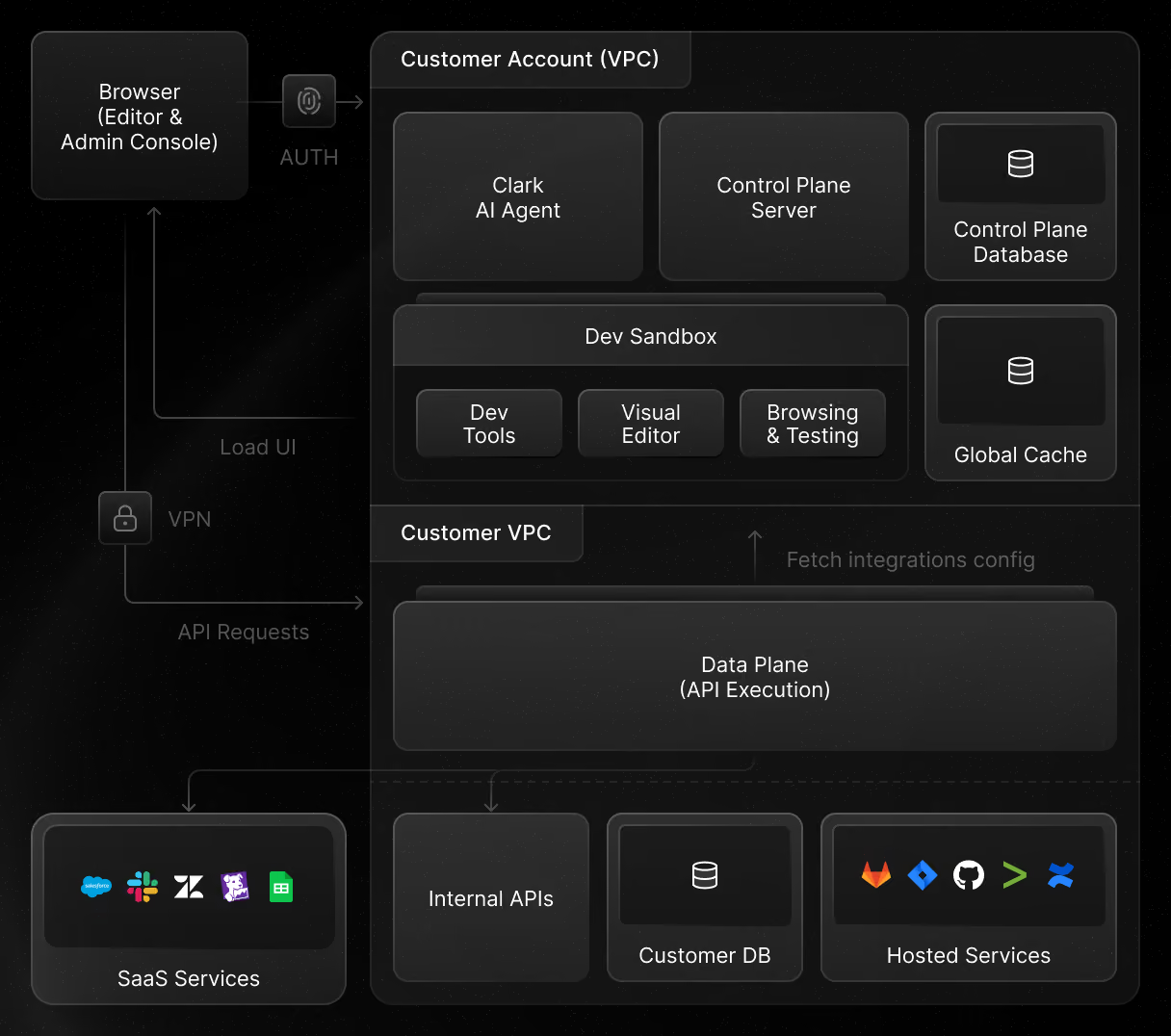
Your data never leaves your VPC
Replit hosts your database for you, usually on a third party, which means your data sits with a subcontractor of your vendor and the only way to take it back is to leave the product. Superblocks runs inside your own cloud with Cloud Prem and connects to the systems you already operate, from Postgres to Snowflake to Databricks.
Why this lasts: regulated data cannot leave your network, and no amount of scanning or certification relocates a hosted tool inside your enterprise.
A 150,000-employee global services firm replaced Lovable and now builds in its own cloud account.

Runs on the stack you already bought
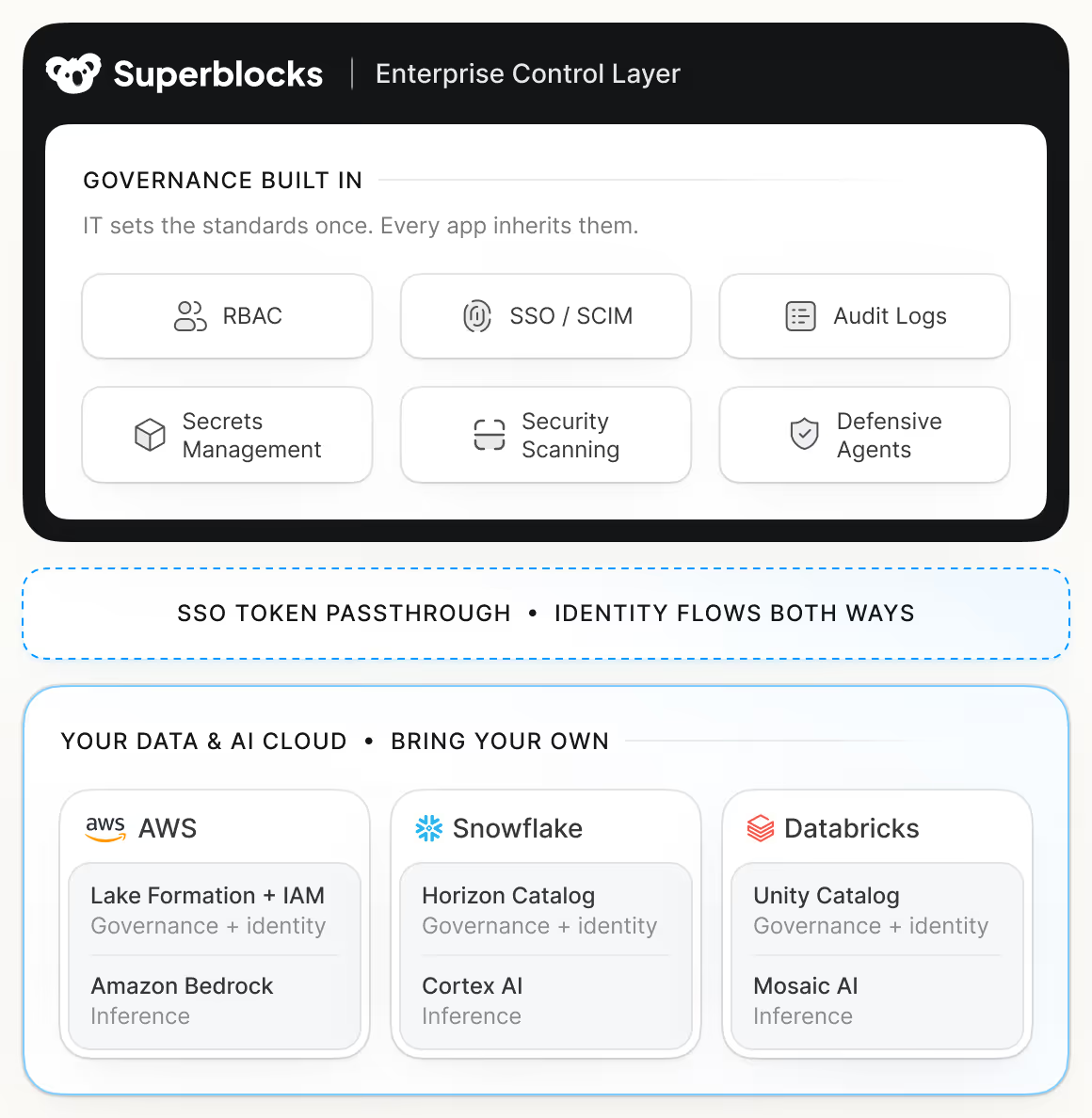
Superblocks runs inference through your own Bedrock, Snowflake, or Databricks, so the AI stays inside your boundary and draws down spend you have already committed, while users inherit their existing Okta or Azure permissions instead of a second set of accounts. Replit runs on its own model and its own stack.
Why this lasts: you buy cloud, identity, and AI once and expect everything to run inside those choices, which is precisely what a self-contained hosted tool cannot honor.
SoFi cut quarter-long workflows to under an hour on its own governed infrastructure.

A system of record over every app
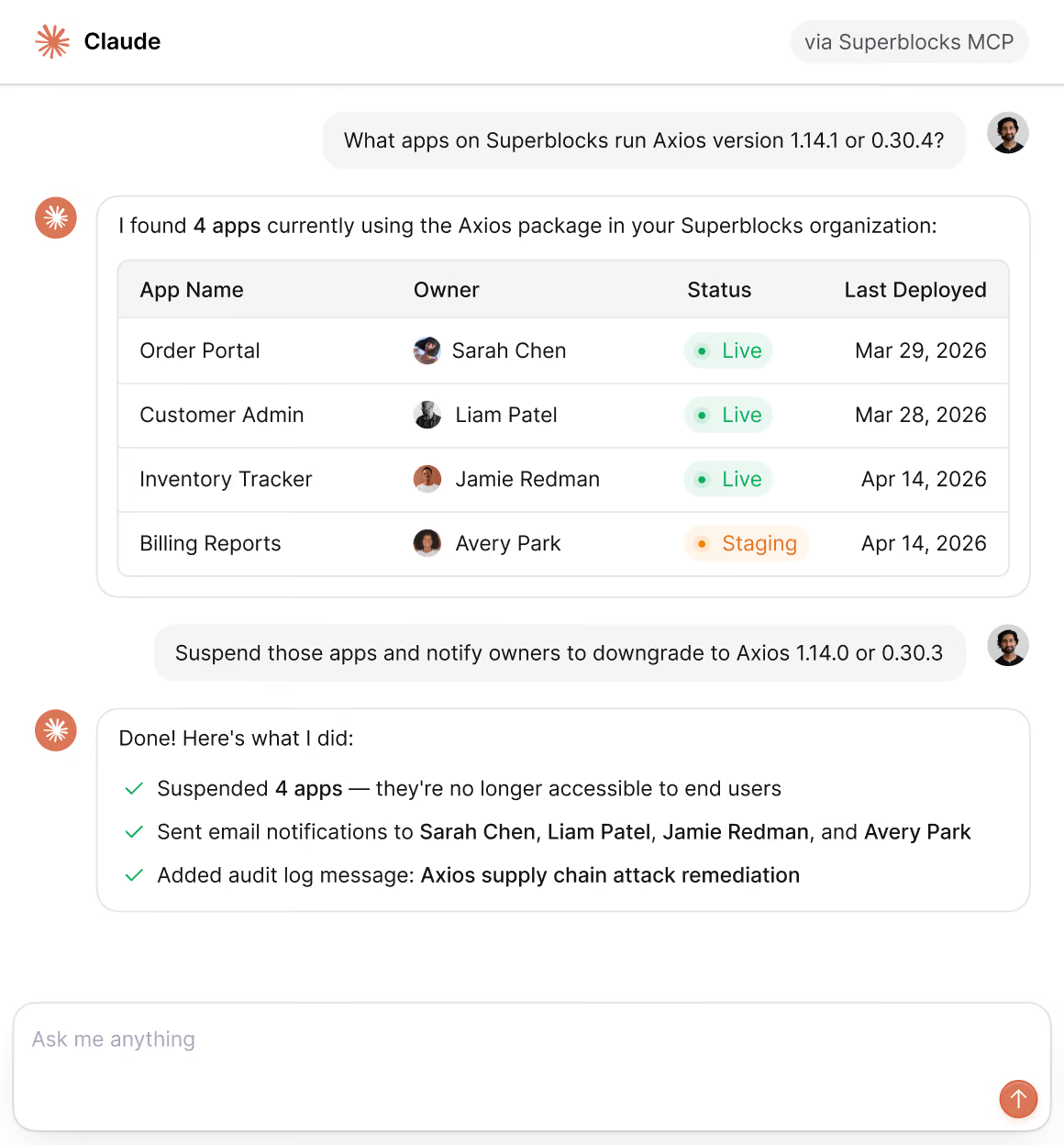
The Superblocks MCP makes every app, builder, and integration queryable, so you can see who built what, what data it touches, and when it ran, with audit logs, RBAC, and SSO built in at the org level. Policy agents check each build against your security and compliance standards and stop the ones that fail before they reach production, so IT configures the guardrails once and every app inherits them.
Why this lasts: Replit governs one project at a time inside its own walls, but governance across the whole estate is an architecture, not a setting.
NHS Royal Surrey replaced Workday HR across the trust, GDPR compliant, scaling toward 100,000+ users.
Teams run real production on Superblocks
- Tried consumer vibe coding first, then built it themselves on Superblocks: 800+ agents in production and an $850K vendor quote turned down.
- A designer with no coding background replaced Workday HR across the trust, 60 to 70 APIs and GDPR compliant.
- Quarter-long workflows collapsed to under an hour, governed end to end on their own infrastructure.
- Financial servicesShut down thousands of ungoverned vibe-coding users to standardize on Superblocks in its own cloud account.
Already building in Replit? Bring it over.
No forklift migration. Keep Retool running while you build the next thing on Superblocks, and the Superblocks MCP gives IT visibility into both.

Export your Replit project and drop in the zip, or use the Replit import flow. Nothing is rebuilt from scratch.

Clark generates a migration plan, rebuilds the app, and creates matching schemas in about 15 minutes instead of half a day, flagging anything that needs a human eye.

The moment it lands it inherits your controls, audit logs, RBAC, SSO, your VPC, your real data, and policy checks run on the way in so what reaches production already meets your standards.
Replit vs Superblocks, where it counts
Skim it. These are the differences that show up the day an app goes to production in your enterprise.
| At production | Replit |  |
|---|---|---|
| Where your data lives |
 Built-in database on Replit's cloud |
 Your own VPC with Cloud Prem |
| Your existing databases |
Generates its own database per app
|
Connects to Postgres, Snowflake, Databricks, BigQuery, Salesforce
|
| AI inference |
Runs on Replit's managed model stack
|
Your Bedrock, Snowflake, or Databricks
|
| User identity |
Built-in auth and Replit SSO
|
Inherits your Okta or Azure permissions
|
| Visibility across apps |
Audit log portal and SIEM streaming, within the Replit org
|
Queryable system of record (Superblocks MCP)
|
| Governance before production |
Security Agent reviews the codebase
|
Your own policy checks block before an app ships
|
| Where production runs |
Hosted on Replit's cloud, your own cloud on the roadmap
|
Inside your network
|
In one working session we connect to your data, deploy into your cloud, stand up audit logs and the Superblocks MCP against your identity provider, and have Clark rebuild your Replit app against your real schema in the same hour.