Build in any AI client.
Ship to production, governed.
Business teams can now build their own apps in whichever AI client you rolled out. MCP connects them to Superblocks, so what they build reaches production with your integrations, your identity provider, a security review before publish, and your own cloud.
A prototype has none of the things production requires
Every prototype that comes out of a chat is missing the same six things, whichever assistant built it.
- Data that isn't realRecords are hardcoded. Making the app useful means connecting it to production data, usually with one person's own credentials.
- Someone's personal API keyModel calls run on an individual's credentials, sitting in plain text in the file.
- No identityNo SSO, no roles, no permissions. Everyone who opens it sees everything in it.
- One laptopIt runs where it was built and nowhere else. Nobody else on the team can use it.
- No audit trailNo record of who ran what against which system. IT cannot answer questions about an app it cannot see.
- No way to change it safelyThe next edit is another prototype. There is no review, no approval, and no rollback.
Teams working in Claude, Gemini, or Codex connect over MCP and carry on building there. Apps already built in Replit or Lovable can be imported directly into Superblocks. Either way any app, built by any team, with any client is under your control, with one path to production.
Watch a prototype become a production app
This video shows an app moving from a chat into production, securely. An analyst builds it in Claude, running on hardcoded data and a personal API key. Superblocks imports it, writes back a plan to approve, then adds a send to Slack button on request. The app ends up in the company's own AWS account, reading and writing Snowflake under each user's own permissions, while the analyst carries on working in Claude.
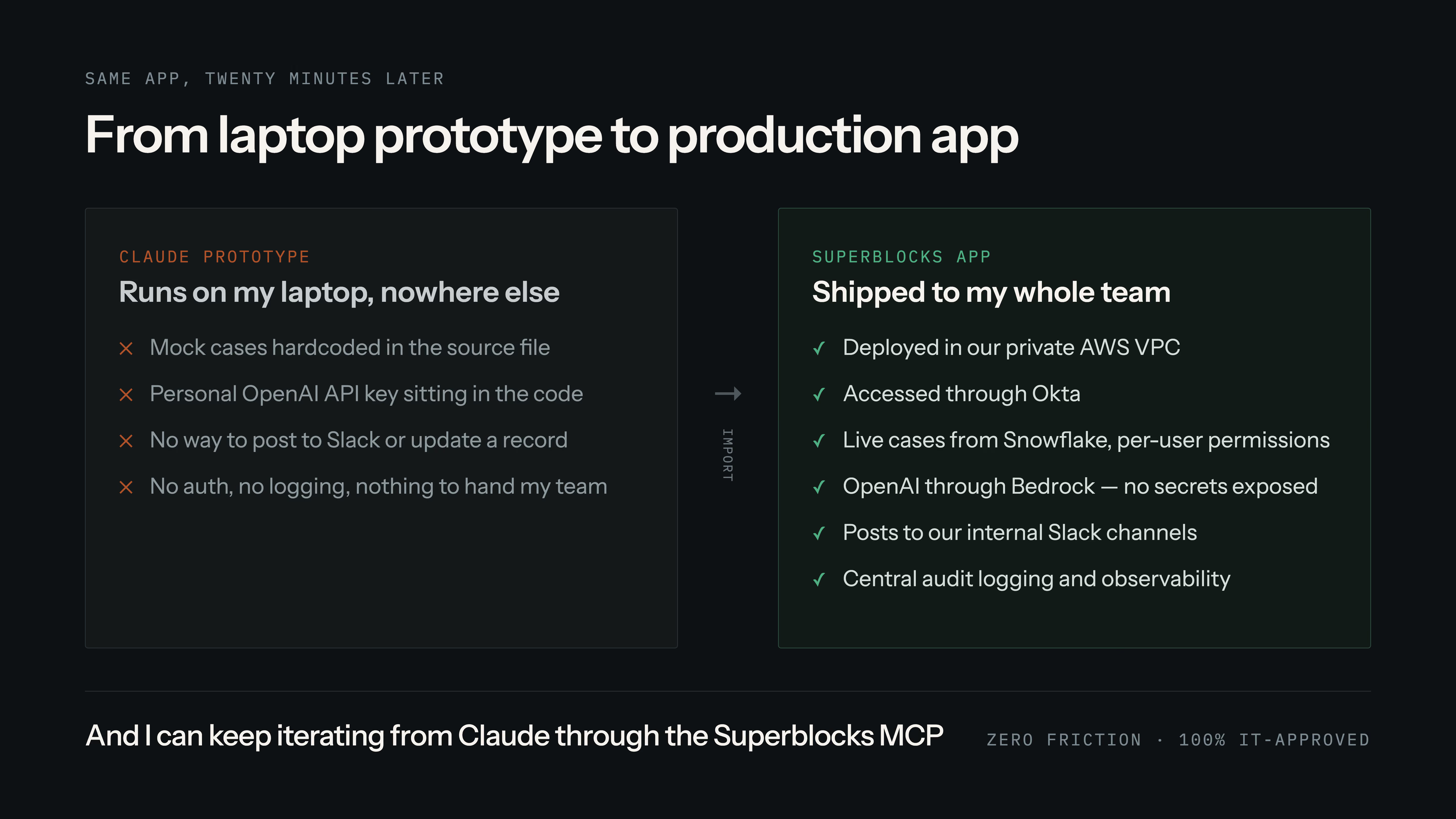
Every app inherits your security controls
Governance lives at the platform, not the app. IT configures the guardrails once and every app built from a chat gets them: your identity provider, your integrations, your security policies, your cloud. Nobody reviews apps one at a time.

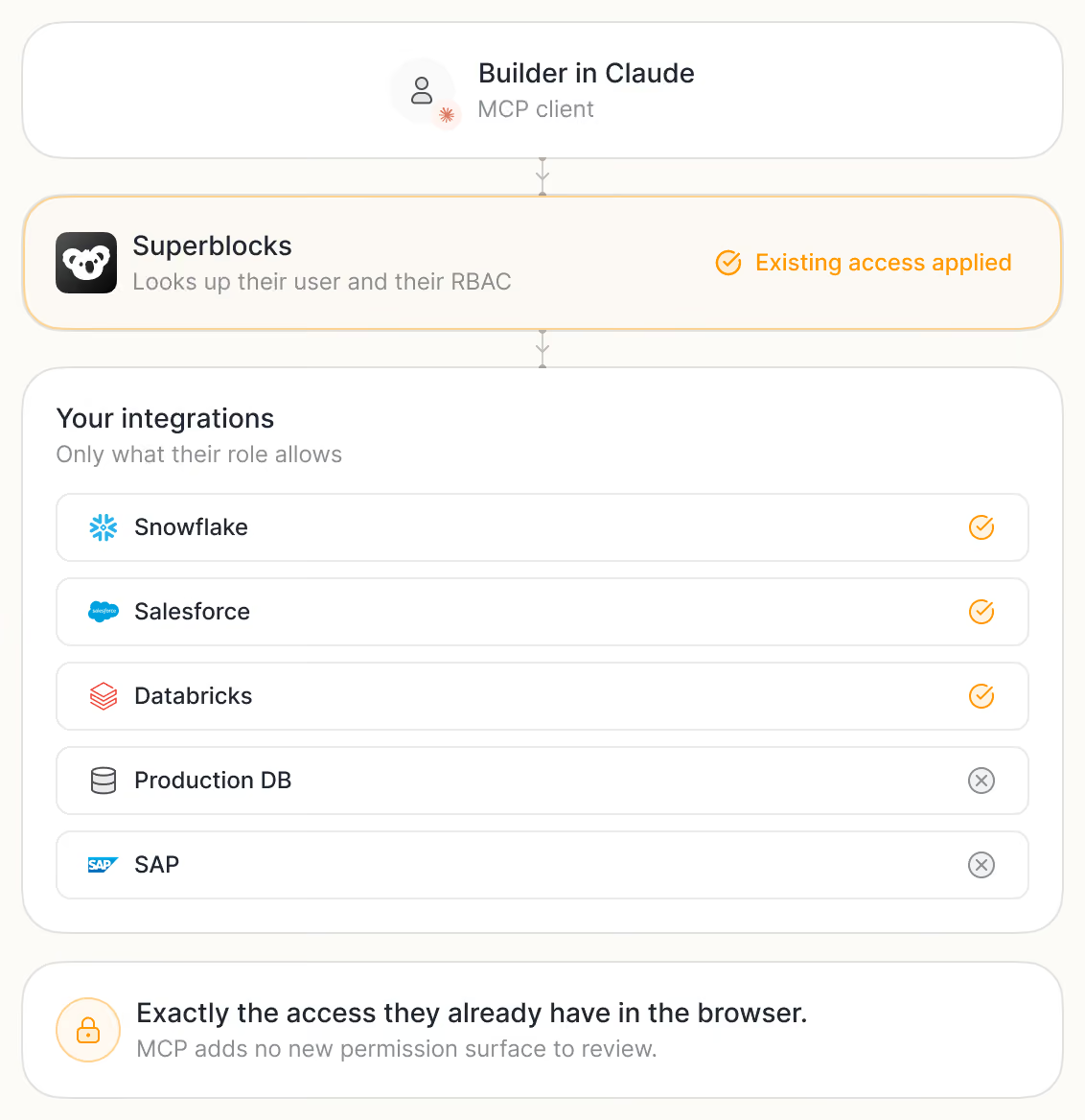
It knows who is asking
The Builder MCP runs on the builder’s own Superblocks token. Superblocks looks up their user and their RBAC, so from Claude they reach exactly what they reach in the browser and nothing more. There is no new permission surface to review. At run time the published app authenticates through your identity provider, and integrations like Snowflake use token exchange, so every query runs as the signed-in user under the row access policies your warehouse already enforces.

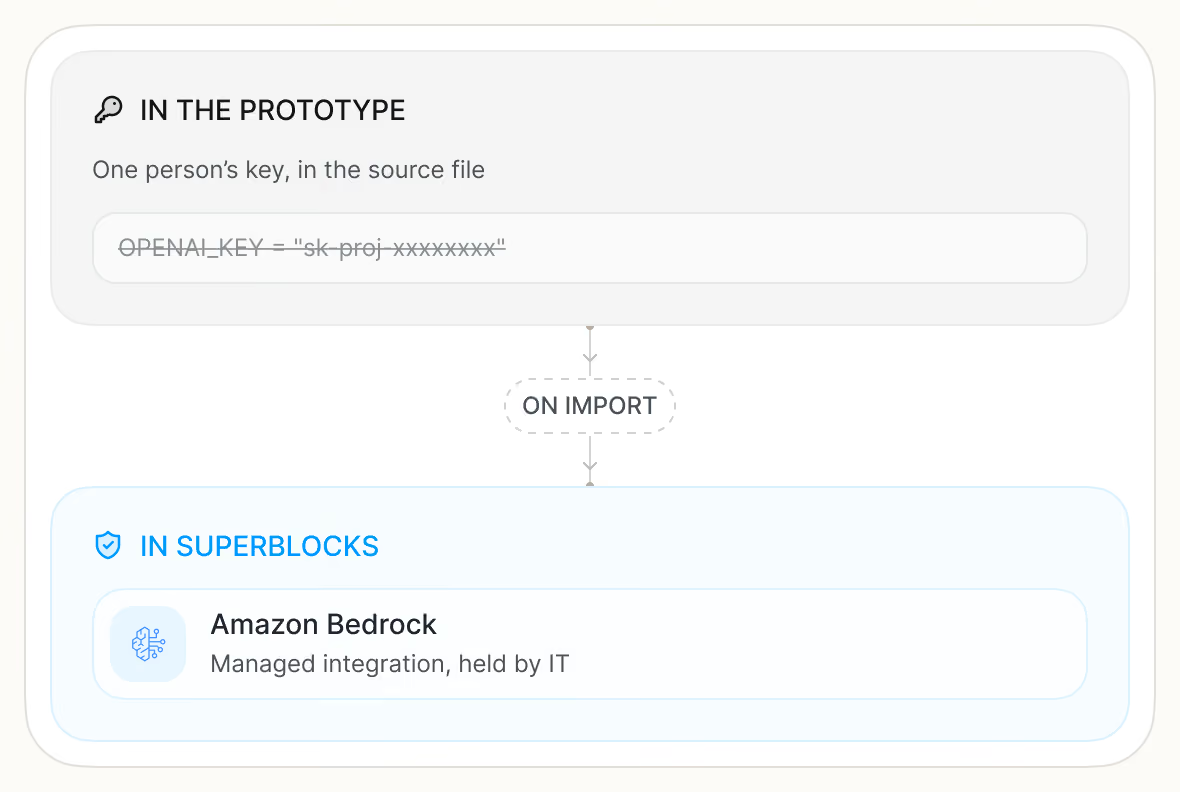
The personal API key disappears
Hardcoded credentials get replaced with managed integrations on import. Model calls route through Amazon Bedrock in your own AWS account, so no customer data leaves your VPC. Secrets are vaulted and never appear in prompts or logs.

Security agents review before deploy
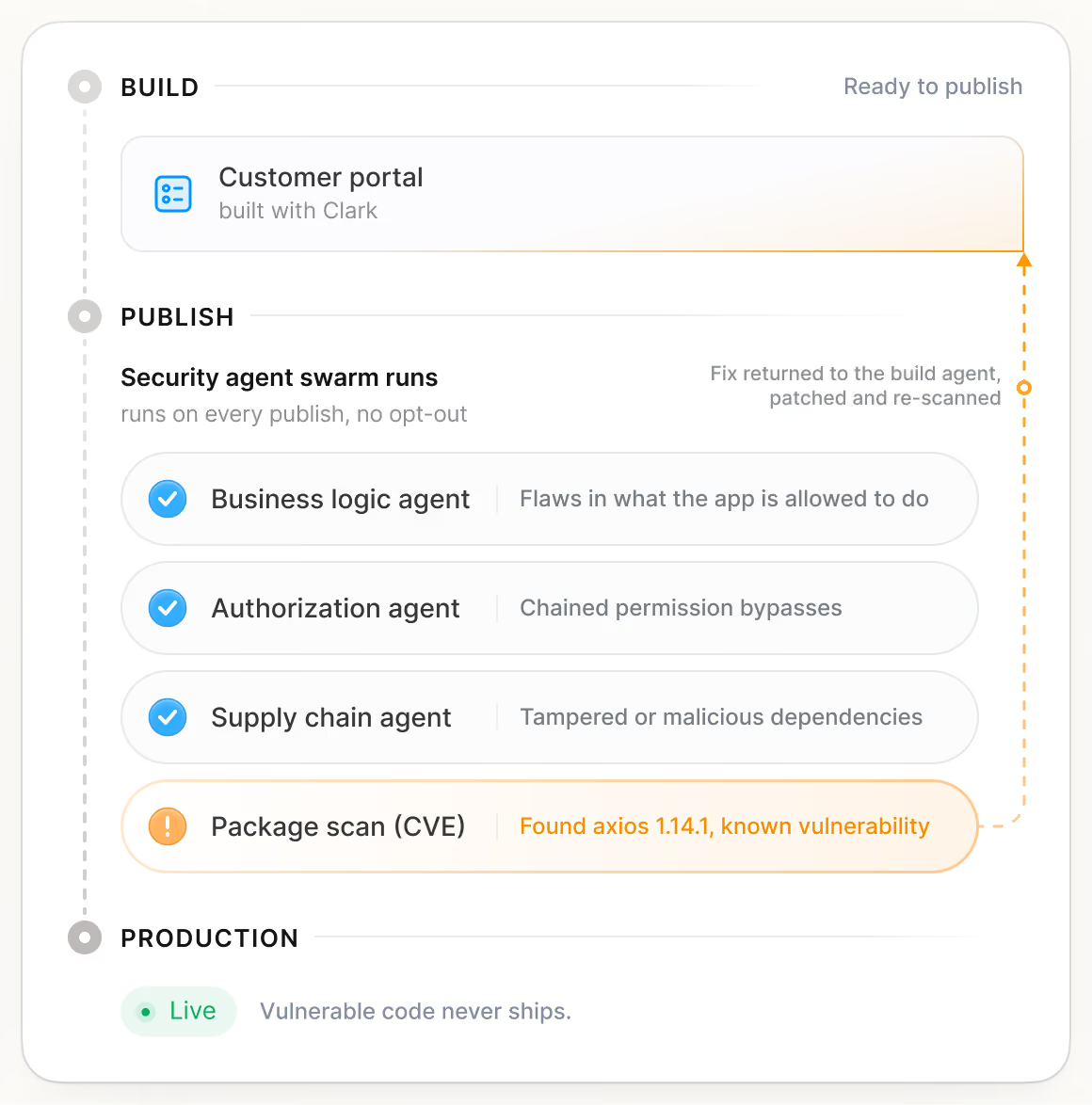
Every publish runs through a swarm of security and policy agents scanning for business logic flaws, authorization bypasses, and supply chain vulnerabilities. Code written by an AI gets reviewed by something other than the AI that wrote it.

Every app built this way is tracked like an asset
Apps built from a chat show up in the same inventory as everything else, with full audit logging on every action. Query the Admin MCP for who built what, what data it touches, who has access, and when it ran.

Who controls what, at each stage
A software factory for business teams.
A control plane for IT and security
- BUILDER MCPThe software factory. Business teams start, import, edit, and publish apps from their AI client, inside the guardrails IT already set.
- ADMIN MCPThe governance control plane. IT and security query the platform as a system of record: apps, builders, integrations, permissions, data access, and audit logs.
See the Builder MCP against your own integrations, your identity provider, and your cloud.

